








From Text to Tasks: The New AI Frontier
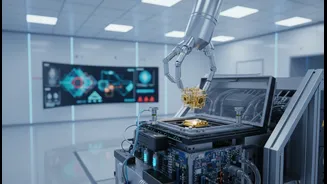
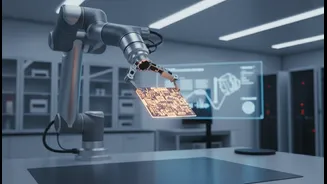
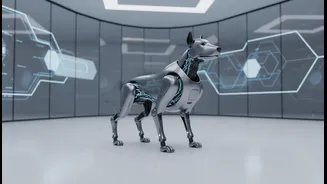
For years, artificial intelligence has lived primarily on our screens, mastering language, generating images, and answering complex questions. But a new frontier is emerging: embodied AI. This isn't about chatbots; it's about giving AI a physical body
to perceive, interact with, and act upon the real world. Think of a robot that can understand the command "clean up this spill" and then identify the liquid, find a cloth, and wipe it clean. This move from virtual tasks to physical action is the core of embodied AI, and it’s the key to unlocking the true potential of robotics. It requires an AI that can translate high-level human instructions into a precise sequence of movements and decisions in a messy, unpredictable environment.
The High Cost of a Smart Machine
Building a robot is hard, but making it intelligent is exponentially harder and more expensive. Historically, the biggest barriers for smaller robotics companies haven't just been the cost of hardware, but the monumental expense of developing the software 'brain'. Each new task and environment required custom, painstakingly written code. A robot programmed to assemble a car door on a factory line is useless for packing boxes in a warehouse. This lack of adaptability has kept most robots locked in highly structured, repetitive tasks. For a startup, the cost of hiring specialist AI teams, gathering massive datasets, and paying for the immense computing power needed to train a versatile robotic intelligence from scratch is often an insurmountable barrier to entry.
A New Brain for a Robotic Body
This is where AI giants like Mistral come in. Known for its powerful Large Language Models (LLMs), the French company is now applying its expertise to the physical world. Its new model, Robostral Navigate, is designed to be a universal 'brain' for robot navigation. By training a model on vast amounts of simulated and real-world data, Mistral can create a general-purpose intelligence that understands language and can translate it into robotic actions. For example, using just a single camera, the model can interpret a command and guide a robot through a complex, unfamiliar space, avoiding obstacles dynamically. This is a game-changer because it separates the 'brain' from the 'body', allowing one advanced AI model to potentially power many different types of robots.
Democratising Dexterity
The impact of this approach is democratisation. By offering a sophisticated embodied AI model, perhaps through an API (Application Programming Interface), Mistral could create a platform effect. Suddenly, a small startup doesn't need to reinvent the wheel of general intelligence. Instead of spending millions developing a foundational AI, they can license a powerful 'brain' from Mistral. This frees them to focus their limited resources on what makes them unique: designing innovative hardware for specific problems or creating highly-specialised applications for niche markets. It's similar to how cloud computing services from Amazon and Google allowed startups to build massive web applications without buying and managing their own servers.
The Ripple Effect for Startups
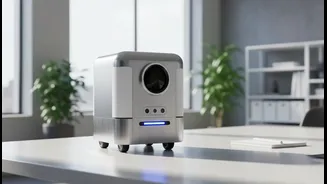
For smaller robotics companies, this shift could be transformative. A startup in agricultural tech could build a robot for delicate harvesting, letting Mistral's AI handle the navigation and basic commands. Another firm could create a low-cost assistant for laboratories, using the same underlying AI to handle different tasks. This dramatically lowers R&D costs, accelerates time-to-market, and allows smaller players to compete with giants on a more level playing field. They can innovate on the application layer—the part of the technology that solves a specific customer problem—rather than being bogged down by the foundational AI. This model-is-hardware-agnostic, meaning it can be deployed across various types of robots, from wheeled to legged, further expanding its utility.