


Defining 'Unstructured Traffic'
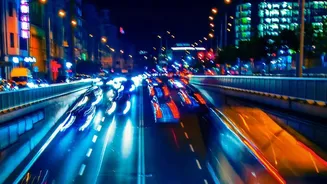
Before diving into the technology, it’s important to understand what 'unstructured traffic' really means. Unlike the orderly, lane-respecting flow of cars on a European highway, unstructured traffic is the norm in many parts of the world, including India.
Think of a bustling intersection in Mumbai or Delhi: cars, auto-rickshaws, motorcycles, pedestrians, and sometimes even animals all share the same space, often without clear lane markings or adherence to formal right-of-way rules.. This environment is defined by constant negotiation and unpredictable movements, presenting a monumental challenge for any autonomous driving system..
How a Tesla 'Sees' the World
Tesla's approach to autonomous driving, called Full Self-Driving (FSD), relies primarily on cameras. Using a suite of eight cameras, the system gets a 360-degree view of its surroundings.. This data is fed into a powerful onboard computer that runs sophisticated neural networks—a form of artificial intelligence.. The system, known as Tesla Vision, processes this visual information to identify and differentiate between various objects.. It doesn't just see a 'thing'; it learns to classify it as a car, a pedestrian, a truck, or a two-wheeler, a crucial first step in predicting behaviour..
Translating Chaos onto the Screen
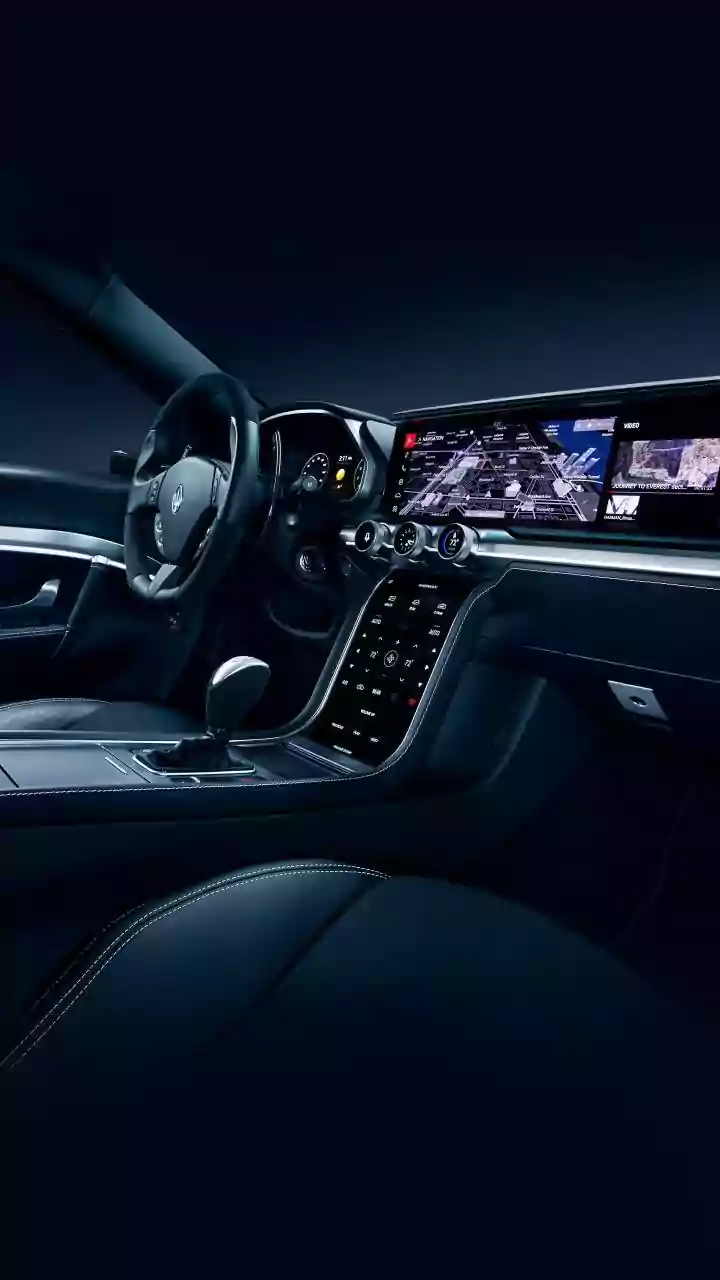
The magic happens when this complex data is translated into the simplified animation on the centre display. The screen shows a digital representation of your Tesla and the world around it. Other vehicles appear as generic 3D models or coloured boxes, while pedestrians are shown as simple figures. What makes it compelling is how it handles the sheer volume and variety of unstructured traffic. Viral videos from India have shown Tesla displays populated with dozens of objects simultaneously, accurately identifying and tracking cars, weaving motorcycles, and even three-wheeled auto-rickshaws—a vehicle type its software was not originally trained on..
Visualizing Intent and Movement
The display doesn't just show where objects are; it also tries to represent what they might do next. The system renders the predicted path of your vehicle and visualizes the space it needs to maintain from other road users. While the public-facing visualization is a simplified version of what the car's AI is processing, it effectively communicates the car's awareness.. For example, it shows lane lines, traffic lights, and stop signs that it recognizes.. In a chaotic scene, seeing the car successfully map out a safe path through a flurry of on-screen avatars provides a unique window into the AI's decision-making process..
More Than Just a Cool Animation
This visualization serves two key purposes. Firstly, it builds driver trust. By showing the driver what the car is seeing in real-time, it helps demystify the technology and builds confidence in the system's capabilities.. When a driver can see that the car has detected the pedestrian on the side of the road or the motorcycle splitting lanes, they are more likely to trust it to react appropriately. Secondly, the data gathered from these real-world encounters is invaluable for Tesla. Every complex situation the car navigates provides crucial training data that helps the neural network learn and improve, making the system more robust for eventual deployment in these challenging markets..