






A Once-in-a-Dozen-Year Spectacle
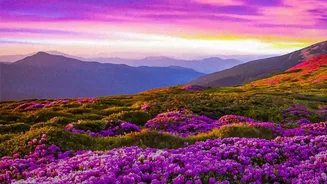
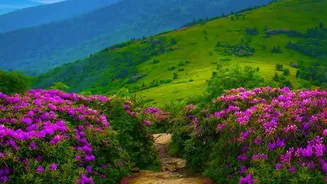
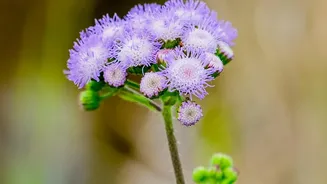
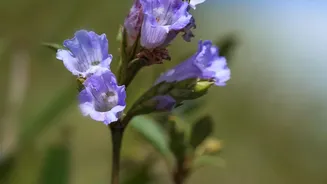
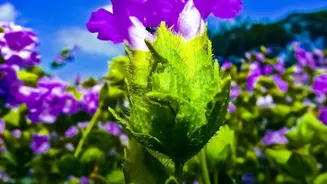
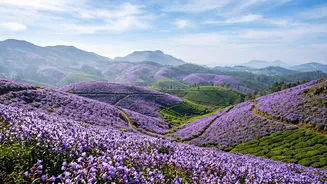
The star of this natural drama is Strobilanthes kunthiana, a shrub endemic to the shola grasslands of the Western Ghats. It belongs to a unique group of plants known as plietesials, or mass seeders. For 11 years, the plant grows quietly. Then, in the 12th
year, the entire population bursts into a synchronised bloom, carpets hillsides, produces seeds, and then dies. This unusual life cycle, known as being monocarpic, is a survival mechanism. The last major bloom across Eravikulam National Park occurred in 2018, making the next grand spectacle highly anticipated in 2030. It is this predictable rarity that transforms the region into a global attraction during the blooming months of August to October.
The Ecological Barometer of the Ghats
The Neelakurinji is not just a passive beauty; it is an active participant and a crucial indicator of the health of its high-altitude ecosystem. When the flowers bloom, they provide a massive feast of nectar for countless pollinators, especially honeybees. This results in the production of a rare, highly valued honey known as Kurinjithen, which local communities believe has medicinal properties. Beyond the bees, the bloom supports a wide array of butterflies and other insects, which in turn are food for other species. The plant's life cycle is also intertwined with the endangered Nilgiri Tahr, which inhabits the same grasslands. In essence, a healthy Neelakurinji bloom signals a thriving, balanced ecosystem.
Woven into Culture and Time
For the indigenous communities of the Western Ghats, the Neelakurinji is deeply embedded in cultural life. The Paliyan tribe of Tamil Nadu traditionally used the 12-year blooming cycle as a natural calendar to calculate their age. The flower is also immortalised in ancient Tamil Sangam literature, where 'Kurinji' refers not just to the flower but to the mountainous landscape itself, often associated with love and union. This deep connection highlights a relationship with nature that transcends mere observation, embedding the plant into the very rhythm of human life for centuries.
A Treasure Under Threat
Despite its fame, the future of the Neelakurinji is precarious. In 2024, Strobilanthes kunthiana was officially classified as a 'Vulnerable' species on the IUCN Red List, confirming what conservationists have long feared. Its fragile shola-grassland habitat has shrunk by an estimated 40%, primarily due to the expansion of tea and eucalyptus plantations, unchecked urbanisation, and infrastructure development. Unregulated tourism during bloom seasons adds another layer of stress, with trampling and waste degrading the delicate environment. Climate change also poses a significant risk, potentially disrupting the synchronised flowering cycle that makes the event so magical. The official 'threatened' status is a wake-up call that this natural wonder could be lost if concerted conservation efforts are not prioritised.
The Countdown to 2030
While some smaller, localised blooms have been reported in parts of Munnar in 2026, these are from different populations with their own cycles. The main event, centered in Eravikulam National Park, is still on track for 2030. The intervening years are critical. Conservation bodies and the government are tasked with protecting the remaining habitats, managing invasive species, and developing sustainable tourism models that don't harm the very attraction visitors come to see. Protecting the Neelakurinji is not just about saving a flower; it is about preserving a complex ecosystem, a piece of cultural heritage, and a natural clock that has ticked for millennia. Its survival matters because it is a direct measure of our ability to coexist with one of the world's most unique biodiversity hotspots.