






A Landmark Launch
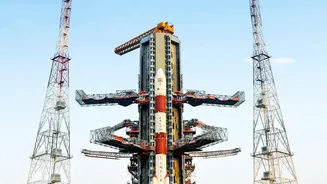
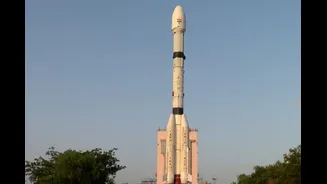
Lifting off from the Satish Dhawan Space Centre in Sriharikota, the Geosynchronous Satellite Launch Vehicle (GSLV-F17) performed flawlessly, marking a moment of national pride. This launch was not just another mission; it represented a crucial step forward,
especially following a few challenging missions in previous years. About 18 minutes after a thunderous liftoff, the rocket successfully deployed the EOS-05 satellite into a Geosynchronous Transfer Orbit (GTO). This initial placement is the first critical phase. From this transfer orbit, the satellite will use its own propulsion system to perform a series of complex manoeuvres over several days to reach its final destination: a geosynchronous orbit approximately 36,000 kilometres above the Earth.
The Workhorse: GSLV-F17
The GSLV is one of ISRO's most important launch vehicles, designed to carry heavier payloads than its counterpart, the PSLV. The GSLV Mk II is a three-stage rocket featuring a combination of solid, liquid, and cryogenic stages. The most complex part is the indigenous cryogenic upper stage, which uses super-cooled liquid hydrogen and liquid oxygen as propellants. Mastering cryogenic technology is a major technological feat, placing India in an elite club of space-faring nations with this capability. A successful flight of the GSLV, like the F17 mission, reinforces ISRO's self-reliance and its capacity to launch heavy, sophisticated satellites without depending on foreign launch providers.
The Eye in the Sky: EOS-05
The primary payload, EOS-05, is an advanced Earth Observation Satellite. Unlike many other remote sensing satellites that orbit in lower orbits and pass over an area periodically, EOS-05 is special. It has been placed in a geosynchronous orbit, which means it will appear stationary over the Indian subcontinent, allowing for continuous monitoring. This constant watch is invaluable for a wide range of applications. With a mission life of around 10 years, EOS-05 will provide real-time imaging to track rapidly developing weather systems like cyclones, monitor natural disasters such as floods and forest fires, and assess agricultural health and water resources. This capability represents a significant upgrade to India's Earth observation infrastructure.
Strategic and Civilian Benefits
The data from EOS-05 holds immense strategic and civilian value. For disaster management agencies, the ability to get real-time imagery can be life-saving, enabling faster and more effective response during emergencies. For agriculture, it provides crucial data for crop acreage estimation, drought monitoring, and improving water use efficiency. Beyond these civilian uses, having a constant 'eye in the sky' enhances India's strategic capabilities, providing high-frequency observation that is critical for security and situational awareness across land and maritime domains. ISRO officials have highlighted the satellite's strategic importance, noting it will provide vital data for the nation while strengthening partnerships between ISRO and Indian industry.