



A Legacy of Taste and Tradition
The practice of offering this laddu began centuries ago, with the current tradition tracing its origins back to August 2, 1715. Initially, a different sweet called Manoharam was offered. The spherical laddu as we know it today was standardized around
1940, eventually becoming the temple's principal offering. Its fame is such that it was granted a Geographical Indication (GI) tag in 2009. This tag protects its authenticity, ensuring that only the laddus made within the temple kitchen can be called 'Tirupati Laddu', safeguarding it from imitation and black marketing. This unique status places it in the company of other protected regional treasures, highlighting its cultural importance.
The Sacred Ingredients
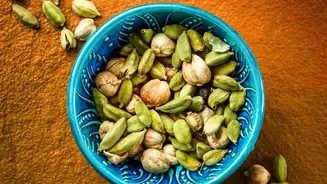
The secret to the laddu's divine taste lies in its specific and high-quality ingredients, a list known as the 'Dittam'. The core components are gram flour (besan), sugar, and pure cow ghee. These are complemented by generous quantities of cashews, raisins, cardamom, and edible sugar candy (mishri). The sheer scale of daily production is staggering: the temple kitchen, or 'Potu', uses around 10 tonnes of gram flour and 10 tonnes of sugar each day, along with hundreds of kilograms of cashews, cardamom, and raisins, and hundreds of litres of ghee. This massive operation ensures that the hundreds of thousands of laddus produced daily maintain their revered quality.
The First Step: Creating the Batter
The journey begins by preparing a batter from gram flour. This isn't just a simple mix; the consistency has to be perfect. The flour is mixed with water and sometimes a little rice flour to achieve a smooth, flowing batter ready for the next crucial stage. In the temple's massive kitchen, this process is mechanized to handle the enormous quantities required. This initial step is foundational, setting the stage for the texture of the final product. Every detail is overseen by skilled cooks, known as 'Pachakas', who are part of a team of over 600 people involved in the laddu-making process.
From Batter to Golden Boondi
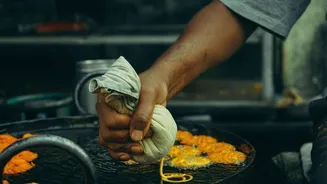
Next, the batter is transformed into 'boondi'. This is done by pouring the batter through large perforated ladles or plates into giant cauldrons filled with hot ghee. As the batter drips through the holes, it forms tiny droplets that fry into crisp, golden pearls. The sound and sight of this large-scale frying process are a spectacle in themselves. The temple's kitchen is even equipped with conveyor belts to efficiently move ingredients and the finished boondi, showcasing a blend of ancient tradition and modern logistics. Once fried to the perfect texture, the boondi is removed and drained, ready for its sweet transformation.
The Sweet Syrup and Final Assembly
While the boondi is prepared, a rich sugar syrup is cooked separately. Sugar and water are boiled until the syrup reaches a 'one-string consistency', a precise point that ensures the laddu will have the right texture and shelf life. Aromatic spices, most notably powdered cardamom, are added to this syrup. The fried boondi is then added to the hot syrup, along with ghee-fried cashews, raisins, and pieces of sugar candy. This mixture is tossed thoroughly in massive vessels, allowing the boondi to soak up the sweet, fragrant syrup.
Shaping the Laddus with Devotion
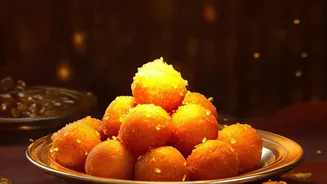
The final, and perhaps most sacred, step is shaping the laddus. While the mixture is still warm enough to be pliable, temple workers, or sevakartas, expertly roll it into uniform spheres. Their hands move with incredible speed and precision, a skill honed through years of service. Each ball is pressed firmly to ensure it holds its shape. This manual process, infused with devotion, is what many believe gives the laddu its divine character. The finished laddus, weighing about 175 grams each for the most common variety, are then ready to be offered to the deity before being distributed as prasadam to the waiting devotees.