

A Living Medieval Workshop
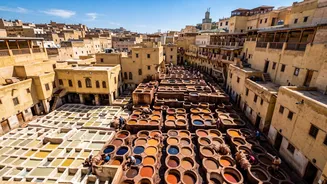
Deep within the twisting alleyways of Fes el-Bali, a UNESCO World Heritage site, lies a scene plucked from the Middle Ages. The Chouara Tannery, the largest and most famous in the city, has been in continuous operation since at least the 11th century.
This is no museum. It is a loud, pungent, and vibrant open-air workshop where the hides of goats, sheep, cows, and camels are transformed into the soft leather that fills the surrounding souks. From the terraces of the leather shops that encircle the pits, you get a bird's-eye view of the entire process. Workers, often standing waist-deep in the vats, use techniques passed down through generations. This enduring commitment to manual craftsmanship is precisely what makes the tanneries a profound and unforgettable sight, connecting modern visitors to the city's ancient economic and cultural heart.
The Infamous Aroma Explained
You will likely smell the tanneries before you see them. The powerful, sharp odour is an unavoidable part of the experience, especially in the heat of summer. But understanding its source transforms it from a mere nuisance into a key part of the ancient process. To break down the tough hides and remove hair and fat, they are first soaked in a mixture of cow urine, quicklime, salt, and pigeon droppings. The ammonia in the animal waste is a powerful softening agent that prepares the leather to absorb dye. This stage can take several days before the hides are washed and moved to the dyeing vats. So when a shopkeeper offers you a sprig of fresh mint—a local custom for visitors—take it. Holding it to your nose doesn't eliminate the smell, but it makes the experience far more manageable.
How to Visit the Right Way
There is no official entrance or ticket booth for the Chouara Tannery. Access is granted through the many multi-story leather shops that surround the courtyard. Navigating the medina's maze-like streets can be a challenge, as GPS is unreliable. You can follow signs, hire a licensed guide, or accept the help of an unofficial guide who will lead you to a specific shop in exchange for a commission or tip. Once you arrive at a shop, you will be led up several flights of narrow stairs to a viewing terrace. It's customary to give a small tip (around 10-20 Moroccan Dirhams) for the view if you do not purchase anything. The best time to visit is in the morning, when the light is best for photography and the vats are freshly filled with vibrant colours. Spring and autumn offer cooler temperatures and a less intense olfactory experience.
Navigating the Sales Pitch
Viewing the tanneries comes with an implicit understanding: you will be guided through the shop's showroom afterward. The pressure to buy can range from gentle to persistent. Remember that you are under no obligation to make a purchase. A polite but firm 'la, shukran' (no, thank you) is usually effective if you are not interested. If you are tempted by the jackets, bags, or traditional 'babouche' slippers, this is your chance to buy directly from the source. However, bargaining is expected. As a rule of thumb, you can often negotiate the opening price down by a significant margin. Before agreeing on a price, inspect the quality of the item—check the stitching, zippers, and feel of the leather. Properly cured leather should have a natural scent, not a strong chemical odour.
An Unforgettable Experience
So, is a visit to the Fes tanneries worth the sensory overload and the sales gauntlet? For most travellers, the answer is a resounding yes. There are few places left in the world where you can witness a craft performed on such a scale, using methods that have remained largely unchanged for a thousand years. It is a visceral connection to history, a spectacle of colour, and a humbling look at the demanding physical labour behind a beautiful craft. The key is preparation. By understanding the process, knowing what to expect from the smell, and being ready to navigate the shopping experience, you can move past the overwhelming aspects. This allows you to truly appreciate the tanneries for what they are: a vibrant, living testament to Moroccan heritage and artisanship.