
India’s Answer to GPS
Navigation with Indian Constellation, or NavIC, is India’s homegrown satellite navigation system, an alternative to foreign systems like America’s GPS. It was designed to provide crucial positioning, navigation, and timing (PNT) services across India and a region
extending 1,500 kilometres beyond its borders. This isn't just about convenience for mobile maps. NavIC provides two levels of service: a standard one for all civilians and a restricted, encrypted service for strategic users, including the military and security forces. Its applications are vast, from guiding commercial vehicles and fishing fleets to providing precise timing for power grids and, most critically, navigating missiles and coordinating troop movements. Having a sovereign system ensures that in times of conflict, India would not be dependent on foreign networks that could be denied or degraded.
A Constellation Under Strain
A satellite navigation system needs a minimum of four operational satellites to accurately determine a position on Earth. Unfortunately, India’s NavIC constellation has fallen below this critical threshold. The original system, designed with seven active satellites, has been plagued by failures. Many of the first-generation satellites have seen their imported atomic clocks—the ultra-precise timekeepers essential for accuracy—fail prematurely. Some satellites have completed their mission life, while others suffered launch setbacks. For instance, the NVS-02 satellite, launched in January 2025, failed to reach its intended orbit. As a result, only three satellites are currently providing full positioning services, rendering NavIC's standalone navigation capabilities inactive.
The Second-Generation Solution: NVS-03
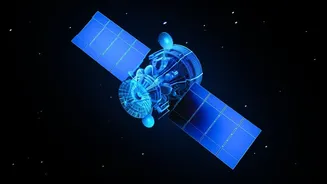
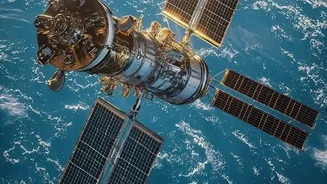
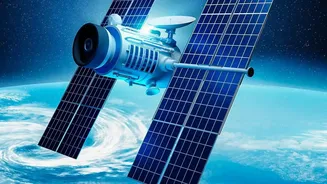
To fix the gaps, the Indian Space Research Organisation (ISRO) is deploying a new series of satellites, known as the NVS series. The first, NVS-01, was successfully launched in May 2023. The next in line is NVS-03, the satellite pegged for the upcoming mission. These second-generation satellites are a significant upgrade. They feature longer lifespans and broadcast signals on the L1 frequency, making them compatible with a wider range of consumer devices that already use global navigation systems. Most importantly, they are equipped with an indigenously developed rubidium atomic clock, built by ISRO's Space Applications Centre. This move to homegrown clock technology is a direct response to the failures of the imported clocks in the first-generation satellites, boosting the system's long-term reliability and furthering India's goal of self-reliance.
GSLV-F18: The Trusted Launch Vehicle
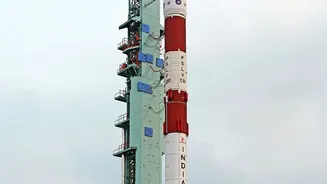
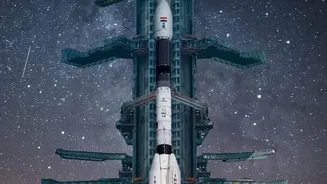
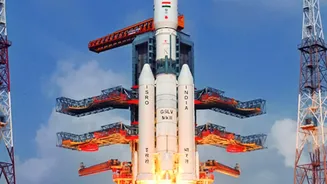
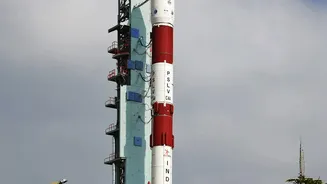
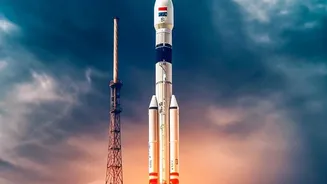
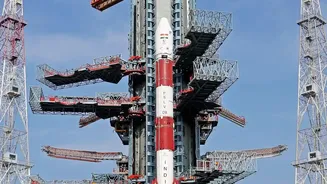
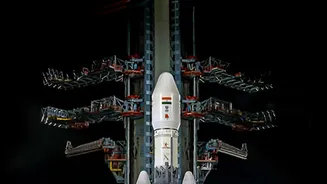
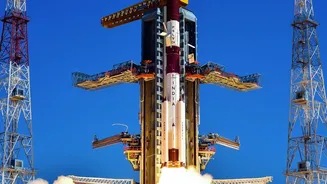
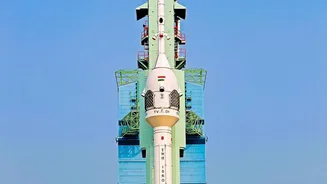
Getting the 2.2-tonne NVS-03 satellite into its precise geosynchronous orbit requires a powerful and reliable rocket, and that is the job of the Geosynchronous Satellite Launch Vehicle (GSLV). ISRO is preparing the GSLV-F18, a Mk II version of the rocket, for this crucial task. The GSLV is ISRO’s workhorse for lifting heavy payloads to high-altitude orbits. While it had a challenging early history, earning the nickname "naughty boy," the Mk II variant has since proven its mettle with a string of successful launches. The launch campaign for GSLV-F18 began on September 14, 2026, with engineers already stacking the first stage of the rocket at the Satish Dhawan Space Centre in Sriharikota.
Restoring a Critical National Asset
The upcoming launch, targeted for a window between October 15 and 20, 2026, is more than just another space mission; it is a mission of restoration. A successful deployment of NVS-03 by GSLV-F18 would bring the number of operational NavIC satellites back to the crucial minimum of four. This would reactivate NavIC's standalone positioning services, restoring its full capabilities for both civilian users and, critically, for the armed forces who depend on it for strategic autonomy and tactical advantage. Following NVS-03, ISRO has two more satellites, NVS-04 and NVS-05, already in advanced stages of development to further bolster and complete the next-generation constellation.