



A Taste of Home, Billions of Miles Away
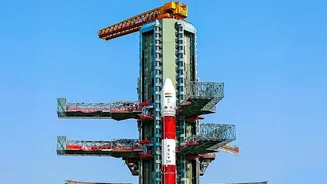
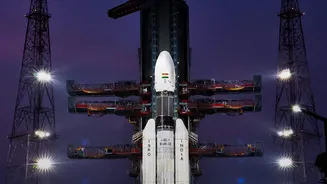
For India’s ambitious Gaganyaan human spaceflight mission, providing a taste of home is a top priority. The monumental task of crafting a menu fit for astronauts falls to the Mysuru-based Defence Food Research Laboratory (DFRL). For decades, DFRL has
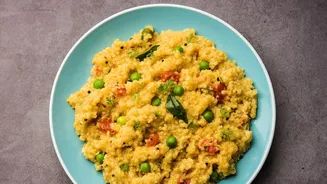
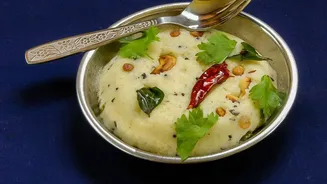
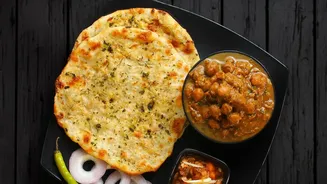
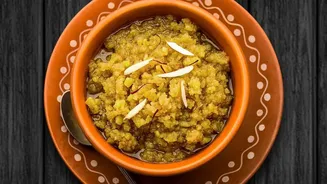
specialised in creating food for the armed forces in extreme conditions, but space presents a unique frontier. The goal is not just to provide calories, but to offer familiar flavours that provide psychological comfort in the isolated and sterile environment of a spacecraft. The initial list of potential dishes was a delicious tour of India, featuring everything from biryani and idli sambar to vegetable rolls and, of course, khichdi and halwa.
The Science of Space Cuisine
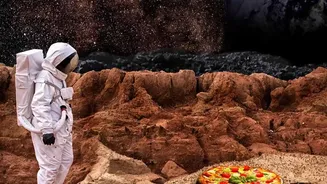
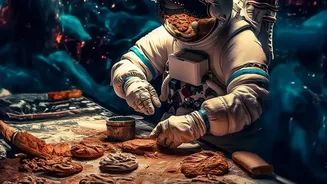
Before any dish can be packed for a space mission, it must pass a battery of brutal tests. In the microgravity environment of space, a single floating crumb can become a serious hazard, capable of clogging air vents or getting into an astronaut's eye. For this reason, all space food must have low fragmentation. Furthermore, meals must be nutritionally dense, have a shelf life of months or even years without refrigeration, and be able to withstand intense launch vibrations. They are often processed into a semi-solid or paste-like form that can be easily consumed, sometimes after being rehydrated with a small amount of water. Even taste is a factor; astronauts often report a diminished sense of taste and smell in space, making flavourful food highly desirable.
The Sweet Success of Halwa
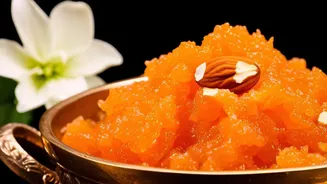
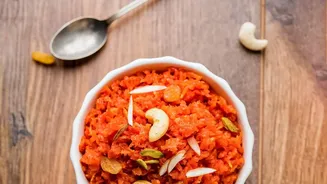
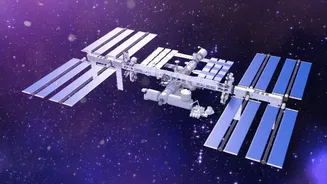
This is where Gajar Ka Halwa, along with Moong Dal Halwa, proved to be a star performer. Halwa's natural properties make it almost perfectly designed for space travel. Its dense, moist, and uniform texture means it produces virtually no crumbs. It is energy-rich, providing a much-needed calorie boost. Most importantly, as a beloved celebratory sweet, it offers a powerful morale boost—a comforting taste of home and festivity. In fact, for astronaut Shubhanshu Shukla’s recent mission to the International Space Station, Gajar Ka Halwa, Moong Dal Halwa, and Aam Ras were the only three Indian dishes to clear all the stringent qualification tests in time. The tradition of sending halwa to space dates back to 1984, when Rakesh Sharma’s menu included Suji Halwa.
The Khichdi Conundrum
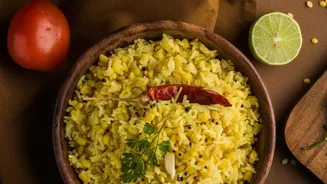
So what happened to khichdi? The ultimate Indian comfort food was a leading candidate, and DFRL has indeed developed a space-ready version. However, according to astronaut Shubhanshu Shukla, while it was tested for his mission, it failed to get the final green light. He explained that some foods, including khichdi and pulao, simply needed more testing to clear all the required safety and stability protocols, and there wasn't enough time before launch. The challenges for a dish like khichdi are complex. Ensuring the rice and dal rehydrate uniformly, maintain an appealing texture, and do not separate in microgravity is a significant scientific hurdle. Unlike the homogenous paste of halwa, a multi-component dish like khichdi presents more variables that must be perfectly controlled.
A Menu That Unites
The story of the astronaut menu highlights the incredible fusion of culture and cutting-edge science. The emotional and psychological well-being of the crew is just as critical as the engineering of their spacecraft. Providing familiar foods is a key part of maintaining peak performance and morale. While khichdi may have missed this particular flight, it remains on the broader menu being developed for the long-term Gaganyaan program. The journey of these dishes is a testament to national pride. Interestingly, Shukla noted that while he didn't get to eat the Indian food he brought, his international crewmates shared and thoroughly enjoyed the halwa, offering a moment of cross-cultural connection in orbit.