





More Than Just a Pretty Backdrop
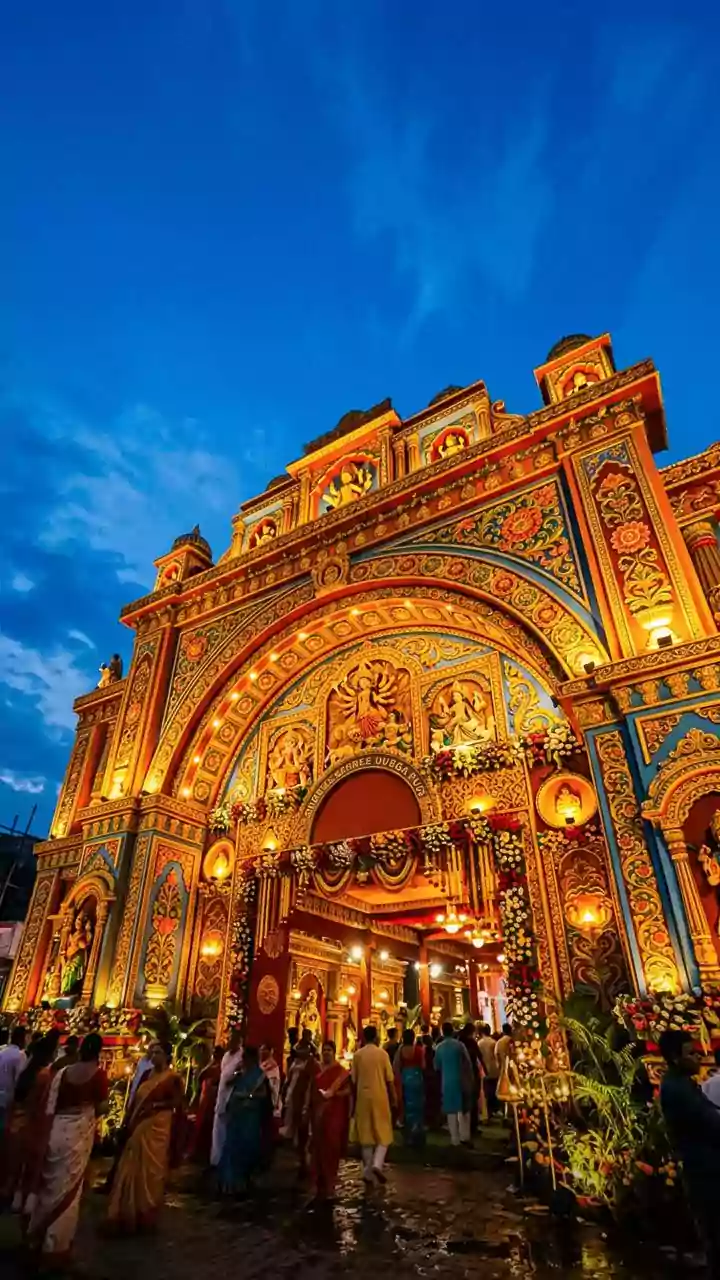
Durga Puja in Kolkata is a grand, city-wide celebration marking the victory of good over evil. It's a time of homecoming, community, and artistic expression. For filmmakers, this presents a rich canvas, buzzing with energy, emotion, and symbolism. While
many films use the festival for a colourful song sequence, Pradeep Sarkar’s ‘Parineeta’ (2005) and Sujoy Ghosh’s ‘Kahaani’ (2012) embed the event deep within their narrative structures. They use the Puja not merely as a setting but as a character in itself, shaping the plot, defining the characters’ journeys, and amplifying the films' core themes. Both films, though belonging to different genres, showcase how the festival’s identity is intertwined with the city's, offering a potent tool for storytelling.
Parineeta: Puja as Romance and Nostalgia
Set in the 1960s, 'Parineeta' is a love story steeped in the old-world charm of Calcutta. The film uses Durga Puja to anchor its romance and underline the deep-seated traditions that govern the lives of its characters, Lalita (Vidya Balan) and Shekhar (Saif Ali Khan). The festival serves as the backdrop for key moments that define their relationship. An intimate exchange of garlands during the Puja is treated with the sanctity of a marriage vow, binding them in a moment of pure, divine-sanctioned love. Later, the famous Dhunuchi Naach sequence becomes a stage for Shekhar's simmering jealousy as he watches Lalita interact with another man, Girish (Sanjay Dutt). Here, the Puja is a vessel for nostalgia, capturing the tender emotions, cultural richness, and the brewing conflicts of a bygone era, making the festival a gentle, romantic heartbeat of the story.
Kahaani: Puja as Suspense and Symbolism
In stark contrast, Sujoy Ghosh's 'Kahaani' transforms the same festival into a landscape of chaos and camouflage. The thriller follows a pregnant Vidya Bagchi (Vidya Balan) searching for her missing husband in a Kolkata that is buzzing with Puja preparations. Throughout the film, the sights and sounds of the approaching festival build a sense of escalating tension. The true genius, however, lies in the climax. The final day of the festival, Dashami, with its frenzied crowds, the red and white sarees of women playing with 'sindoor' (vermilion), and the immersion processions, provides the perfect cover for Vidya's final act of vengeance. The festival's raw energy conceals her and facilitates her escape. The symbolism is powerful: Vidya, like the goddess Durga, vanquishes the demon. The festival is no longer a romantic backdrop but a tool for suspense and a metaphor for the triumph of a woman's strength.
A Tale of Two Pujas
Comparing the two films reveals the versatility of Durga Puja as a narrative device. In 'Parineeta', the festival is orderly, traditional, and enclosed within the grand courtyard of a zamindar's home. It highlights community, romance, and simmering domestic tension. The mood is one of nostalgic reverence. 'Kahaani', on the other hand, takes the festival to the streets, capturing its chaotic, public, and anonymous nature. It uses the very elements that define the celebration—the deafening drum beats, the surging crowds, and the vivid colours—to build a breathless, thrilling conclusion. One uses Puja to consecrate a bond of love, while the other uses it to execute a mission of justice. 'Parineeta' looks at the festival's role in preserving tradition, while 'Kahaani' leverages its modern, frenetic energy.