

One Snack, Two Identities
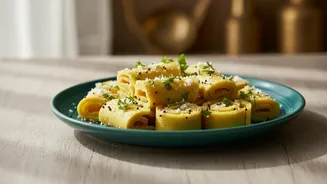
Walk into a savoury snack shop, or 'farsan' store, in Ahmedabad, and you'll find neat rows of yellowish, tightly coiled rolls called Khandvi. Travel a few hundred kilometres south to Pune, and you'll find what appears to be the very same dish, but here
it's called Suralichi Vadi, and sometimes Patuli. Both are delicate, melt-in-your-mouth snacks made from gram flour (besan) and yogurt or buttermilk. They are a testament to the shared culinary heritage that flows between the two neighbouring states, where recipes and traditions have mingled for centuries, creating a delicious, shared food culture.
The Anatomy of a Delicate Roll
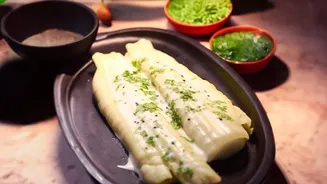
Making Khandvi or Suralichi Vadi is often considered a test of a cook’s patience and skill. The process begins with a thin batter of gram flour, sour yogurt or buttermilk, seasoned with ginger, turmeric, and a pinch of asafoetida. This batter is then cooked continuously, requiring constant stirring until it thickens to a precise, paste-like consistency. The real artistry lies in the next step: the hot mixture must be spread immediately and incredibly thinly onto a flat surface. As it cools, it sets into a delicate sheet, which is then cut into wide strips and carefully rolled into the bite-sized spirals that are its signature look. The result is a snack with a soft, silky texture that is both light and satisfying.
The Gujarati Icon: Khandvi
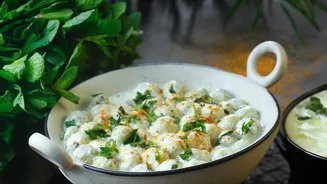
In Gujarat, Khandvi is a cornerstone of the state's legendary snack culture. It’s a staple item at family gatherings, festivals, and as a popular tea-time snack. While it is made at home, many prefer to buy it from local shops, trusting the experts to achieve the perfect, tricky consistency. The Gujarati preparation is typically minimalist. After the rolls are arranged on a platter, they are topped with a sizzling tempering (tadka) of mustard seeds, sesame seeds, curry leaves, and sometimes slit green chilies. A generous garnish of fresh, grated coconut and finely chopped coriander leaves adds the final touch of freshness and texture.
The Maharashtrian Twist: Suralichi Vadi
In Maharashtra, the dish is lovingly called Suralichi Vadi, which translates to ‘rolled delicacy’. While the preparation is fundamentally identical to Khandvi, some Maharashtrian versions introduce a subtle but delicious variation. In these recipes, a flavourful stuffing is added before the rolls are made. After the gram flour paste is spread, a mixture of freshly grated coconut, chopped coriander, and sometimes a hint of green chili and ginger paste is sprinkled over the sheet. The sheet is then rolled up, encasing the fresh filling within the delicate besan layer. This adds an extra dimension of texture and flavour to every bite, distinguishing it slightly from its typically unstuffed Gujarati counterpart.
A Friendly Debate, A Shared Love
So, are they different? The answer is both yes and no. At their core, Khandvi and Suralichi Vadi are born from the same concept, ingredients, and technique. The primary difference often lies in the optional stuffing found in some Maharashtrian preparations. However, for most food lovers and home cooks, the names are used interchangeably, and the dish represents a shared love. The debate over its origin or the ‘correct’ name is less a serious dispute and more a playful reflection of regional pride. It highlights how a single culinary idea can evolve with minor, yet meaningful, tweaks as it crosses state lines.