




What is the New V2V Drive?
In a significant move to enhance road safety, the Ministry of Road Transport and Highways (MoRTH) has proposed a mandate for V2V communication systems in all new vehicles from October 1, 2028. The draft notification outlines a phased rollout, requiring
any vehicles voluntarily equipped with V2V from October 2027 to comply with a new standard, AIS-230. This rule covers nearly all vehicle types—from two-wheelers (Category L) to passenger cars (Category M) and commercial trucks (Category N)—aiming to create a nationwide network of 'talking' vehicles that can wirelessly share data about their speed, position, and braking status to prevent accidents.
The Promise: Safer Roads Through Communication
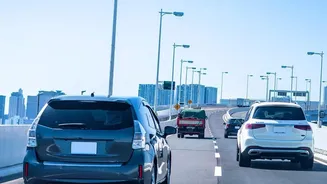
V2V technology allows vehicles to broadcast and receive real-time safety messages, functioning like a digital sixth sense on the road. This system can alert a driver to a vehicle braking hard several cars ahead in traffic, warn of a car approaching a blind intersection, or flag a vehicle driving on the wrong side of a highway. Unlike current Advanced Driver Assistance Systems (ADAS) that rely on onboard cameras and sensors, V2V provides information beyond the line of sight, which is crucial in adverse weather like fog or heavy rain where sensors can fail. By enabling proactive warnings instead of reactive ones, the technology is expected to complement ADAS and significantly reduce collisions.
The Standardization Crossroads
The biggest question surrounding this push is which technology standard India will adopt. Globally, two main standards have competed: the Wi-Fi-based Dedicated Short-Range Communications (DSRC) and the newer Cellular V2X (C-V2X), which uses mobile network technology. Recent government actions suggest India is decisively choosing C-V2X. The new AIS-230 standard is built around C-V2X technology. Furthermore, the Department of Telecommunications has already delicensed the 5.9 GHz spectrum band required for C-V2X deployment, clearing a major regulatory hurdle. This move allows India to bypass the legacy debates that slowed adoption in regions like the US and Europe and align with the modern global trend favouring cellular-based systems.
India's Unique Challenges and Opportunities
Implementing V2V in India presents a unique set of challenges. The system must function reliably in chaotic, mixed-traffic conditions involving cars, trucks, two-wheelers, pedestrians, and even animals, often with poor lane discipline. The cost of the onboard units is another significant concern, especially for the price-sensitive two-wheeler and entry-level car markets. However, India also has a unique advantage. With no legacy V2V systems in place, the country can build a unified, nationwide network from scratch without worrying about backward compatibility issues. The mandate's inclusion of two-wheelers is particularly noteworthy, addressing a huge segment of road users often overlooked in global V2V discussions.
The Road Ahead
The government's proposal is currently in a public consultation phase, allowing automakers, tech companies, and telecom operators to provide feedback before the rules are finalized. Key discussions will revolve around the specifics of certification, cybersecurity standards to prevent hacking, and ensuring interoperability between devices from different manufacturers. This initiative is part of a larger push toward an Intelligent Transportation System (ITS) in India, which already includes GPS tracking mandates (AIS-140) for commercial vehicles and pilot projects for barrier-free satellite-based tolling. The V2V mandate is a foundational step, shifting vehicles from being isolated hardware to becoming connected nodes in a larger, smarter, and safer transportation ecosystem.