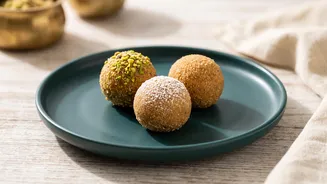




A Modern Twist: Sunth Panjiri Truffles
Panjiri, a traditional North Indian postpartum and winter delicacy, is also a quintessential prasad for Janmashtami. Made from whole wheat flour, ghee, sugar, and warming spices, its most distinct flavour often comes from 'sunth', or dry ginger powder.
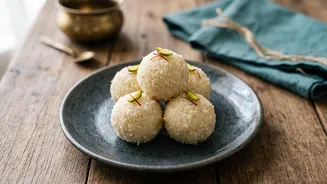
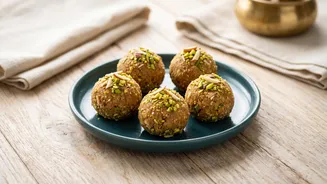
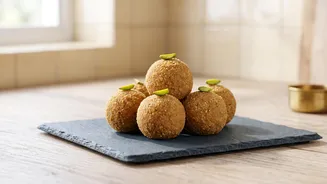
This recipe reimagines the classic loose powder as sophisticated, bite-sized truffles, making it easier to serve and enjoy. The inherent warmth of ginger and the richness of nuts are rolled into a modern form that will delight both young and old. It's the perfect way to honour tradition while embracing a contemporary presentation. To prepare these, start by roasting one cup of whole wheat flour (atta) in half a cup of ghee until it turns fragrant and golden brown. In a separate pan, lightly toast a mix of chopped nuts like almonds and cashews. Once the roasted flour has cooled slightly, combine it in a large bowl with the toasted nuts, half a cup of powdered sugar, and a generous teaspoon of dry ginger powder (sunth). Add two to three tablespoons of melted ghee as needed to bind the mixture. Roll small portions of the warm mixture between your palms to form smooth, round balls. For an elegant finish, you can roll these truffles in desiccated coconut or finely chopped pistachios. Let them cool completely to firm up before serving.
The Timeless Classic: Dhaniya Panjiri
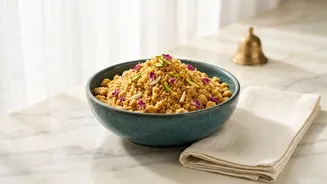
No Janmashtami bhog is complete without Dhaniya Panjiri, a prasad specifically associated with this festival. Unlike its whole wheat counterpart, this panjiri uses roasted coriander seed powder as its base, giving it a unique, aromatic, and deeply traditional flavour. It is especially significant for those observing a 'vrat' or fast, as grains are often avoided. The preparation is a fragrant process that fills the home with festive cheer. To make this auspicious offering, begin by dry-roasting half a cup of whole coriander seeds in a pan over low heat until they become aromatic and slightly darker in colour. Let them cool completely before grinding them into a coarse powder. Next, heat a tablespoon of ghee and roast half a cup of makhana (fox nuts) until they are crisp. In the same pan, add a little more ghee and lightly fry a handful of chopped almonds, cashews, and melon seeds. In a mixing bowl, combine the ground coriander powder, crushed crispy makhana, all the roasted nuts, and two tablespoons of grated dry coconut (kopra). Finally, mix in half a cup of powdered sugar and a pinch of cardamom powder. Combine everything well. This fragrant and nutty mixture is the taste of pure tradition.
A Creamy Delight: Makhana Kheer
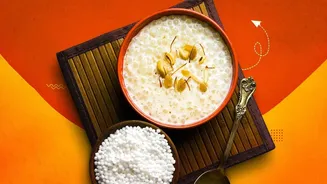
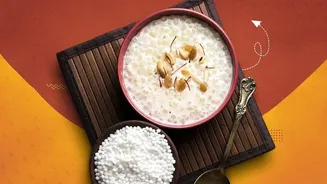
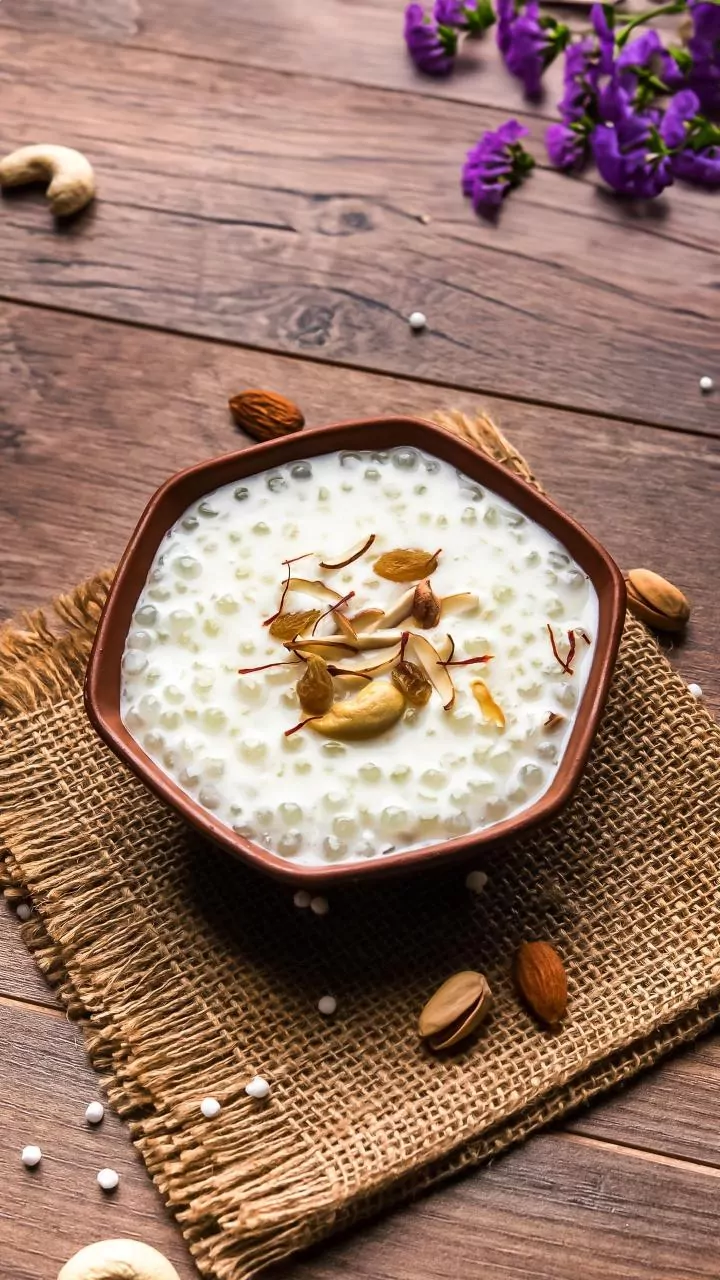
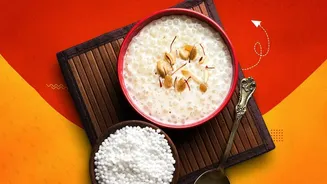
To balance the rich, nutty flavours of the panjiris, a creamy and soothing kheer is the perfect addition to your festive menu. Makhana Kheer, or fox nut pudding, is a popular choice for Janmashtami as it is light, nutritious, and suitable for fasting. The makhana pearls soften beautifully in the milk, creating a unique texture that is both rustic and luxurious. Making this kheer is simple. Start by heating a teaspoon of ghee in a pan and roasting one cup of makhana on low heat for about five to six minutes, until they become crisp. Set them aside to cool. Once cooled, coarsely crush about two-thirds of the roasted makhana, leaving the rest whole for texture. In a heavy-bottomed pot, bring one litre of full-fat milk to a boil, then reduce the heat and let it simmer until it thickens slightly. Add both the crushed and whole makhana to the milk and continue to cook on low heat for 15-20 minutes, stirring occasionally, until the makhana pieces are soft and the kheer has a creamy consistency. Add half a cup of sugar (or to taste), half a teaspoon of cardamom powder, and a few strands of saffron. Stir until the sugar dissolves completely. Garnish with slivered almonds and pistachios before offering it as bhog.