





A Puzzle of Missing Miniatures
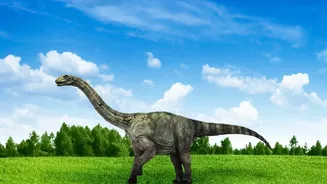
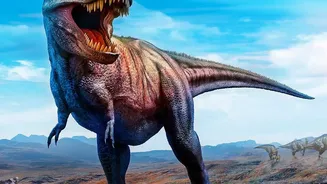
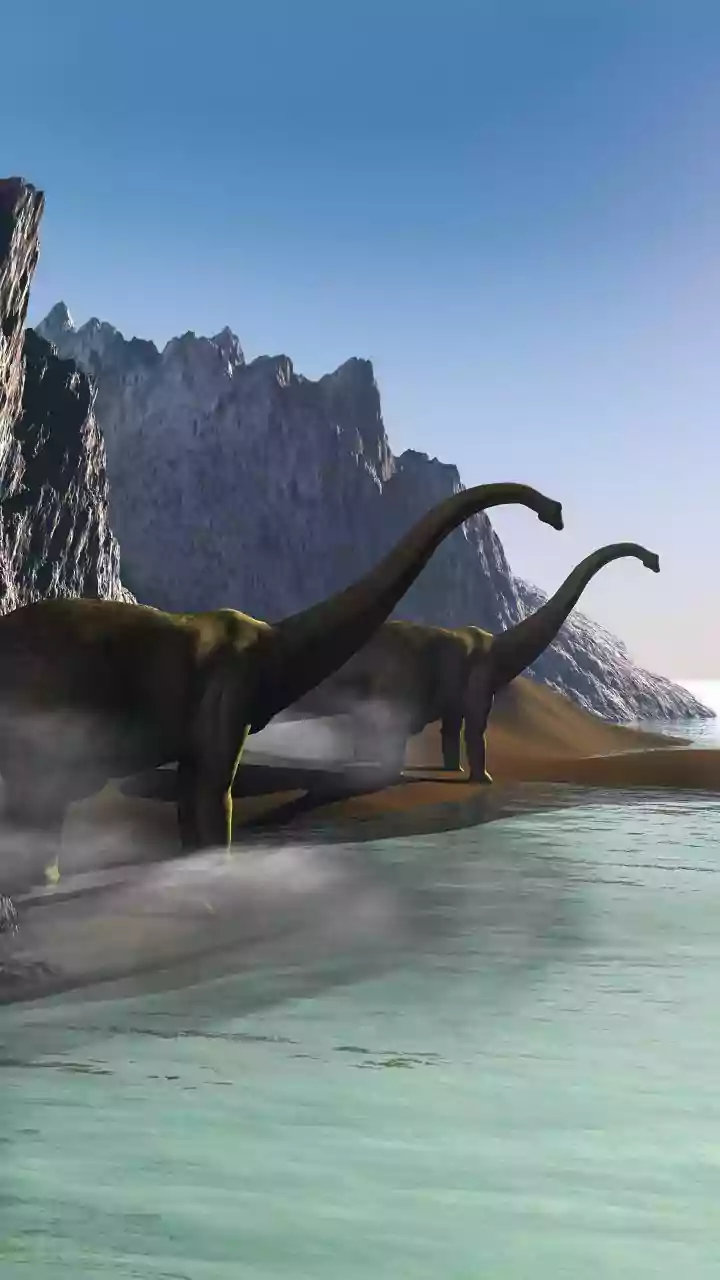
For millions of years, dinosaurs came in all shapes and sizes, from the colossal Argentinosaurus to imposing predators like T-Rex. Yet, paleontologists have long been puzzled by a conspicuous gap in the fossil record: a near-total absence of truly tiny
dinosaurs, the size of a mouse or shrew. While the smallest known non-avian dinosaurs weighed around 400-500 grams, comparable to a large rabbit, this is hundreds of times heavier than the smallest mammals and reptiles living today. This anomaly is strange because in most modern ecosystems, small-bodied species are the most numerous and diverse. A new study published in the journal Evolution sought to understand why dinosaurs, for all their success, never seemed to shrink down to fill these miniature roles.
It’s Not Biology, It’s Ecology
Researchers from Princeton University and the American Museum of Natural History used mathematical models to see if dinosaur biology was the limiting factor. These models, which link an animal's body size to how efficiently it can convert food into offspring, worked well for predicting the size ranges of birds, mammals, and turtles. However, the models failed to explain the dinosaur size gap. In fact, based on their physiology, the models predicted there should have been dinosaurs in the 100 to 300-gram range, but no fossils have ever been found. This suggests the reason for the missing tiny dinosaurs wasn't an internal, biological constraint but an external, ecological one. Something else was already occupying those small ecological niches and seemingly preventing dinosaurs from moving in.
The Unexpected Competitors: Early Mammals
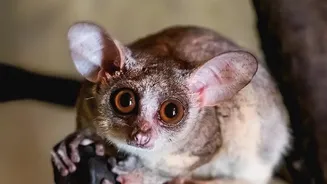
The prime suspects for this ecological gatekeeping are our own ancestors: the early mammals. Throughout the Mesozoic Era, while dinosaurs dominated the large-animal niches, early mammals were already thriving in the undergrowth. Most were tiny, shrew-sized creatures, busy carving out a living by hunting insects and scavenging in a world ruled by giants. The new research hypothesizes that these mammals were so effective and numerous in the small-prey-hunting niches that they essentially locked dinosaurs out. This presents a fascinating reversal of the classic evolutionary narrative. We often hear that giant dinosaurs kept mammals from growing large, but it now seems that tiny mammals may have returned the favor by preventing dinosaurs from ever getting truly small.
A New View of Ancient Ecosystems
This finding reframes our understanding of the world before the asteroid impact. It wasn't simply a case of dinosaurs reigning supreme while mammals waited for their turn. Instead, it was a complex ecosystem with intense competition at all size levels. Large dinosaurs likely outcompeted mammals for large-body niches, while small mammals outcompeted dinosaurs for small-body niches. This dynamic created a world where each group held the other in check at opposite ends of the size spectrum. It also helps explain how birds, the direct descendants of dinosaurs, were able to break this mold. By evolving flight, birds gained access to new resources and niches, allowing them to rapidly diversify and shrink to sizes far smaller than any of their land-bound dinosaur relatives ever achieved.