




The New Lunar Gold Rush
For decades, the Moon was seen as a dusty, dry, and desolate world. But recent discoveries have transformed our understanding. NASA’s Artemis program is setting its sights on the lunar South Pole for a very specific reason. This region is home to permanently
shadowed regions (PSRs), craters and depressions that haven't seen direct sunlight in billions of years. Within these super-chilled areas, scientists have confirmed the presence of water ice mixed in with the lunar soil, or regolith. This resource is considered the single most important factor for establishing a long-term human presence, turning the South Pole into the most valuable real estate off Earth. Instead of short visits like the Apollo missions, the goal is to build a sustainable outpost, known as the Artemis Base Camp.
Blueprint for a Lunar Outpost
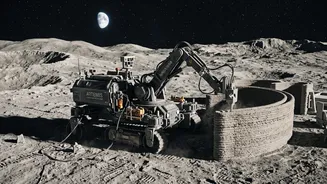
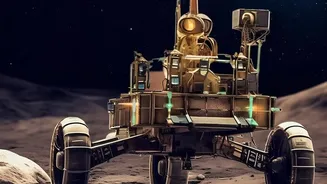
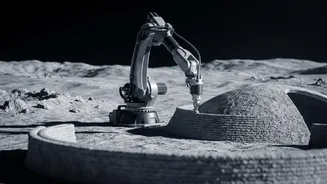
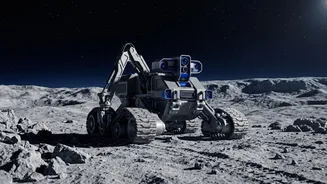
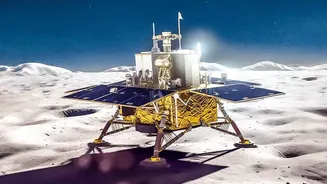
The Artemis Base Camp won't be a sprawling city overnight, but a strategically planned, phased development. The initial concept includes a few core elements: a lunar terrain vehicle (LTV) for short trips, a larger pressurized rover that acts as a mobile home for longer expeditions, and a foundational surface habitat where astronauts will live and work. NASA plans to build up these capabilities over time, with robotic missions laying the groundwork by testing technologies and mapping resources. The long-term vision, scheduled to evolve through the 2030s, is a permanent outpost that can support crews for months at a time, complete with its own power systems—potentially including fission power—and communication networks. This base will serve as a hub for science and exploration, allowing us to unlock the secrets of the Moon's history.
Living Off the Land, Lunar Style
The game-changer for lunar settlement is the ability to use local resources, a concept known as In-Situ Resource Utilization (ISRU). The water ice at the South Pole is the primary target. Once mined, this ice can be melted for drinking water and, more critically, split into its component elements: hydrogen and oxygen. Oxygen is obviously essential for breathable air inside habitats. But when you have both liquid oxygen and liquid hydrogen, you have the most powerful chemical rocket propellant known. This means the Moon could become a refueling station. Instead of launching everything from Earth—a process governed by the punishing 'tyranny of the rocket equation'—future missions could top up their tanks at the Moon for journeys to Mars and beyond. This dramatically reduces the cost and complexity of deep space exploration.
The Hurdles Ahead
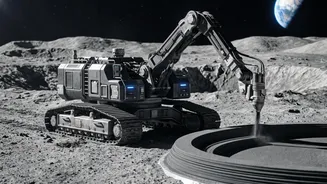
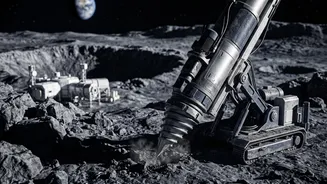
The vision is compelling, but the challenges are immense. The same permanently shadowed regions that preserve the ice are among the coldest places in our solar system. Engineering hardware that can operate in these extreme temperatures is a major hurdle. Lunar dust, or regolith, is another significant problem; it's as fine as powder but as abrasive as tiny shards of glass, posing a threat to both equipment and astronaut health. Furthermore, extracting the water isn't as simple as drilling into a frozen lake. The ice is mixed with soil, and may contain other volatile compounds, requiring complex mining, heating, and purification processes before it can be used. NASA and its international and commercial partners are currently developing and testing robotic prospectors, like the now-canceled but influential VIPER rover, and new drilling and processing technologies to solve these very problems.