





The Beginning: Warming Temperatures and Melting Ice
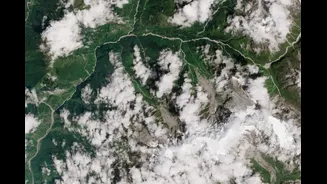
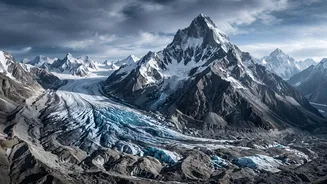
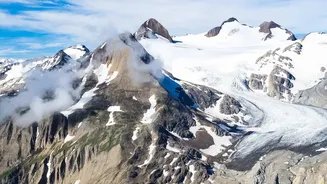
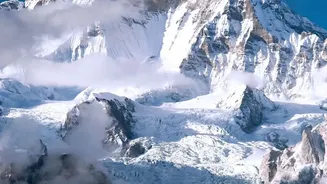
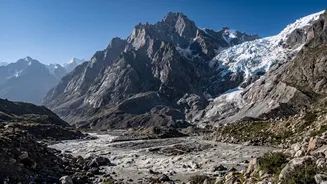
The entire process starts with a fundamental global shift: rising temperatures. The Himalayas are warming at a rate significantly faster than the global average. This accelerated warming has a direct and visible impact on the region's thousands of glaciers.
As temperatures climb, these massive rivers of ice begin to melt and retreat at an alarming pace. This isn't just a slow, gentle thaw; it's a process that fundamentally destabilises the mountain environment. The melting of permafrost—the frozen 'glue' that holds rock and soil together on steep slopes—further weakens the mountainsides, making them more prone to collapse. This sets a precarious stage for everything that follows.
The Trigger: A Sudden, Violent Collapse
The next link in the chain is the trigger event. This is often a dramatic and violent moment where a massive chunk of a glacier, sometimes along with the underlying bedrock, breaks free. This collapse can be so powerful that it registers as a significant seismic event, initially mistaken for an earthquake. The trigger itself can be a rockslide, a snow avalanche, or simply the glacier's own instability due to melting. On August 26, 2026, a colossal section of a glacier and rock near the Nepal-Tibet border sheared off, crashing into the valley below. This single event unleashed a torrent of energy, transforming a solid mass of ice and rock into a mobile, destructive force.
The Cascade: A Debris Flow Gathers Force
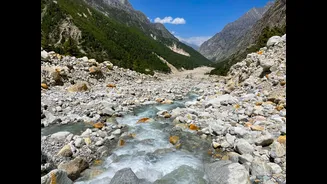
What begins as a fall of ice and rock does not stay that way for long. As this mass thunders down the steep Himalayan slopes, it becomes a cascading hazard. The initial collapse generates immense frictional energy, melting ice and gathering everything in its path: water, mud, sediment, and massive boulders. This transforms the event into an extraordinarily large and mobile debris flow, a fast-moving slurry that has been described as being like liquid concrete. This mixture is far more destructive than a simple water flood. In some cases, the debris can temporarily dam a river, causing water to build up behind it before the natural dam catastrophically fails, releasing an even greater and more powerful flood wave downstream.
The Deluge: A Wall of Water Hits Communities
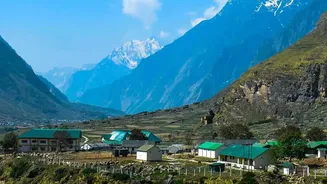
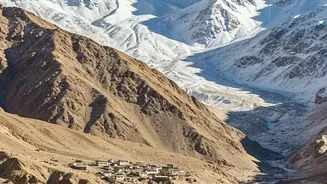
The final, devastating stage is when this tsunami of debris reaches populated areas. The speed and power are almost unimaginable. Water levels in rivers can rise by several metres in just half an hour. This wall of water, rock, and mud destroys everything in its path—homes, bridges, roads, and crucial infrastructure like hydropower plants. For downstream communities, there is often little to no warning. Entire villages can be cut off or wiped out in minutes. The aftermath brings its own set of dangers, including the risk of secondary floods from newly formed, unstable lakes and an increased threat of further landslides in the now-destabilised landscape.
A Shared Risk for the Himalayan Region
This chain of events is not unique to Nepal. The same hazardous processes are a growing threat across the entire Himalayan arc, including in the Indian states of Uttarakhand and Himachal Pradesh. The 2021 Chamoli disaster in Uttarakhand was a chillingly similar event, where a rock and ice avalanche triggered a devastating debris flow. As glaciers continue to retreat due to climate change, the frequency of these cascading disasters is expected to rise. Experts stress that these are no longer isolated incidents but the new reality of a warming world, highlighting the urgent need for robust early warning systems, regional cooperation, and a global response to address the root cause of climate change.