





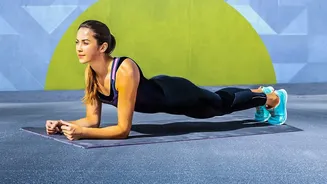

More Than Just a Plank
You are likely familiar with the standard plank, a foundational exercise for core strength. The high plank with shoulder taps takes this a step further. It's a dynamic, anti-rotational movement that challenges your body in new ways. By lifting one hand
to tap the opposite shoulder, you create an unstable, three-point base. This forces the deep muscles in your core and shoulder to work overtime to keep your body stable and prevent your hips from twisting or sagging. It’s this fight against rotation that builds exceptional control and strength.
Awakening Your Deep Core
When trainers talk about the 'core', they mean more than just the six-pack muscles (rectus abdominis). Deep core muscles, like the transverse abdominis and obliques, act as a natural corset for your spine. The primary job of these muscles is to resist movement and protect your back. Plank shoulder taps are a masterclass in this function. As you lift a hand, your core must instantly brace to stop your torso from rotating toward the floor. This builds anti-rotational strength, which is crucial for everything from lifting groceries to performing complex athletic movements safely and powerfully.
Forging Shoulder Stability
Shoulder stability isn't just about raw strength; it's about control. It’s the ability of the smaller stabilising muscles around your shoulder girdle, including the rotator cuff, to keep the joint secure and moving correctly. During a shoulder tap, the arm that remains on the ground is doing immense work. It must support a significant portion of your body weight unilaterally, firing up the deltoids, triceps, and, most importantly, the stabilising muscles that keep your shoulder socket secure. This builds strength and endurance in the shoulder, improving posture and reducing the risk of injury.
How to Perform It Perfectly
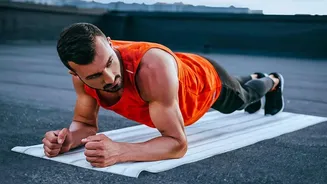
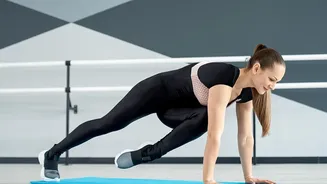
Proper form is everything. Rushing through the movement or using poor technique will negate the benefits and could lead to strain. Start in a high plank position, as if you're at the top of a push-up. Your hands should be directly under your shoulders, and your feet should be about shoulder-width apart. Before you move, engage your core by drawing your belly button in, and squeeze your glutes. Slowly lift your right hand and tap your left shoulder, then place it back down with control. Repeat with your left hand tapping your right shoulder. The key is to minimise any movement in your hips. Imagine you have a glass of water balanced on your lower back.
Common Mistakes to Avoid
The most frequent error is rocking the hips from side to side. This means your core has disengaged, and you're not getting the anti-rotational benefit. To fix this, widen your feet for a more stable base and consciously squeeze your glutes and abs. Another common mistake is rushing the taps, which turns the exercise into a momentum-based movement rather than a controlled one. Slow down. Also, avoid letting your lower back sag or your butt stick up in the air; your body should maintain a straight line from your head to your heels throughout.
Ways to Modify and Progress
If you're new to the exercise, start with your feet wider apart to create a more stable base. You can also perform the movement from your knees to reduce the load while you master the core engagement. To make it more challenging, bring your feet closer together. This narrows your base of support and dramatically increases the anti-rotational demand on your core. Another way to progress is to slow the movement down, even adding a one or two-second pause as you tap your shoulder, maximising the time under tension for the supporting arm and core.