





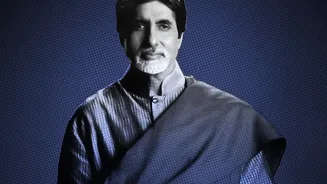

A Gamble That Changed Television
When Kaun Banega Crorepati (KBC) premiered on July 3, 2000, the Indian television landscape was a different world. Primetime was dominated by family soaps, and a high-stakes quiz show was considered a massive gamble. Adapted from the British hit 'Who
Wants to Be a Millionaire?', KBC was reportedly ten times more expensive than any other show on air at the time. Many in the industry were skeptical, questioning the wisdom of placing a quiz show in a prime slot and casting a film superstar as the host. Yet, the creators at Star Plus pushed forward, betting that the combination of a thrilling format and a beloved celebrity could redefine appointment television. From its very first episode, it was clear the gamble had paid off, as KBC shattered viewership records and became an instant success.
The Amitabh Bachchan Effect
It is impossible to separate the story of KBC from its legendary host, Amitabh Bachchan. In 2000, Bachchan was at a low point in his career, facing financial difficulties. His decision to host a television show, then seen as a step down for a film icon, was a significant risk. However, his charisma, gravitas, and unique ability to connect with ordinary people proved to be the show's masterstroke. Addressing contestants with respect and the computer with a friendly "Computer-ji," Bachchan transformed the host's role from a mere quizmaster to a compassionate guide. He listened to their stories, celebrated their small victories, and shared in their disappointments. The show single-handedly revived his career and cemented his status as the undisputed king of not just the big screen, but the small screen too.
Capturing the Indian Dream
At its heart, KBC's success lies in its powerful connection to the aspirations of a nation. The 'hot seat' became a symbol of opportunity, a place where knowledge was the great equalizer. It didn't matter if you were a teacher from a small village or a doctor from a metropolis; on KBC, your general knowledge gave you a fair shot at a life-changing sum of money. The show celebrated learning and made it aspirational, sending a powerful message that knowledge could lead to tangible rewards. The personal stories of contestants—their struggles, dreams, and motivations—became a central part of the narrative, allowing millions of viewers to see themselves in the person on screen. For many, winning even a small amount meant funding an education, clearing a debt, or starting a business.
A Shared Family Ritual
In an era of fragmenting media consumption, KBC achieved something rare: it brought entire families together. Across the country, households would gather every weeknight, with grandparents, parents, and children all watching the same screen, holding their breath together with each question. It became a cross-generational event, a clean, engaging, and educational program that everyone could enjoy. The show's questions, drawing from Indian history, mythology, and pop culture, sparked conversations and made learning a collective activity. This shared viewing experience turned KBC from a mere television show into a national ritual, deeply embedding it into the fabric of Indian domestic life.
Evolving to Stay Relevant
A show does not last for over two decades without adapting. While the core format remains, KBC has consistently evolved to keep pace with the times. Over the years, it has moved networks from Star Plus to Sony TV, introduced new lifelines, and adjusted the prize money, which at one point reached a jackpot of ₹7 crore. It embraced technology, integrating social media and digital 'Play Along' features on apps like SonyLIV to engage viewers beyond the television screen. The show has also updated its themes and rules for new seasons to reflect a changing world, ensuring that even after more than 1,000 episodes, the format feels fresh and compelling for a new generation of viewers.