




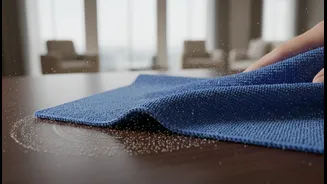


The Golden Rule: Work With Gravity
The logic behind top-to-bottom cleaning is rooted in basic physics. Every particle of dust, dander, crumbs, and debris is subject to gravity. When you dust a ceiling fan, wipe the top of a bookshelf, or clean a high cabinet, loose particles inevitably
fall downward. If you've already cleaned the surfaces below, you have just created more work for yourself by forcing a do-over. By starting at the highest point in a room and methodically working your way down, you ensure that dislodged dirt lands on surfaces you have yet to clean. This systematic approach is a cornerstone of professional cleaning because it maximizes efficiency, prevents the re-contamination of clean areas, and can reduce overall cleaning time by a significant margin. You clean each surface just once, which is the very definition of working smarter, not harder.
Putting the Principle into Practice
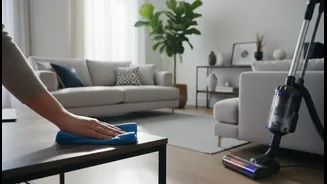
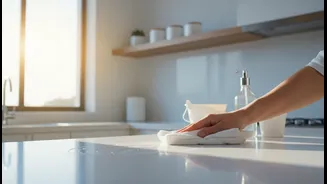
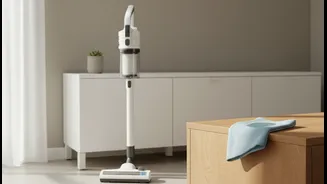
Applying the top-down rule is straightforward. Before you begin, do a quick declutter of the room to clear surfaces. Then, start at the ceiling level. Use a duster with an extendable handle to tackle cobwebs in corners, dust on light fixtures, and grime on ceiling fan blades. From there, move to the upper portions of the walls, picture frames, and the tops of tall furniture like bookshelves or kitchen cabinets. Next, address mid-level surfaces. This includes wiping down tables, countertops, desks, and other furniture. Finally, once all upper and middle zones are complete, it's time to clean the floor. All the dust and debris from your previous work has now settled, and you can vacuum, sweep, or mop it all away in one final, effective pass.
A Room-by-Room Guide
In the Living Room: Start by dusting ceiling fans, light fixtures, and crown moulding. Move to shelves and the tops of entertainment centres. Wipe down electronics (spraying the cloth, not the device), coffee tables, and end tables. Finish by vacuuming the floor and any upholstered furniture where dust may have settled. In the Kitchen: Begin with the tops of your upper cabinets, which can accumulate a sticky mix of dust and grease. Wipe down the cabinet faces, then the backsplash and countertops. Clean your stovetop and other appliances. The last step should always be mopping the floor. In the Bathroom: Dust light fixtures and vents first. Clean the mirror, then wipe down the vanity and countertop. Scrub the shower and toilet. The final task is to clean the floor, ensuring you capture all the hair and dust that has fallen.
Pro Tips for Peak Efficiency
To further enhance your top-down cleaning, professionals often pair it with a few other principles. One is the "left to right" or clockwise method. Pick a starting point in the room, typically the door, and clean in a circle, moving from top to bottom in each section. This ensures you don’t miss any spots. Another key rule is to perform dry tasks before wet ones. Always do your dusting before you start wiping surfaces with cleaning spray or mopping floors. This prevents dust from turning into a muddy residue on damp surfaces, which is harder to remove. Finally, gather all your supplies before you start. Having your dusters, microfiber cloths, cleaning solutions, and vacuum ready prevents you from wasting time walking back and forth.