





The Supply Chain Squeeze
The primary hurdle for India's electric vehicle ambitions lies in its supply chain. The industry remains critically dependent on other countries, especially China, for the most vital component: the lithium-ion battery cell. This reliance creates significant
vulnerability to geopolitical tensions, fluctuating raw material costs, and international shipping disruptions. Automakers report that demand for popular models often outpaces their production capacity, leading to longer waiting periods for customers. Adding to the pressure are persistent semiconductor constraints that affect the advanced electronics inside every modern vehicle. While the government has initiated ambitious plans like the Production Linked Incentive (PLI) scheme for Advanced Chemistry Cell (ACC) manufacturing to boost domestic production, progress has been slow. Reports from early 2026 indicate that the scheme has achieved only a tiny fraction of its manufacturing capacity targets, meaning India's dependence on imported cells remains nearly total for now.
The Unstoppable Engines of Growth
Despite these headwinds, the EV market’s forward momentum is undeniable. A powerful combination of factors is fuelling this expansion. Government incentives, through central schemes like FAME and various state-level policies, have been instrumental in lowering the upfront cost for consumers. The upcoming FAME-III policy is expected to continue this support, primarily for the two- and three-wheeler segments that form the backbone of the market. Perhaps the most significant driver is the rising and volatile cost of petrol and diesel. As fuel prices climb, the lower running costs of electric vehicles become increasingly attractive to cost-conscious Indian consumers. This economic reality, combined with growing environmental awareness and a wider availability of models, is turning EV consideration into concrete sales.
Two Wheels Leading the Charge
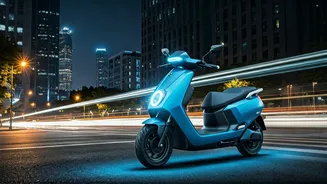
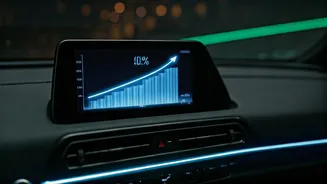
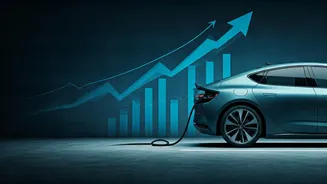
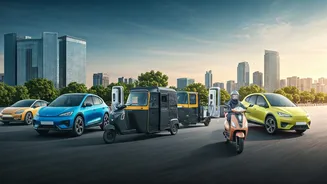
To truly understand India's EV boom, one must look at the two-wheeler segment. Electric scooters and motorcycles are not just part of the story; they are the main characters, accounting for the vast majority of all EV sales. In the first half of 2026, sales in this category surged, with year-on-year growth in June hitting over 60 percent. For the first time, EV penetration in the overall two-wheeler market has crossed the 10 percent threshold. This segment's success is driven by its perfect fit for Indian commuting patterns: shorter daily distances, the convenience of home charging, and a much lower price point compared to electric cars. The intense competition among brands like TVS, Bajaj, and Ather Energy has also spurred innovation and kept prices competitive, creating a vibrant market where consumer demand continues to outpace supply.
Building Resilience with 'Make in India'
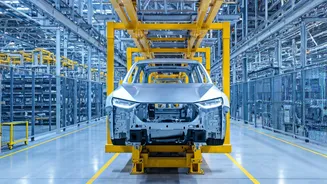
The industry and government recognise that long-term momentum cannot rely on imported components. The strategic answer is localisation. The 'Make in India' initiative is at the heart of the effort to build a self-reliant EV ecosystem, from raw materials to finished vehicles. Even with the slow start for the battery PLI scheme, the policy framework is designed to encourage companies to set up domestic manufacturing for cells, electronics, and other critical parts. Beyond just assembly, there is a push for Indian manufacturers to design vehicles that are more efficient and better suited to local conditions, rather than simply adopting designs based on large, imported batteries. Furthermore, the industry is beginning to explore alternative battery chemistries, such as sodium-ion, as a potential long-term strategy to reduce the dependence on lithium and diversify the supply base.