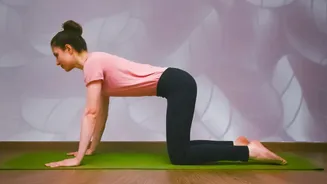







Understanding Pilates: The Art of Alignment
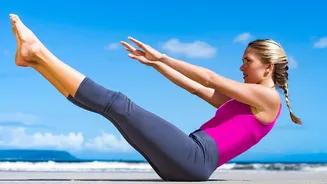
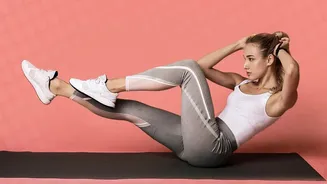
Pilates is a low-impact exercise method focused on controlled, precise movements and breathwork. Its primary goal is to strengthen the body from the inside out, starting with the deep stabilizing muscles of your core, often called the "powerhouse". This
includes your abdominals, lower back, hips, and glutes. The six core principles of Pilates are concentration, control, centering, flow, precision, and breathing. By emphasizing proper alignment and muscle engagement, Pilates enhances body awareness, improves posture, and increases flexibility. It's less about high-intensity sweat and more about retraining your body to move with efficiency and stability, making it a powerful tool for injury prevention and rehabilitation.
Understanding Circuit Power: The Engine of Efficiency
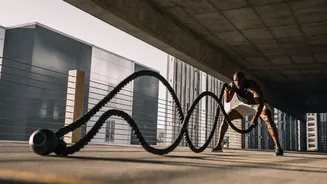
Circuit training is a form of conditioning that involves performing a series of different exercises in succession with minimal rest in between. A typical circuit combines strength training and cardiovascular exercises to target multiple muscle groups in a single session. This high-intensity approach keeps your heart rate elevated, making it an extremely efficient way to burn calories and improve cardiovascular health. Workouts can be structured by a set number of repetitions for each exercise or by timed intervals, often lasting from 30 to 90 seconds per station. The 'power' in circuit training comes from this relentless pace, designed to build muscular endurance, enhance strength, and maximize fat loss in a condensed timeframe.
For Posture and Core Strength: Choose Pilates
If your main goal is to stand taller, alleviate back pain, and build a rock-solid core, Pilates is the clear frontrunner. Its laser focus on the deep muscles that support your spine and pelvis is unmatched. Exercises in Pilates are specifically designed to improve postural alignment by strengthening neglected muscles and increasing awareness of how you hold your body. This helps correct common issues like rounded shoulders or a forward-head posture. While circuit training does engage the core, its primary focus is on larger muscle groups and cardiovascular intensity. Pilates targets the foundational 'inner corset' of muscles, providing stability for every other movement you make.
For Weight Loss and Cardio Health: Choose Circuit Training
When it comes to shedding pounds and boosting heart health, the high-intensity nature of circuit training gives it a distinct advantage. By keeping your heart rate up, circuits burn a significant number of calories both during and after the workout—a phenomenon known as the afterburn effect. Studies have shown that high-intensity workouts are highly effective for reducing body fat. While advanced Pilates can be challenging, its calorie burn is generally lower, comparable to moderate stretching or speed walking. Circuit training's combination of resistance and cardio provides a more potent stimulus for weight loss and improving cardiovascular endurance.
For Muscle Definition: It's Complicated
Both workouts can lead to a more toned appearance, but they achieve it differently. Circuit training, especially with weights, is more effective for hypertrophy—the process of increasing muscle size. It builds strength and muscle mass more overtly. Pilates, on the other hand, focuses on creating long, lean muscle by improving muscular endurance and tone through controlled movements, often using bodyweight or light resistance. Many people feel results from Pilates quickly, even if visible changes in muscle definition take longer. If you want to build noticeable muscle, circuits are your best bet; if you desire a sculpted, defined look without bulk, Pilates is an excellent choice.
The Best Routine Might Include Both
You don't have to choose just one. In fact, Pilates and circuit training complement each other beautifully. Combining the two creates a balanced fitness regimen that builds a body that is both strong and resilient. The core strength, flexibility, and body awareness gained from Pilates can improve your form and reduce the risk of injury during high-intensity circuit workouts. In turn, the cardiovascular and strength-building power of circuits addresses areas where Pilates is less focused. A great weekly schedule could involve two days of circuit training for power and cardio, and two days of Pilates for alignment, core work, and active recovery.