

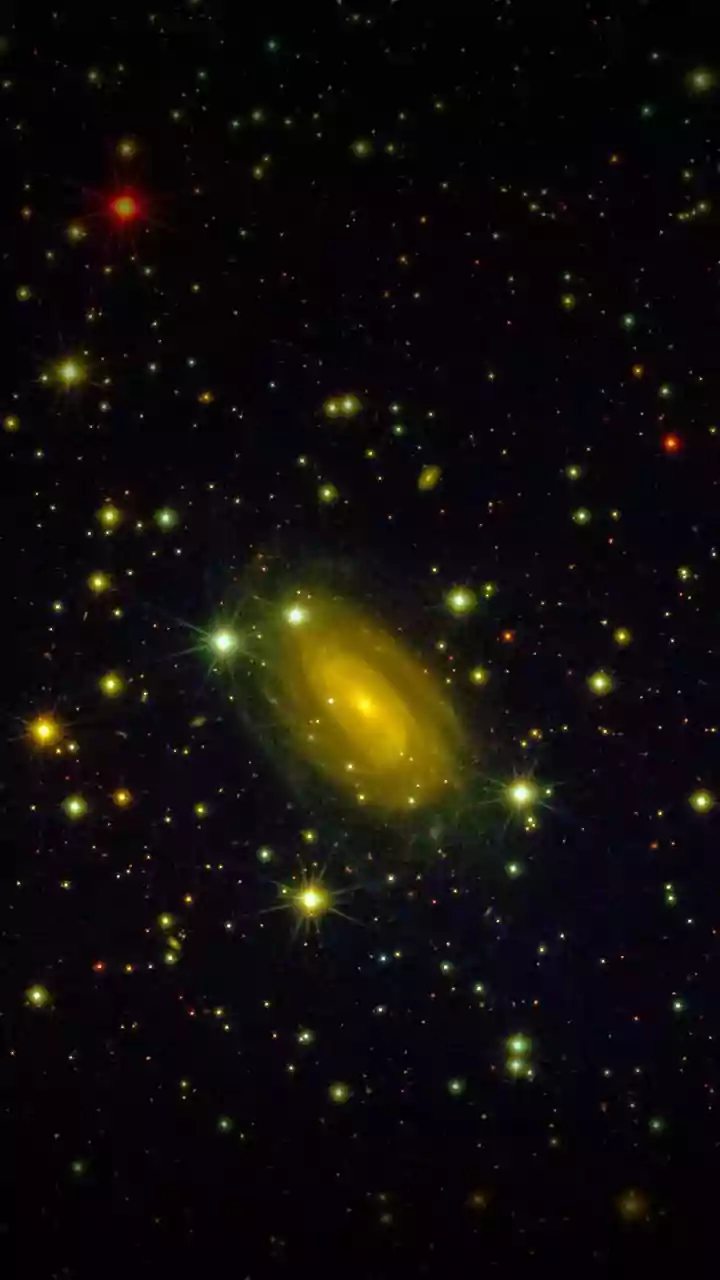








A Veteran Observatory's Descent
Launched in 2004, the Neil Gehrels Swift Observatory has been one of astronomy's most valuable assets, designed to study the most powerful explosions in the universe: gamma-ray bursts. Having massively outlived its planned two-year mission, the space
telescope has been operating for over two decades. But now, its journey is nearing an unexpected end. The satellite is losing altitude much faster than anticipated. Without its own propulsion system, Swift relies on a stable orbit to survive, and that stability is gone. Its orbit has decayed from an initial 600 kilometers down to a critical level, putting it on a collision course with Earth's upper atmosphere.
The Sun Is the Culprit
The primary cause of Swift's accelerated descent is our own Sun. The Sun is currently in an active phase of its 11-year cycle, known as Solar Cycle 25. This period of high activity, which peaked in 2024, releases more energy and radiation, including extreme ultraviolet light. This energy heats Earth's outermost atmosphere, the thermosphere, causing it to expand or 'puff up'. For satellites in low Earth orbit like Swift, this expanded atmosphere creates significantly more friction, or drag. This increased drag acts like a brake, slowing the satellite and causing its orbit to decay at a much faster rate than engineers had planned for. This solar-driven effect has put Swift on an orbital 'death spiral' years ahead of schedule.
A Legacy of Cosmic Discovery
Losing Swift wouldn't just be the loss of a piece of hardware; it would mean the end of a unique scientific powerhouse. Swift's primary mission was to rapidly detect gamma-ray bursts, pivot automatically, and study their fading afterglows across multiple wavelengths. Its robotic speed and multi-instrument design were revolutionary, allowing it to provide real-time alerts to observatories worldwide. It has detected thousands of these cosmic explosions, providing crucial data on events like the collapse of massive stars and the merger of neutron stars. With no equivalent telescope currently in operation or a replacement funded, the potential loss of Swift would create a significant gap in our ability to monitor the violent and transient universe.
An Unprecedented Rescue Mission
Instead of letting the acclaimed observatory burn up, NASA has embarked on a first-of-its-kind rescue mission. The agency awarded a contract to the private company Katalyst Space to build and launch a robotic servicing spacecraft named LINK. Launched on July 3, 2026, the LINK spacecraft is designed to chase down Swift, grab onto it with three robotic arms, and then use its own thrusters to push the observatory into a higher, more stable orbit. This daring maneuver has never been attempted on a satellite that was not designed for docking or servicing. The goal is to raise Swift's orbit enough to extend its scientific life for another decade.
A Growing Problem in Low Earth Orbit
Swift's predicament is a stark warning for the thousands of other satellites operating in low Earth orbit. The surprisingly strong Solar Cycle 25 has been affecting orbital assets across the board, from scientific missions to commercial constellations. Studies have shown that satellites have been decaying at a faster rate than many models predicted, leading to shorter mission lifetimes and costing operators hundreds of millions of dollars. As humanity becomes more reliant on space-based infrastructure for communication, navigation, and Earth observation, understanding and forecasting the Sun's impact becomes ever more critical to protecting these vital resources from an early, fiery demise.