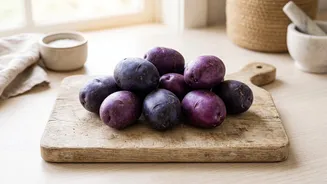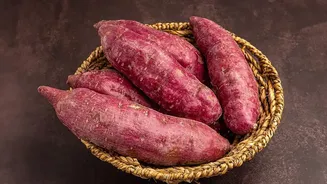








The humble potato, a staple in countless Indian kitchens, has a vibrant new cousin. Scientists have developed a purple potato, not just as a novelty, but as a powerful tool in the fight against malnutrition using a technique called biofortification.
Introducing Kufri Jamunia
Developed
by the ICAR-Central Potato Research Institute (ICAR-CPRI) in Shimla, this new variety is named Kufri Jamunia. Officially released in 2024, it stands out with its deep purple skin and, more importantly, its purple flesh. This isn't just for looks; the colour is a sign of its rich nutritional content. Kufri Jamunia is the latest in a series of coloured potatoes from ICAR-CPRI, which also includes the purple-skinned Kufri Neelkanth (2018) and the red-skinned Kufri Manik (2021). However, with its purple-through-and-through profile, Kufri Jamunia represents a significant step forward in breeding for nutrition.
The Science of Biofortification
Kufri Jamunia is a prime example of biofortification. This is the process of increasing the nutritional value of crops through conventional plant breeding or other agricultural practices. Instead of adding nutrients to food during processing (like in fortified flour or salt), biofortification builds them directly into the crop as it grows. This approach is considered a sustainable and cost-effective strategy to tackle 'hidden hunger'—a widespread public health issue where people get enough calories but lack essential vitamins and minerals. By enhancing a staple food like the potato, these vital nutrients can reach a large population without requiring major changes to dietary habits.
The Power of Purple Pigments
The striking purple colour comes from natural pigments called anthocyanins, the same powerful antioxidants found in jamun, blueberries, and blackberries. Antioxidants help protect the body's cells from damage caused by free radicals, and diets rich in them are linked to numerous health benefits. Studies on anthocyanin-rich foods suggest they may contribute to better heart health, including lower blood pressure, and have anti-inflammatory properties. Kufri Jamunia boasts a significant amount of these compounds, with about 42 mg per 100 grams in its flesh.
A Nutritional Upgrade
Beyond its antioxidant content, Kufri Jamunia is packed with other vital micronutrients. Compared to conventional potato varieties, it delivers significantly more iron and zinc. According to data from the Press Information Bureau, 100 grams of Kufri Jamunia contains around 3.22 mg of iron and 2.28 mg of zinc. It is also rich in Vitamin C, containing about 42.75 mg per 100g. This enhanced profile makes it a potent tool for addressing common deficiencies in iron and zinc, which are prevalent across India and contribute to health issues like anaemia.
From the Lab to the Land
For any new crop to make an impact, it must be viable for farmers. Kufri Jamunia has shown promising results in this regard. It is a high yielding variety, capable of producing 32–35 tonnes per hectare under normal farming conditions. It has a medium maturity cycle of 90–100 days and is suitable for cultivation across the North Indian plains, including states like Punjab, Haryana, Uttar Pradesh, and Bihar. The variety also has good storage qualities, which is crucial for reducing post harvest losses and ensuring a stable supply. Its unique colour and mealy texture make it versatile for cooking, suitable for everything from traditional curries and parathas to processed foods like naturally coloured flour.