







The Rise of the Algorithmic Gatekeeper
In today's competitive job market, a majority of large companies use some form of artificial intelligence in their recruitment process. These systems, often part of an Applicant Tracking System (ATS), are designed to bring efficiency to the overwhelming
task of sorting through thousands of applications. They parse resumes for keywords, analyze qualifications, and sometimes even conduct initial video interviews, scoring candidates before a human recruiter sees the application. Recent data shows that around 88% of companies now use AI for initial candidate screening. The goal is to streamline hiring by automating high-volume, repeatable tasks, allowing human teams to focus on more strategic work.
The Promise: Efficiency and Objectivity
Proponents of AI in hiring point to several key benefits. First and foremost is speed. AI can screen resumes in a fraction of the time it would take a human, reducing the time-to-hire and helping companies secure talent faster. There's also the promise of greater objectivity. By focusing on defined skills and qualifications, a well-designed AI can theoretically reduce the unconscious human biases that can creep into hiring decisions, creating a more level playing field. For companies, this translates into potential cost savings and access to a wider, more diverse talent pool. For candidates, it can mean a smoother, more responsive application process with faster communication.
The 'Experience' Blind Spot
Despite its power, AI has a significant blind spot: understanding the nuanced value of deep experience. Algorithms are trained on data, and that data often reflects past hiring patterns. This can lead to what's known as algorithmic bias, where the system unintentionally penalizes candidates who don't fit a specific, historically successful mold. An experienced professional might have a non-linear career path, a wealth of soft skills like leadership and mentorship, or strategic insights that are not easily captured by keywords on a resume. AI screeners might incorrectly filter out these candidates because their profiles don't perfectly match the rigid criteria of a job description, which is often geared toward more straightforward career progressions. This creates a system that can excel at pattern matching but often fails at recognizing wisdom.
A Growing Divide in the Workforce
Recent workforce data highlights a fascinating trend: companies adopting AI are growing their headcounts faster than non-adopters, but this growth is not evenly distributed. Since late 2022, senior-level employment at these firms has grown significantly more than junior roles. One Stanford study found that while junior roles in AI-exposed industries saw a decline, positions for more experienced workers remained largely stable. This suggests that while AI may be automating some entry-level tasks, companies are increasingly reliant on experienced staff to manage, interpret, and leverage these powerful new tools. The most crucial skills are becoming less about routine tasks and more about human-centric abilities like critical thinking, strategic problem solving, and emotional intelligence.
HumanintheLoopTheBestofBothWorlds
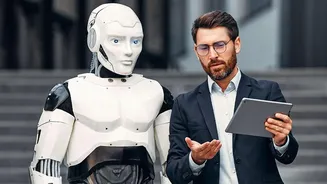
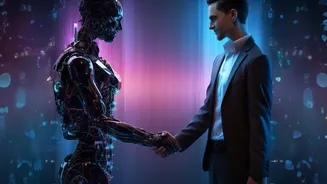
The most effective approach to AI in hiring isn't about replacement, but collaboration. The emerging best practice is a 'humanintheloop' model, where AI serves as a powerful assistant, not the final decisionmaker. In this framework, AI handles the initial highvolume screening to identify a qualified pool of candidates. Then experienced human recruiters and hiring managers step in to apply the context intuition and nuanced judgment that algorithms lack. They assess cultural fit leadership potential and the complex interplay of skills that define a great senior hire. Research shows that an overwhelming majority of recruiters around 85% want to retain final authority over AI recommendations underscoring the enduring value of human expertise.