







A Leap in 'Mind-Reading' Technology
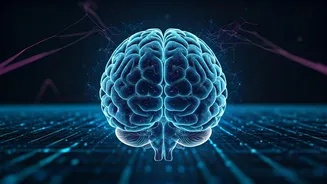
Researchers at Meta have unveiled a new system, Brain2Qwerty v2, that represents a significant advance in the field of brain-computer interfaces (BCIs). Announced in late June 2026, this technology can translate a person's brain activity into full sentences
of text with much greater precision than previous non-invasive methods. The key innovation is its improved accuracy. The system achieved an average word accuracy of 61%, a massive improvement over the roughly 8% achieved by other non-invasive techniques. For the best-performing participant in the study, the accuracy was even higher, reaching 78%. This means more than half of the sentences were decoded with one word error or less. This brings non-surgical methods closer to the performance levels that were once only possible through invasive brain implants, which require complex and expensive surgery.
How AI Translates Brainwaves to Words
The magic behind this breakthrough lies in a sophisticated, multi-layered AI approach combined with a non-invasive brain scanning technique called magnetoencephalography (MEG). Unlike implants, MEG uses a helmet-like device to measure the tiny magnetic fields produced by the brain's neuronal activity. To train the AI, nine healthy volunteers each spent around 10 hours wearing an MEG device while typing out sentences, creating a dataset of 22,000 sentences synced with their brain signals. The AI system doesn't just match brain signals to letters. First, deep learning models decode the raw brain signals. Then, other AI systems, including powerful Large Language Models (LLMs) similar to those behind popular chatbots, take over. These LLMs use their understanding of language and semantic context to assemble the jumble of decoded signals into coherent, structured sentences. It marks the first successful use of an LLM to turn noisy brain activity into intelligible text.
A Beacon of Hope for Millions
The ultimate goal of this research is to restore communication for people who cannot speak due to conditions like amyotrophic lateral sclerosis (ALS), stroke, brain lesions, or locked-in syndrome. For these individuals, current communication aids can be slow and cumbersome. A reliable, non-invasive brain-to-text interface could dramatically improve their quality of life, allowing them to express their thoughts, needs, and emotions more naturally and independently. By making the underlying code for their system open source, Meta hopes to accelerate progress across the neuroscience community. The company believes this open approach will help scientists identify, diagnose, and treat neurological disorders faster than if they worked in isolation.
The Road Ahead: Hurdles and Potential
Despite the impressive results, the technology is not yet ready for clinical or everyday use. The system was tested on healthy volunteers who were actively typing, and it needs to be tested on individuals who have lost the ability to speak or move. Furthermore, the MEG machines used for the research are multi-million dollar pieces of equipment that require magnetically shielded rooms, making them impractical for home use. The performance also varied between individuals, suggesting personal differences in brain signals can affect accuracy. However, the researchers are optimistic. They found that the system's accuracy improved the more data it was trained on, which suggests that with more training, the performance gap with invasive methods could shrink even further. The success of Brain2Qwerty v2 opens a promising path toward safe, efficient, and accessible brain-computer interfaces that could one day give a voice back to the voiceless.