


The Clay Makers of Kumartuli
The story of Durga Puja in Kolkata begins months before the main festivities, in the narrow, winding lanes of Kumartuli, the traditional potters' quarter. For generations, artisans here have practiced the sacred craft of idol-making, transforming straw,
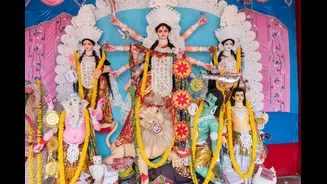
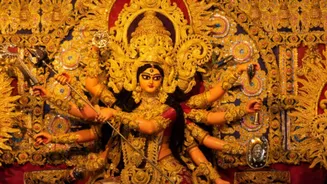
bamboo frames, and clay pulled from the Hooghly River into magnificent sculptures of Goddess Durga. This is where heritage is most tangible. Walking through the workshops, you witness a legacy passed down through families, a meticulous process where divine forms are sculpted by hand. The final, defining moment is 'Chokkhu Daan', the painting of the eyes, a ritual that is believed to breathe life into the idol. These idols, ranging from classical to contemporary, are destined for pandals across the city and the world, each one a testament to an enduring artistic tradition.
A Tale of Two Pujas: Pandals and Palaces
The 'blend' of Durga Puja is best seen in the contrast between its two main forms of celebration. On one hand, you have the 'Bonedi Bari' pujas, held in the ancestral mansions of Kolkata's old aristocratic families. Some of these celebrations are centuries old, like the one started at Shobhabazar Rajbari in 1757, and retain age-old rituals, traditional 'ekchala' idols (where all deities are on a single frame), and a stately, intimate grandeur. On the other hand, the city is famous for its 'sarbojanin' or community pujas, hosted in elaborate temporary structures called pandals. These are the heart of the modern festival atmosphere, where neighbourhoods compete to create the most innovative and artistic themes, transforming the city into a sprawling, open-air art gallery.
The City as an Art Gallery
Pandal hopping is the quintessential Durga Puja experience. For five days, millions of people walk the streets of Kolkata, often all through the night, to admire the artistry of the pandals. These are not mere tents but ambitious architectural and artistic installations, with themes ranging from historical replicas and social issues to environmental consciousness and pure fantasy. The streets are illuminated with dazzling light displays, the air is filled with the rhythmic beat of the 'dhaak' (a traditional drum), and a collective energy of celebration takes over. This city-wide exhibition, free for all to experience, breaks down social barriers as people from all walks of life come together in shared appreciation. The festival's unique ability to merge public art with religious devotion was a key reason for its inscription on UNESCO's list of Intangible Cultural Heritage of Humanity in 2021.
A Feast for the Senses
Durga Puja is as much a culinary festival as it is a religious one. The concept of 'pet pujo' (worshipping the stomach) is taken very seriously. Every street corner comes alive with food stalls offering an array of treats. From the iconic Kathi Rolls and spicy Phuchka to crispy Fish Fry and Kolkata-style Chowmein, the street food scene is an adventure in itself. The community feasts, known as 'bhog', offer a more traditional taste of the festival. Typically a simple, vegetarian meal of khichuri, labra (a mixed vegetable dish), and chutney, it is served to thousands of devotees and visitors at the pandals, embodying the spirit of community and sharing that is central to the celebration. And no Puja is complete without Bengali sweets, or 'mishti', with shops overflowing with Rosogolla, Sandesh, and Mishti Doi.
An Emotional Farewell
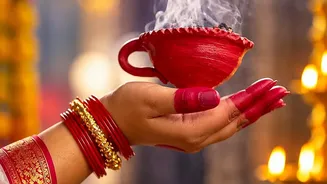
The festival culminates on Vijaya Dashami, the tenth day, with the immersion of the idols, a ritual known as 'Bisarjan'. Processions fill the streets, making their way to the ghats of the Hooghly River. Accompanied by music and dancing, it's a vibrant and emotional farewell to the goddess, who is seen as a daughter returning to her husband's home in Kailash. Before the immersion, married women participate in 'Sindoor Khela', smearing each other with vermilion powder, a symbol of happy married life and a final act of celebration. As the clay idols dissolve back into the river from which they came, the ceremony marks not just an end, but also the beginning of the wait for her return the following year.