







Decoding CAFE: More Than Just a Drink Order
CAFE stands for Corporate Average Fuel Economy. These are not rules for a single car model but for a manufacturer's entire fleet of vehicles sold in a year. Think of it as a report card for a car company's overall environmental performance. The goal is
to push manufacturers to produce and sell more fuel-efficient vehicles, thereby reducing the nation's carbon footprint and dependence on imported oil. India first introduced these norms in 2017, with the second phase, CAFE II, rolling out in 2022. The newly proposed CAFE III, set to begin from April 1, 2027, represents the most ambitious phase yet.
What's New with CAFE III?
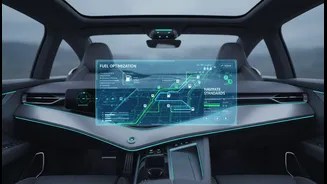
The proposed CAFE III norms demand a significant improvement in fuel efficiency. The draft sets a fleet-average target that tightens progressively from 94.76 grams of CO2 per kilometre in fiscal year 2028 to a stringent 78.90 g/km by 2032. This is a substantial leap from the current CAFE II standard of 113 g/km. To achieve this, the rules also formalize a shift to the Worldwide Harmonised Light Vehicles Test Procedure (WLTP), a more realistic and globally recognized testing cycle. For the first time, the draft also introduces incentives called 'Carbon Neutrality Factors' for vehicles running on ethanol blends, compressed biogas (CBG), and other biofuels, giving them special recognition.
The 'Technology-Neutral' Philosophy
A key feature of the CAFE III proposal is its 'technology-neutral' approach. Instead of the government mandating a specific winning technology, like forcing a shift exclusively to electric vehicles (EVs), it sets a final emission target and lets manufacturers decide how to get there. Carmakers will have the flexibility to use a mix of technologies—including more efficient petrol and diesel engines, strong hybrids, plug-in hybrids, EVs, and vehicles running on ethanol or CNG—to meet their fleet average. This allows for innovation across multiple fronts but has also sparked debate. While it provides flexibility, some experts worry it might slow the complete transition to zero-emission EVs by allowing legacy technologies to persist longer.
Winners and Losers in the Showroom
This flexible policy will create different outcomes for different players. Manufacturers with a strong portfolio of hybrid vehicles, like Maruti Suzuki and Toyota, could find themselves in a favorable position. The rules also introduce 'super credits', which give extra weight to the sales of cleaner vehicles like EVs and certain hybrids, helping companies meet their targets faster. Automakers with a product line heavy on traditional petrol or large, fuel-intensive SUVs may face greater compliance challenges and costs. Meanwhile, companies that have invested heavily in a pure-EV strategy, such as Tata Motors, will benefit from super credits but will also see their hybrid-making rivals receive significant regulatory support.
What This Means For Your Next Car Purchase
For the average car buyer, these changes will be felt in several ways. In the short term, the cost of cars might increase as manufacturers invest in more advanced and efficient technologies like turbochargers, hybrid systems, and lightweight materials to meet the stricter targets. However, this initial higher cost is expected to be offset by lower running costs over the vehicle's lifetime due to significantly better fuel economy. Buyers can also expect a wider variety of fuel-efficient models in showrooms, with a noticeable increase in hybrid and flex-fuel options alongside the growing EV market. The ultimate goal is a car market that offers cleaner air, lower fuel bills, and more technological choice.