





The Inevitable Question of Succession
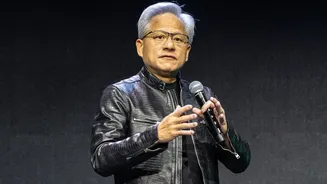
On November 12, 2026, Jensen Huang resigned as CEO of the company he co-founded, sending ripples through the industry. The departure, amid controversy, forced a question that investors had long pondered but the company had avoided: what does a post-Huang
Nvidia look like? The board acted swiftly, appointing CFO Colette Kress as interim CEO and Harvey C. Jones as its first-ever board chair, signaling a move toward more traditional governance. While Huang's visionary leadership has been credited with reinventing the company three times, from a graphics card maker to a full-stack AI systems company, the firm's strategy for its next chapter is not about finding another singular genius. Instead, it's about institutionalizing the very innovation that made it a titan.
A Relentless One-Year Roadmap
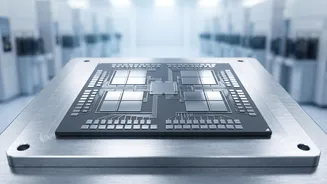
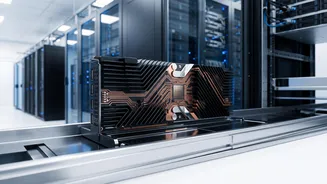
The core of Nvidia's continuity plan is a relentless, drum-beat pace of product releases. At recent industry events, the company confirmed it has shifted to a one-year cadence for new AI accelerator architectures. The current Blackwell platform is set to be succeeded by the 'Vera Rubin' platform in late 2026, followed by Rubin Ultra in 2027, and the 'Feynman' architecture in 2028. This rapid cycle aims to make competitors' multi-year roadmaps seem sluggish by comparison. For customers, it means performance and efficiency gains are no longer a periodic leap but an annual expectation. By making the roadmap the star, Nvidia shifts the focus from a single leader's vision to a predictable, powerful, and seemingly unstoppable innovation engine. Interim CEO Colette Kress has noted that strong demand for the upcoming Rubin chips is expected to drive growth, underscoring the company's confidence in its product pipeline.
Beyond the Chip: The Platform Moat
Selling chips is only part of the story. Nvidia’s true dominance lies in its ecosystem, built around the CUDA software platform. This vast collection of software libraries, tools, and compilers makes it incredibly difficult and expensive for customers who have built their AI models on Nvidia's platform to switch to a competitor. The strategy extends to hardware, with NVLink for high-speed GPU interconnects and Quantum InfiniBand for networking, creating a fully integrated, optimized data center-scale computer. Recent announcements have focused on expanding CUDA-X libraries to give AI 'agents' new tools for scientific discovery, further embedding its software in high-value research and development. This platform-centric approach ensures that even as competitors like Google, Microsoft, and Meta develop their own AI chips, migrating away from the entire Nvidia stack remains a monumental task.
Customer as Partner: Sovereign AI and Neoclouds
Nvidia is also changing its relationship with customers, evolving from a simple vendor to a foundational partner. A key part of this is the push into 'sovereign AI,' where nations and large enterprises build their own AI infrastructure to maintain data control and national competitiveness. Nvidia is actively supporting these initiatives, such as a $250 million commitment to the UK for AI safety and computing infrastructure. Furthermore, the company is deeply involved with a new generation of 'neoclouds'—AI-focused cloud providers. Recognizing that many of these fast-growing startups lack the capital for massive infrastructure build-outs, Nvidia has entered into complex financing and partnership arrangements. These deals involve billions in commitments and guarantees to help customers secure land, power, and data centers, ensuring that future AI capacity is built on Nvidia's platforms.