




The Ghost Particle's Big Role
Neutrinos are fundamental particles, like electrons, but they are famously antisocial. Trillions pass through you every second, yet they rarely interact with any matter, earning them the nickname 'ghost particles'. In the cataclysmic final moments of
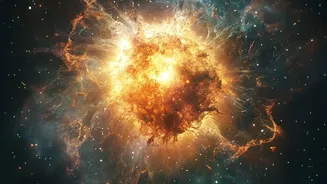
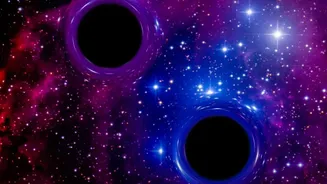
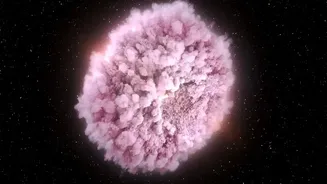
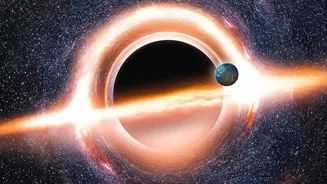
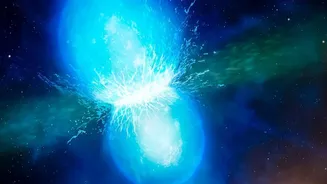
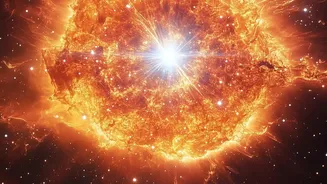
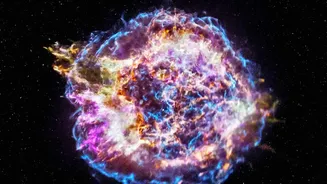
a massive star's life, however, their role becomes critical. When a star exhausts its fuel, its core implodes under its own immense gravity, releasing an unimaginable flood of neutrinos that carries away about 99% of the explosion's energy. This torrent of particles is so intense that even their weak interactions can provide the crucial push needed to blow the star's outer layers apart in a supernova. If this neutrino-powered heating fails, the star continues to collapse, forming a black hole instead.
A Stellar 'Goldilocks Zone'
For years, astrophysicists have worked to model which stars explode and which ones don't. A recent study from the University of Copenhagen has uncovered a surprising twist in this cosmic drama. By running 195 simulations of dying stars with masses ranging from nine to 120 times that of our sun, researchers found a specific 'Goldilocks' zone. Stars between 16 and 30 solar masses proved to be uniquely sensitive to the behaviour of neutrinos. In simulations, small changes to neutrino physics could flip the fate of these stars, turning what was expected to be a successful supernova into a failed one that creates a black hole. According to the researchers, many stars in this mass range that were expected to explode comfortably in standard models actually failed to do so when these new neutrino effects were included.
The 'Flavor-Changing' Twist
The key to this sensitivity lies in a quantum mechanical property of neutrinos called 'flavor conversion' or 'oscillation'. Neutrinos come in three types, or 'flavors'—electron, muon, and tau—and they can switch between these types as they travel. For a long time, this phenomenon was considered too complex to include in supernova simulations and was assumed to have a negligible effect on the outcome. However, new findings show that in the incredibly dense environment of a collapsing star, neutrinos are packed so tightly that they interact with each other, triggering rapid flavor changes. This conversion alters how they transfer energy to the material outside the core. The new study demonstrates that including these flavor changes can significantly reduce the likelihood of an explosion for stars in that sensitive 16-to-30-solar-mass range, making them more likely to collapse into black holes.
Solving Cosmic Mysteries
This discovery could help solve several long-standing astronomical puzzles. For instance, astronomers have observed fewer supernovae in the universe than theoretical models predict. If many mid-sized massive stars are collapsing directly into black holes without a bright, visible explosion, it could account for this 'supernova rate problem'. It may also explain why some of the largest red supergiant stars seem to vanish without a trace. Furthermore, the models incorporating neutrino flavor changes predict the formation of less massive neutron stars, which aligns better with actual observations of these dense stellar remnants. By treating these stars as cosmic laboratories, scientists can use them to better understand the fundamental properties of neutrinos themselves, particles that remain shrouded in mystery.