





The Journey Is Half the Adventure
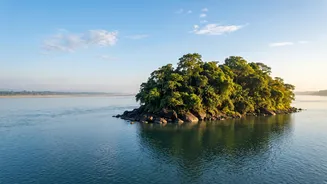
Your trip to Umananda begins not at the temple, but at the ghats of Guwahati. The only way to reach this tiny island is by a short ferry or boat ride from the mainland. This ten-minute journey across the vast expanse of the Brahmaputra offers a stunning
perspective of the city. As the urban shoreline recedes and the island’s green silhouette grows larger, the noise of the city is replaced by the rhythmic chug of the boat and the sounds of the river. This brief but scenic voyage is an essential part of the Umananda experience, setting a peaceful tone for the visit ahead. Ferries are available from several points, including Kachari Ghat, and offer a memorable ride for a nominal fee.
An Island Born from Mythology
Umananda is steeped in Hindu mythology, earning it a deep spiritual significance. Its name is a combination of 'Uma', another name for Goddess Parvati, and 'Ananda', meaning joy. Legend says Lord Shiva created the island for Parvati's happiness. However, it also has a more dramatic name: Bhasmachal, or 'hill of ashes'. This comes from the belief that Lord Shiva, in a fit of rage after being disturbed during deep meditation, burned Kamadeva (the god of love) to ashes on this very spot. The 17th-century Umananda Temple, dedicated to Lord Shiva, was built upon this hill by the Ahom King Gadadhar Singha in 1694. Though damaged in an earthquake in 1897, it was later restored by a local merchant, and today it stands as a testament to centuries of faith.
Peacock Island and Its Golden Residents
During British rule, the island was nicknamed 'Peacock Island', believed to be due to its shape resembling a peacock's splayed feathers. For decades, however, its most famous residents were not peacocks but a colony of golden langurs, an endangered primate species. A pair was introduced to the island years ago, and their population grew, becoming a major attraction for visitors who would often see them among the tamarind trees. Sadly, the last remaining golden langur on the island died in 2020, marking the end of an era for this isolated primate community. While you can no longer spot these rare creatures here, their story remains an integral part of what made the island so unique.
What to Expect During Your Visit
After a short climb up a flight of stairs from the ferry landing, you will reach the temple complex. The main shrine is a quiet, spiritual space, with rock-cut figures of Ganesha, Surya, Vishnu, and other deities adorning the walls, showcasing the intricate craftsmanship of Assamese artisans. The atmosphere is serene, offering a stark contrast to the city you just left behind. Mondays and the festival of Maha Shivratri are considered especially auspicious times to visit, drawing large numbers of devotees. The island itself is small, and you can comfortably explore it, soak in the views of the Brahmaputra, and visit the temple in an hour or two, making it a perfect short excursion.