





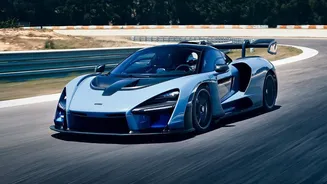


Understanding the Current King: The W1
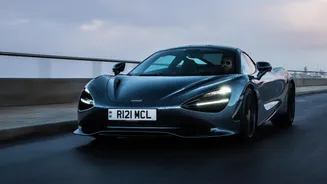
To grasp the significance of a car placed above the W1, one must first understand what the W1 represents. As the successor to the legendary P1, the McLaren W1 is the current pinnacle of the brand's 'Ultimate Series'. It is a technological marvel, a hybrid
hypercar designed for absolute track dominance. Boasting a staggering 1,258 horsepower from its twin-turbo V8 hybrid powertrain, it is the fastest-accelerating road-legal McLaren ever made. Limited to just 399 units, each with a price tag of around $2 million, the W1 is the embodiment of McLaren's forward-looking, performance-obsessed philosophy. It is, by all accounts, an 'ultimate' car.
Enter the P50: The Rumors Take Shape
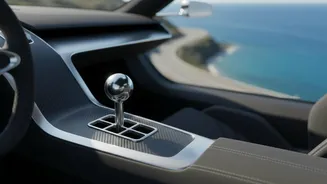
The rumors surrounding the P50 suggest a dramatic shift in philosophy. Unlike the hybrid, dual-clutch W1, the P50 is reportedly being developed with a focus on analog driver engagement. The most persistent rumor is that it will feature a manual gearbox, which would be the first in a McLaren road car since the iconic F1 of the 1990s. This detail alone signals a different mission, one that prioritizes the visceral connection between driver, machine, and road over pure lap times. The internal codename, P50, is also thought to be a nod to its spiritual predecessors, combining the legacy of the P1 and the F1. Reports suggest an official unveiling could happen as soon as Monterey Car Week in August.
A Different Kind of Performance
If the W1 is about crushing lap times with hybrid power and active aerodynamics, the P50 seems to be about creating an emotional experience. Speculation points towards a naturally aspirated engine, possibly a V12, which would be another first for modern McLaren road cars and a stark contrast to the brand’s ubiquitous twin-turbo V8s. While this presents emissions and engineering challenges, it aligns with a growing trend in the hypercar market. Competitors like Gordon Murray Automotive have found immense success with sold-out, V12-powered, manual-only cars like the T.50, proving a strong appetite among collectors for a more traditional and sensory-rich driving experience.
Redefining the Top Tier
Positioning a car above the W1 is a significant strategic move for McLaren. It suggests the creation of a new, even more rarified tier in its product hierarchy. With a rumored production run of fewer than 100 units, the P50 would be substantially rarer than the W1. Its price is also expected to exceed the W1's, placing it in a different financial stratosphere. This move isn't just about building a faster or more expensive car; it's about segmenting the 'ultimate' market itself. The W1 remains the ultimate expression of modern, technological performance, while the P50 would become the ultimate expression of analog purity and driver-focused heritage.
The Competitive Landscape and Market Logic
McLaren is not operating in a vacuum. Other elite manufacturers are already tapping into this demand for analog hypercars. Ferrari has reintroduced a manual-style experience, and small-volume makers like Pagani and Koenigsegg continue to offer highly engaging, non-hybrid options. By developing the P50, McLaren would be directly addressing this collector-driven market segment it has largely ignored in its modern era. For a brand that has always prided itself on being at the cutting edge of technology, building a car that deliberately embraces a more 'old-school' ethos would be a landmark moment, signaling that the definition of 'ultimate' is broader than just speed.