






The Golden Rule: No Personal Income Tax
First, it's true. For most residents, Monaco does not impose a tax on income, capital gains, or wealth. This policy was established way back in 1869 to attract wealthy individuals to the principality. However, there's a significant exception: French citizens
who reside in Monaco are generally still subject to French income tax, a rule stemming from a 1963 bilateral treaty. For everyone else who secures residency, their personal earnings are not directly taxed by the state, forming the bedrock of Monaco's reputation as a tax haven.
The Biggest Revenue Source: Value Added Tax (VAT)
If not from income, where does the government's money come from? The single largest contributor is Value Added Tax (VAT), known as TVA in French. This consumption tax accounts for roughly half of the state's entire budget. Through a customs union with France, Monaco operates within the EU's VAT system and applies the same rates as its larger neighbour. The standard VAT rate is 20%, applied to most goods and services. There are also reduced rates for necessities like food, water, and medicine. Essentially, the government funds itself through taxes on spending, not earning. Every time someone dines at a lavish restaurant, buys a luxury watch, or pays for a hotel stay, a significant portion goes to the state's coffers.
Corporate and Property Taxes Fill the Gaps
While personal income goes untaxed, business profits don't get a complete free pass. Monaco levies a corporate income tax, currently at 25%, but only under specific conditions. It primarily applies to companies that generate more than 25% of their revenue from outside the principality. This measure helps Monaco comply with international standards while still encouraging businesses that operate locally. Another crucial revenue stream comes from real estate. While there is no annual property tax, there are significant transfer duties on property sales. These duties can be as high as 7.5% for certain types of buyers, generating substantial income given Monaco's status as home to the world's most expensive real estate.
The State's Own Business Ventures
A unique aspect of Monaco's economy is the state's direct ownership in its most profitable enterprises. The government holds a majority stake (nearly 60%) in the Société des Bains de Mer (SBM). This company is a powerhouse, owning and managing iconic properties like the Monte Carlo Casino, the Hôtel de Paris, the Opéra de Monte-Carlo, and numerous other luxury hotels and restaurants. Profits from these state-controlled monopolies flow directly into the government budget, providing a steady and significant source of funding. This model means the state benefits directly from the tourism and luxury that define its global image.
The Real Price of a 'Tax-Free' Life
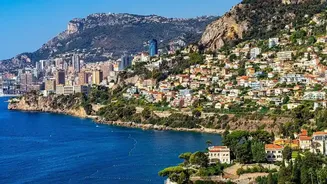
Living without income tax comes at a different, very high price: an astronomical cost of living. The lack of available land in the 2-square-kilometre nation makes its real estate the priciest on the planet. Renting a simple one-bedroom apartment can cost thousands of euros per month, and buying a property is a multi-million euro affair. To even apply for residency, one must often prove significant financial means, including depositing a substantial sum (often cited as €500,000 or more) in a Monaco bank. This high barrier to entry effectively acts as a form of financial gatekeeping, ensuring that residents are wealthy enough to fuel the consumption-based economy through their high spending, which is then taxed via VAT.
Why This Model Isn't for Everyone
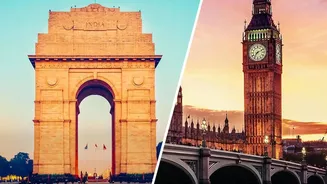
Could India adopt such a system? The short answer is no. Monaco's model is possible due to a unique combination of factors: its tiny size, minuscule population (under 40,000), and an economy deliberately built around attracting the world's ultra-wealthy. This creates a high concentration of wealth and spending in a very small area. India, a nation of 1.4 billion people with vast infrastructure needs, a massive agricultural sector, and extensive social welfare programs, requires a broad and deep tax base. Personal income tax is a vital pillar of that base, providing the necessary funds for defence, education, healthcare, and infrastructure development on a scale unimaginable in the tiny principality.