

A New Eye on the Universe
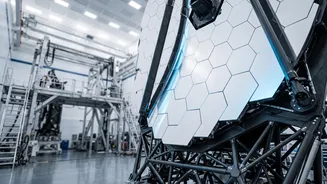
Named after Dr. Nancy Grace Roman, NASA’s first chief of astronomy and the celebrated “Mother of Hubble,” this next-generation observatory is designed for discovery on a grand scale. Unlike its predecessors that zoom in on specific targets, Roman is a survey
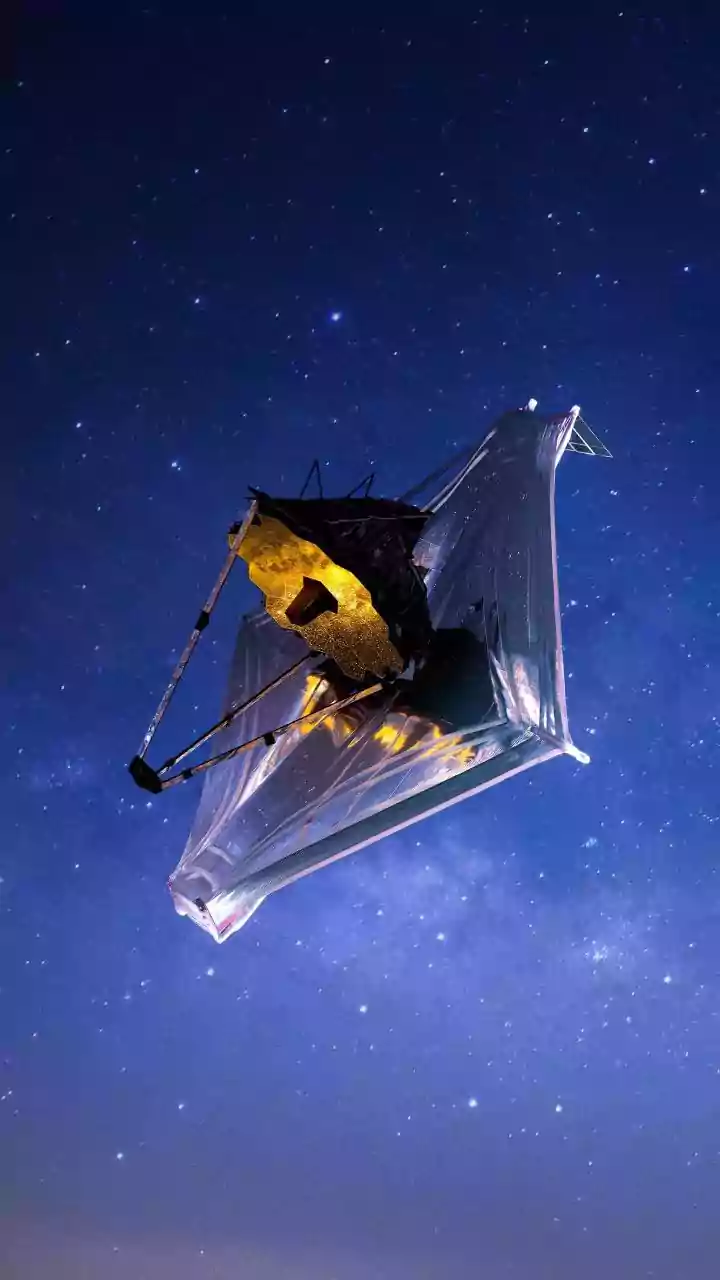
telescope. Its mission is to map vast stretches of the sky in infrared light, creating a massive cosmic atlas. It operates from the second Sun-Earth Lagrange point (L2), a gravitationally stable spot about 1.5 million kilometres from Earth, which allows for a clear, continuous view of the cosmos. This vantage point, shared by the James Webb Space Telescope (JWST), is crucial for making the sensitive measurements needed to probe the universe's greatest mysteries.
Seeing Wider Than Ever Before
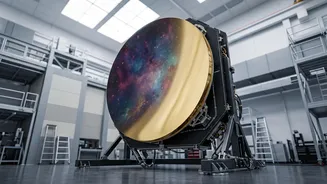
Roman's superpower is its incredible field of view. While its primary mirror is the same 2.4-meter size as Hubble's, its Wide-Field Instrument (WFI) can capture an area of the sky 100 times larger in a single snapshot. Imagine trying to photograph a sprawling forest. While Hubble and Webb can take exquisitely detailed photos of a single leaf or bird, Roman can capture the entire forest with the sharpness to still see the individual trees. This survey prowess means that in its five-year primary mission, Roman will observe more of the universe than Hubble has in over 30 years of operation. It’s expected to send back about 1.4 terabytes of data every single day, creating a treasure trove for astronomers.
The Hunt for Dark Energy and New Worlds
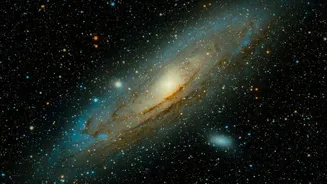
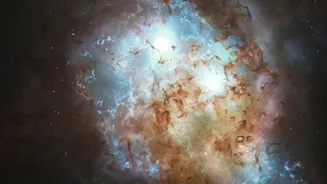
The telescope has two primary scientific goals. First, it will tackle the profound mystery of dark energy, the enigmatic force believed to be causing the universe's expansion to accelerate. By surveying billions of galaxies and thousands of distant supernovae, Roman will measure how the universe has expanded over time, providing crucial clues about the nature of this force. Its second major task is to conduct a massive census of exoplanets—planets orbiting other stars. Roman will use a technique called gravitational microlensing, where the gravity of a star or planet bends the light of a more distant star, creating a temporary magnification. This method is sensitive enough to find planets down to the mass of Mars and even free-floating “rogue” planets that drift through the galaxy untethered to a star. Scientists expect Roman to discover tens of thousands, or even more than 100,000 new exoplanets, vastly increasing the number of known worlds.
More Than a Planet Hunter
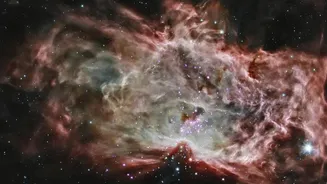
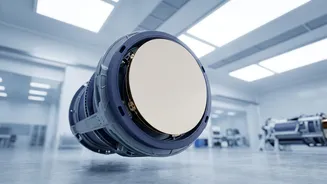
Beyond its main objectives, Roman will be a versatile tool for all of astrophysics. The data it collects will help astronomers study everything from the growth of supermassive black holes and stars in neighbouring galaxies to cosmic nurseries where new stars are born. It also carries an advanced technology demonstration called the Coronagraph Instrument. This device is designed to block the blinding glare of a star, which will allow scientists to take direct images of giant planets orbiting nearby stars—a feat that is incredibly difficult with current technology. The techniques proven by Roman's coronagraph will pave the way for future missions, like the planned Habitable Worlds Observatory, which aims to search for signs of life on Earth-like planets.
A Complement to Hubble and Webb
Roman is not a replacement for Hubble or Webb, but a powerful new member of NASA's team of space observatories. The three telescopes have complementary capabilities. Roman will act as the great cosmic scout, identifying intriguing targets across vast areas of the sky. Then, the powerful zoom lenses of Hubble and Webb can follow up for more detailed observations in different wavelengths of light. While Roman surveys in infrared, Hubble continues its work in visible and ultraviolet light, and Webb focuses on peering even deeper into the infrared spectrum to see the earliest galaxies. Together, they will provide a more complete and multi-layered view of the universe than ever before.