





The Constant Search for Balance
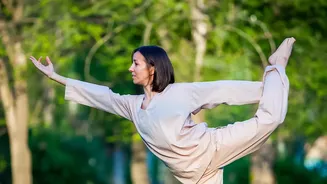
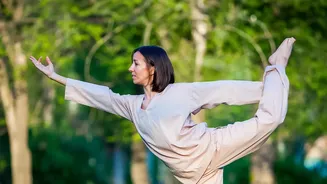
At its heart, Tai Chi is a discipline of balance. Each slow, deliberate movement is an exercise in shifting weight, maintaining a stable center, and coordinating the body with the breath. Practitioners learn to 'root' themselves, feeling the connection
between their feet and the floor. This develops dynamic balance—the ability to stay stable while in motion—which is crucial not just for the form itself, but for preventing falls in everyday life. On a flat, hard surface, the body can sometimes get away with minor imperfections in posture and alignment. You might lean a little too far, or your weight shift might be slightly off, but the stable ground offers a forgiving platform.
Why Sand Changes Everything
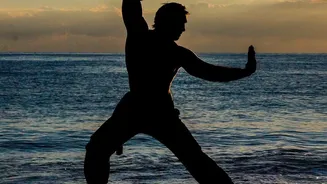
Step onto the sand, and that forgiveness disappears. Sand is an inherently unstable surface. It shifts and gives way under your weight, meaning any small error in your balance is immediately magnified. A weight shift that was merely imperfect on solid ground might cause you to stumble on the beach. This instant, honest feedback is what makes sand such a powerful, if challenging, training partner. It forces you to pay closer attention to every single movement, from the placement of your foot to the alignment of your spine. The sand essentially removes your ability to 'cheat' and forces a deeper level of engagement to maintain stability.
The Proprioception Payoff
This heightened challenge provides a significant benefit: it supercharges your proprioception. Proprioception is often called the body's 'sixth sense'—it's your awareness of where your body parts are in space without having to look. When you're on an unstable surface, the nerves in your feet, ankles, and legs have to work much harder, sending constant updates to your brain to make micro-adjustments. This process strengthens the neuromuscular pathways responsible for balance. Over time, practicing on sand can make your movements more precise and your reflexes quicker, improving your balance not only in Tai Chi but in all aspects of life.
Waking Up Your 'Barefoot' Muscles
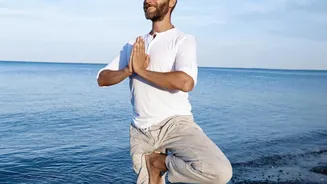
Performing Tai Chi barefoot on sand engages dozens of small, intrinsic muscles in your feet and ankles that are often neglected in shoes. These muscles are vital for stabilizing the foot and maintaining the arch. The soft, yielding surface forces them to grip, adjust, and stabilize constantly, providing a natural strength-training workout. This increased muscle activation travels up the kinetic chain, engaging your calves, core, and glutes more intensely to maintain stability during the slow, flowing forms. You're not just doing Tai Chi; you're doing resistance training at the same time.
Tips for Your First Sand Session
If you're ready to try it, start slowly. Begin by simply walking barefoot on the sand to let your feet acclimate. Find a stretch of wet, packed sand near the waterline, as it provides a slightly more stable surface than loose, dry sand. Don't try your most complex form right away. Start with basic stances and simple movements like 'Circles in the Sand' to feel how your body adapts. Focus on your breathing and allow the sound of the waves to guide your rhythm. Most importantly, listen to your body. Sand training is more demanding, so a shorter session can be just as effective as a longer one on a hard surface.
When to Stick to Solid Ground
While beneficial, practicing on sand isn't for everyone, every time. If you are a complete beginner to Tai Chi, it's best to first learn the foundational movements on a stable surface to avoid developing bad habits or risking injury. Similarly, if you are recovering from a recent ankle or foot injury, the instability of sand might be too much too soon. The goal is to challenge your balance, not to overwhelm it. Always prioritize safety and stability, and consider sand practice as a supplemental tool to deepen your skills once you have a solid foundation.