





The Hope Mission's Eye on Mars
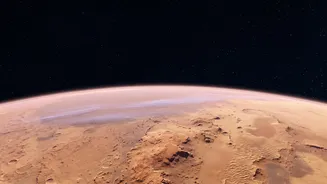
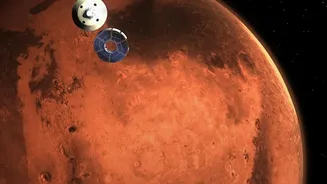
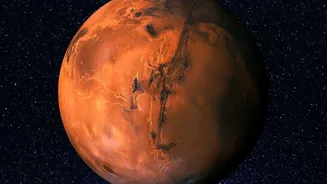
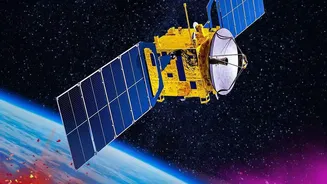
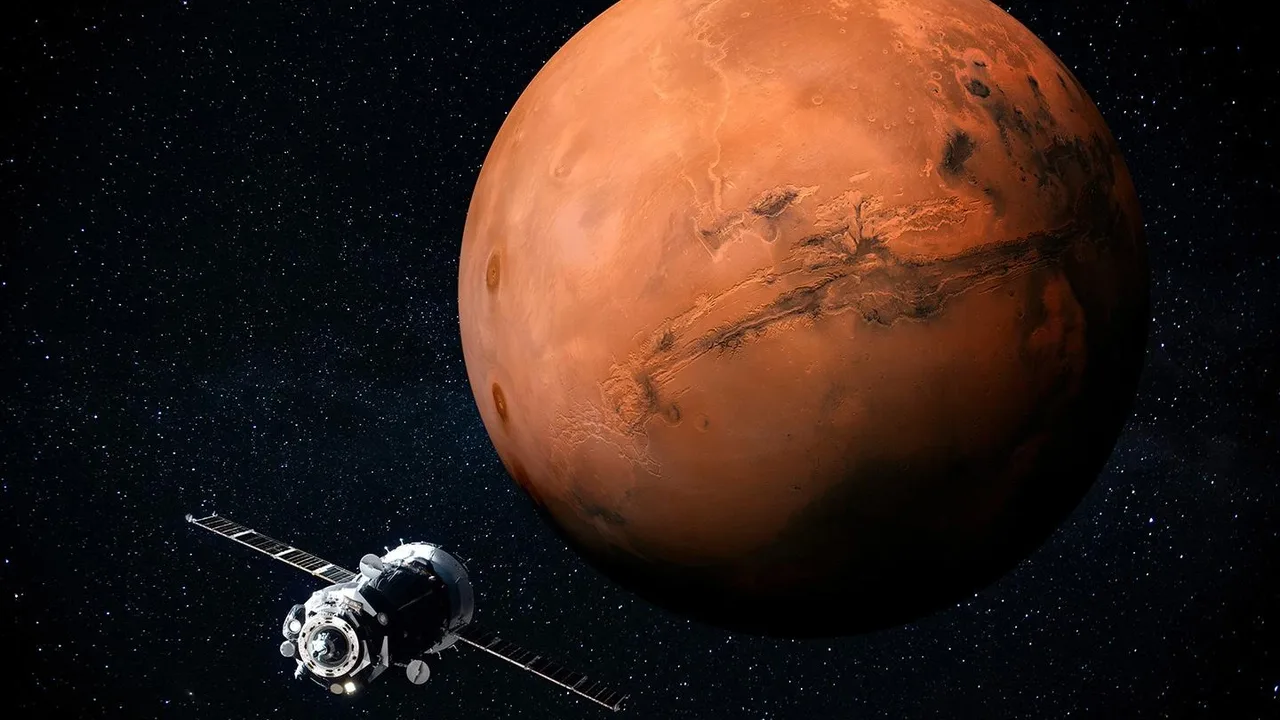
The United Arab Emirates' Hope probe, also known as Al-Amal, made history when it entered Mars' orbit in February 2021, marking the Arab world's first interplanetary mission. Unlike many missions that focus on a specific location, Hope was designed with
a uniquely high and wide orbit, allowing it to create the first complete picture of the Martian atmosphere. Its goal is to study daily and seasonal weather cycles, observe events like dust storms, and understand how Mars loses its atmosphere to space over time. To do this, it carries a suite of advanced scientific instruments, each with a special job.
Meet EMIRS: A Key Instrument
At the heart of this recent study is the Emirates Mars InfraRed Spectrometer, or EMIRS. This powerful instrument is essentially a high-tech thermal scanner, designed to measure the temperature of the Martian surface and atmosphere. By detecting infrared radiation—a type of light we feel as heat—EMIRS can track the global distribution of key elements like dust, water ice, and water vapor. It can see how these components change throughout the day and night, providing a dynamic view of the planet's climate systems. This ability to capture a holistic view, especially observing nighttime clouds, has provided an unprecedented dataset for scientists worldwide.
PRL's Crucial Role in Analysis
This is where India’s Physical Research Laboratory (PRL), an esteemed institution based in Ahmedabad, steps in. While the Hope probe gathers the raw information, it is the careful analysis by scientists on Earth that turns that data into discovery. PRL scientists have been leveraging the public data from the EMIRS instrument to conduct their own independent studies. This is a prime example of modern space science, where international collaboration is not always about co-building a spacecraft, but also about sharing data for the global scientific community to analyze. The partnership between the Indian and UAE space agencies has been growing, with a memorandum of understanding signed to foster cooperation in space exploration and research.
Uncovering Atmospheric Secrets
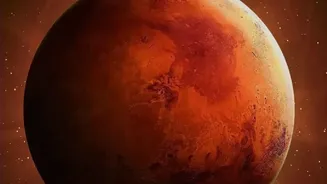
By analyzing the EMIRS observations, PRL researchers are gaining deeper insights into the Martian atmosphere. Their work focuses on understanding the behaviour of dust storms and the vertical distribution of dust and water ice particles. Dust is a huge driver of the Martian climate, influencing everything from temperature to atmospheric circulation. The EMIRS data allows scientists to create 3D maps of atmospheric temperature and constituent particles, helping them refine models of the planet’s weather. Previous studies with EMIRS have already revealed that Martian water-ice clouds are often thicker at night and in the early morning, challenging older, daytime-only observations. The work by PRL adds to this growing body of knowledge, helping to piece together the complex puzzle of Mars’ past and present climate.
Why This Collaboration Matters
This study is more than just a scientific paper; it’s a testament to the power of international collaboration in space. India, with its successful Mars Orbiter Mission (Mangalyaan), and the UAE, with its ambitious Hope probe, are two relatively new but formidable players in planetary exploration. By sharing data, these nations accelerate the pace of discovery for everyone. For India, it showcases the analytical prowess of its scientific institutions like PRL, demonstrating that the country is not only capable of launching its own missions but also of playing a key role in interpreting data from others. This synergy helps build a more complete understanding of Mars, which is crucial for answering big questions about its potential for past life and how it evolved so differently from Earth.