




The Apex of Simplicity
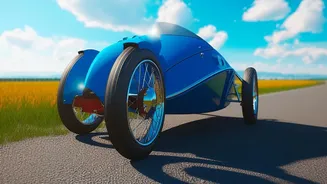
First, let’s meet the Peel P50. Holding the Guinness World Record for the smallest production car ever made, the P50 is a three-wheeled microcar originally built in the 1960s on the Isle of Man. It’s just 137cm long, weighs less than a modern refrigerator,
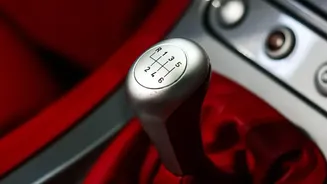
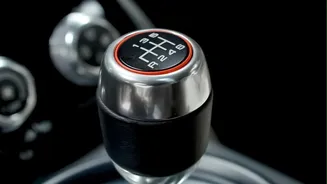
and was advertised as seating "one adult and a shopping bag." The original models had a tiny 49cc engine, a three-speed manual gearbox, and no reverse gear. If you needed to back up, you got out, grabbed a handle on the rear, and physically pulled the car into position. Driving a P50 is an exercise in pure, unadulterated connection. There are no driver aids, no power steering, and certainly no infotainment screen. Every input is direct and mechanical. You feel every bump in the road and hear the tiny engine buzzing away right behind you. It demands your full attention, not because it's fast—its top speed hovers around 60 km/h—but because you are the entire operating system.
A Symphony of Complexity
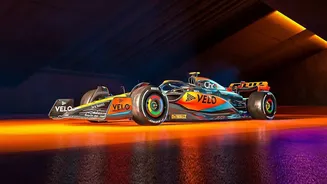
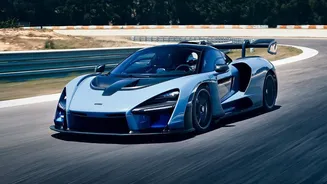
On the other end of the automotive spectrum sits McLaren's current Formula 1 car, a marvel of aerospace engineering and computational power. While the headline mentions a "W1," we'll consider the team's latest single-seater, which represents the pinnacle of speed and technology. Its steering wheel alone is more complex than the entire P50. With dozens of buttons, rotary dials, and switches, the driver manages everything from brake balance and differential settings to fuel mixture and energy recovery systems, all while hurtling around a track at over 300 km/h. This is also a form of control, but it is systemic and strategic rather than physical. The driver is not just steering the car; they are actively managing a highly complex and dynamic data system. Shifts are executed in milliseconds via paddles, a world away from the deliberate action of a manual clutch and gearstick.
Two Definitions of Control
This brings us to the core of the argument. The P50 offers visceral, analogue control. The driver's skill is measured in their ability to physically manipulate a simple machine. It’s about the direct link between hand, foot, and the road. Conversely, the McLaren F1 car represents a digital, mediated form of control. An F1 driver's genius lies in their ability to process immense amounts of data, make split-second strategic adjustments, and operate the car’s systems to extract maximum performance. They are, in essence, a human central processing unit. The argument isn't that one is 'harder' than the other—both require immense skill—but that they represent fundamentally different philosophies of driver engagement. One is about pure mechanical interaction, the other about mastering a technological ecosystem.
The Fading Art of Manual Engagement
The contrast between these two machines highlights a broader trend in the automotive world. For decades, a manual transmission was seen as the mark of a true enthusiast, offering more control and a more engaging driving experience. However, modern automatic and dual-clutch transmissions are now often faster, more efficient, and more reliable. They can shift quicker than any human, and their advanced electronics optimize performance and fuel economy in ways a manual driver often can't match. As cars become more technologically advanced, the raw, mechanical feedback that defines the P50's experience is being engineered out. Many argue this creates a disconnect, where the driver becomes more of a passenger and loses the satisfying feeling of being fundamentally connected to the machine.
Why Raw Connection Still Matters
So, could the P50 truly put manual control 'above' a McLaren? In a race, the answer is a comical no. But in terms of philosophical purity, the argument holds weight. The joy of driving, for many, isn't just about getting from A to B quickly. It’s about the challenge, the feedback, and the satisfaction of mastering a skill. The P50, in all its simplicity, distills this down to its essence. It reminds us that engagement isn't about having more buttons to press, but about the quality of the connection between driver and vehicle. While F1 technology pushes the boundaries of what is possible, the principle embodied by the P50—that the most rewarding experience comes from direct, unfiltered control—remains a powerful and enduring ideal for many driving purists.