



The Unseen Thaw Below the Peaks
One of the most critical factors destabilising mountain slopes is the thawing of permafrost. Permafrost is ground—soil, rock, and sediment—that has remained frozen for at least two consecutive years. In high-altitude regions, it acts like a natural cement,
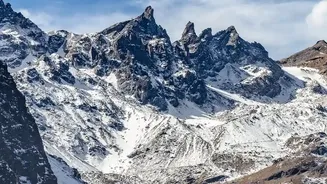
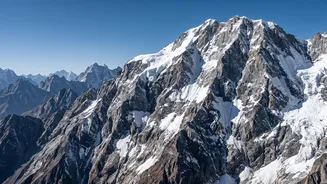
binding loose rocks and soil together within steep slopes. However, as global temperatures rise, this subterranean ice is beginning to melt. Scientific monitoring in mountain ranges has shown that warming is penetrating deep into the bedrock, in some cases hundreds of feet down. This process weakens the structural integrity of the mountain from within, essentially dissolving the glue that holds the slopes together and making them more susceptible to collapse.
When Glaciers Retreat
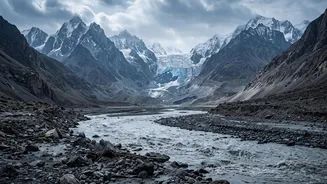
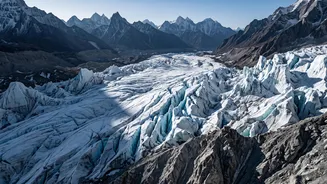
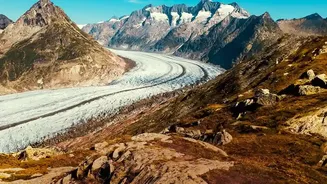
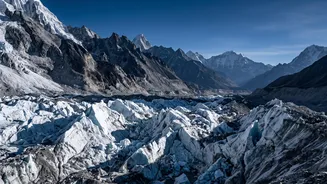
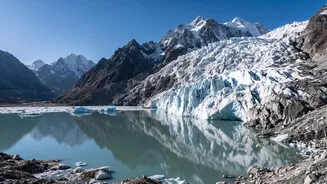
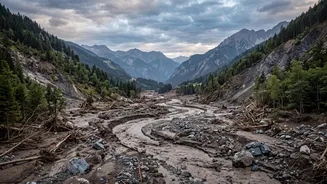
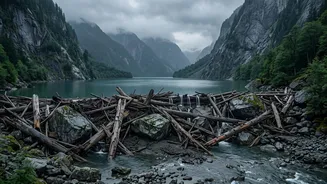
The rapid retreat of glaciers is another major contributor to slope instability. For centuries, massive glaciers have exerted immense pressure on the valley walls they occupy, providing a supportive buttress. As these glaciers thin and recede due to warming, this support is removed—a process known as debuttressing. This unloading can cause the newly exposed and unsupported rock walls to fracture and fail. Furthermore, retreating glaciers expose vast quantities of loose rock and sediment that were previously held in place by the ice. This material is often unstable and can be easily mobilised by rainfall or further melting, creating a heightened risk of debris flows and landslides.
Water and Extreme Weather
Climate change isn't just about gradual warming; it's also about an increase in the frequency and intensity of extreme weather events. More intense rainfall, particularly during monsoon seasons in regions like the Himalayas, can have a devastating impact on mountain stability. Water from heavy rain or rapid snowmelt can seep deep into the cracks and fissures of a mountainside, increasing what is known as pore water pressure. This pressure effectively pushes the rock and soil particles apart, reducing friction and making a slope failure much more likely. When these extreme rainfall events occur on slopes already weakened by permafrost thaw and glacier retreat, the risk of a catastrophic landslide is significantly amplified.
A Growing Concern for the Himalayas
The Himalayas, often called the 'Third Pole' for holding the largest mass of ice outside the polar regions, are particularly vulnerable. This mountain range is warming at a rate faster than the global average, accelerating the melt of both glaciers and permafrost. For India and neighbouring countries, the implications are profound. Destabilised slopes pose a direct threat to downstream communities, critical infrastructure like roads and hydropower projects, and vital water resources that support billions of people. Events like the 2021 Chamoli disaster in Uttarakhand, where a rock and ice avalanche triggered deadly flash floods, serve as a stark reminder of the cascading hazards that can be unleashed.
The Challenge of Predicting Disaster
While scientists can clearly identify the growing risks, predicting exactly when and where a specific slope will fail remains an immense challenge. Researchers use tools like satellite monitoring (InSAR) and on-the-ground sensors to track slope movement and changes in permafrost temperatures. Models can forecast which areas are becoming more susceptible based on factors like slope steepness, bedrock type, and projected changes in rainfall. However, the precise trigger for a massive landslide can be a complex interplay of long-term weakening and short-term events. The scientific consensus is clear that the overall hazard is increasing, but pinpointing the exact moment of collapse is often impossible, highlighting the urgent need for better early warning systems and adaptive strategies for mountain communities.