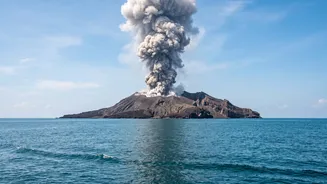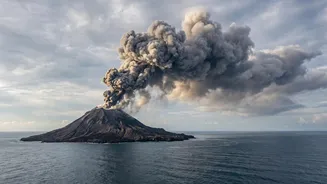








The Child of Krakatoa Awakens
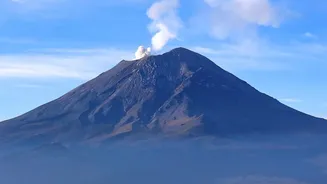
Mount Anak Krakatau, whose name translates to “Child of Krakatoa,” is a volcanic island located in the Sunda Strait between the major Indonesian islands of Java and Sumatra. It emerged from the sea in 1927, formed from the caldera of the legendary Krakatoa, whose cataclysmic
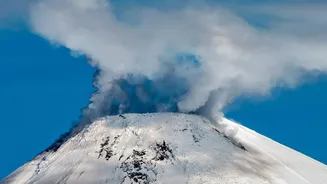
1883 eruption was one of the deadliest in recorded history. This 'child' has been highly active ever since, but a series of powerful eruptions that began on Friday, September 4, 2026, has brought it back into global focus. Indonesian authorities have since raised the volcano's alert to Level III, the second-highest tier, establishing a no-go zone around the crater as it continues to spew lava and ash. The latest activity, which included a continuous 25-hour eruption episode, sent plumes of ash soaring to altitudes of up to 15,000 metres (nearly 50,000 feet).
Why Volcanic Ash Is So Dangerous for Planes
To a passenger, an ash cloud might look like a regular weather cloud, but to an aircraft, it's a catastrophic hazard. Volcanic ash is not soft and sooty; it's composed of tiny, jagged particles of rock and glass. When sucked into a jet engine, these particles do not simply pass through. The intense heat inside the engine's combustion chamber—far hotter than the melting point of the ash—turns the particles into a molten, glassy substance. This molten material then sticks to cooler parts of the engine, like turbine blades and fuel nozzles, solidifying into a ceramic-like coating. This process can swiftly block air flow, causing the engines to lose power or fail completely. Furthermore, the abrasive particles can sandblast cockpit windows, severely impairing pilots' visibility, and clog sensors critical for flight.
Widespread Travel Chaos
The eruption's timing and location created a perfect storm for aviation. The ash cloud drifted directly over one of Southeast Asia's busiest air corridors, forcing the closure of at least eight airports, including Jakarta's main hub, Soekarno-Hatta International Airport. The transport ministry reported that by September 7, the disruptions had affected more than 270,000 passengers, with over 1,500 flights cancelled or delayed. Major carriers, including Singapore Airlines and its budget arm Scoot, cancelled dozens of flights to and from Jakarta. The situation remained fluid for days, with airports closing and reopening based on shifting wind patterns and ongoing risk assessments from the Darwin Volcanic Ash Advisory Centre, which helps track ash plumes for aviation safety. Even airports far from the volcano, like in Bali, experienced knock-on effects as flights scheduled to or from Jakarta were grounded.
Indonesia and the Ring of Fire
This event is a stark reminder of Indonesia's volatile geology. The nation sits on the Pacific “Ring of Fire,” an arc of volcanoes and fault lines around the Pacific Ocean where about 90% of the world's earthquakes occur. Indonesia alone has more active volcanoes than any other country, with Anak Krakatau being just one of more than 120. While the 2018 flank collapse of Anak Krakatau triggered a deadly tsunami, authorities have stated that the volcano's current, smaller size does not pose a similar threat at this time. However, the ongoing seismic activity and the potential for further eruptions mean that both residents and the aviation industry must remain on high alert. Indonesian agencies are constantly monitoring the situation, but the power of nature in this region means that disruption is an ever-present risk.