

A New Eye on the Universe
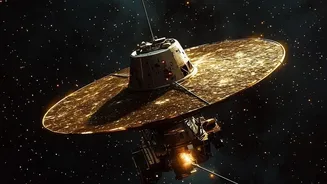
Launched in late August 2026, the Nancy Grace Roman Space Telescope is NASA's next great observatory, poised to revolutionize our understanding of the universe. Named for Nancy Grace Roman, NASA's first chief of astronomy often called the “mother of Hubble,”
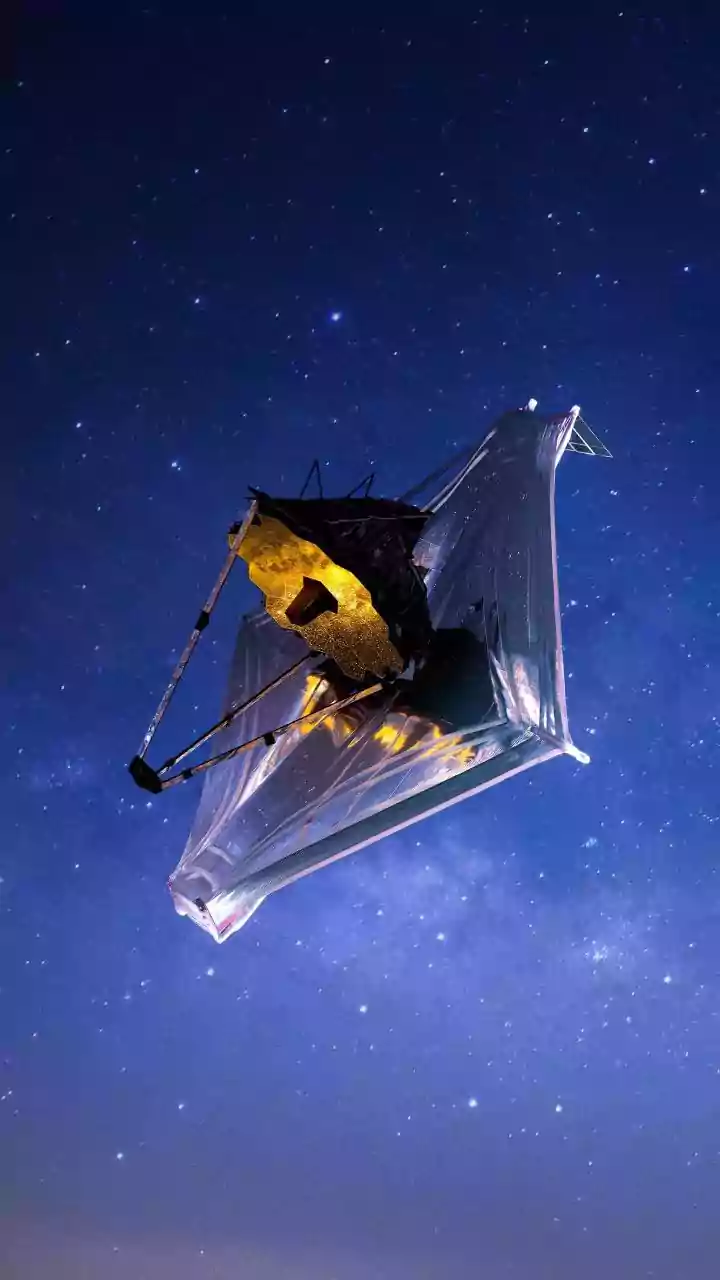
this new telescope isn't just a successor to Hubble or the James Webb Space Telescope (JWST); it's a completely different kind of tool. While Hubble and Webb act like zoom lenses, providing incredibly detailed views of small patches of sky, Roman is the ultimate wide-angle lens. It has the same size 2.4-meter primary mirror as Hubble, giving it comparable image sharpness, but its Wide Field Instrument (WFI) can see an area of the sky at least 100 times larger in a single snapshot.
The Power of a Panoramic View
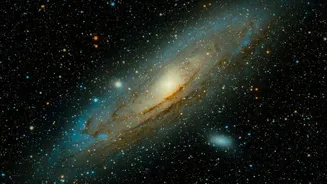
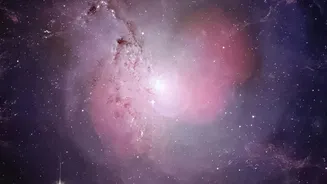
This massive field of view is Roman's superpower. To put it in perspective, where Hubble might need hundreds of individual images stitched together to map a nearby galaxy, Roman could do it in just a couple of shots. This incredible efficiency will allow it to conduct vast surveys of the sky, creating cosmic maps of unprecedented scale and depth. The telescope's camera is a mosaic of 18 advanced detectors, which together create images of over 300 megapixels. This allows Roman to capture billions of galaxies over its mission lifetime, providing a treasure trove of data for astronomers. The recent successful launch on a SpaceX Falcon Heavy and initial deployment mark the beginning of its journey to its operational orbit about 1.5 million kilometers from Earth.
Hunting for Cosmic Mysteries
Roman’s primary mission objectives are two of the biggest puzzles in modern cosmology: dark energy and exoplanets. Scientists believe dark energy is the mysterious force causing the universe's expansion to accelerate, but they know very little about it. By surveying billions of galaxies, Roman will measure how their distribution has changed over cosmic history, providing crucial clues about dark energy's nature. Simultaneously, the telescope will conduct a huge survey of the central part of our Milky Way galaxy, using a technique called gravitational microlensing to find thousands of new exoplanets. This method is sensitive enough to find planets much farther from their stars than other techniques allow, offering a more complete census of planetary systems. Roman is expected to discover over 100,000 planets, a massive leap from the few thousand known today.
Beyond the Primary Mission
In addition to its main surveys, Roman is equipped with a groundbreaking technology demonstrator: the Coronagraph Instrument. This device is designed to block the overwhelming glare from a star, allowing astronomers to take direct images of the planets orbiting it. It's expected to be 100 to 1,000 times more powerful than previous coronagraphs, paving the way for future missions that will search for Earth-like planets. The telescope’s broad capabilities will also support a wide range of other astronomical research, from studying the life cycle of stars to observing objects in our own solar system. The synergy between Roman's wide-angle surveys and the detailed follow-up observations from Hubble and Webb will give scientists a more complete picture of the cosmos than ever before.