

The Universe's Ultimate Forge
For decades, scientists have theorised about the origins of the universe's heaviest elements. While stars are incredible nuclear furnaces, their everyday processes can only create elements up to iron. To get heavier materials like gold, platinum, and
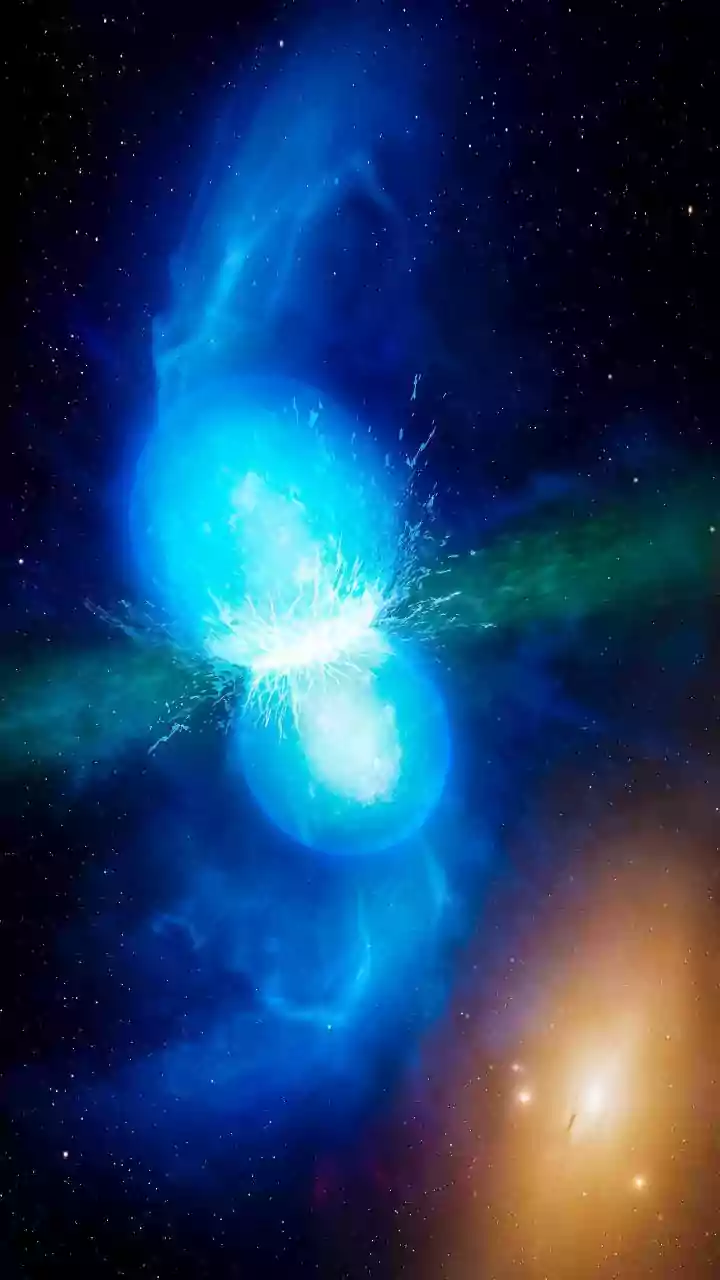
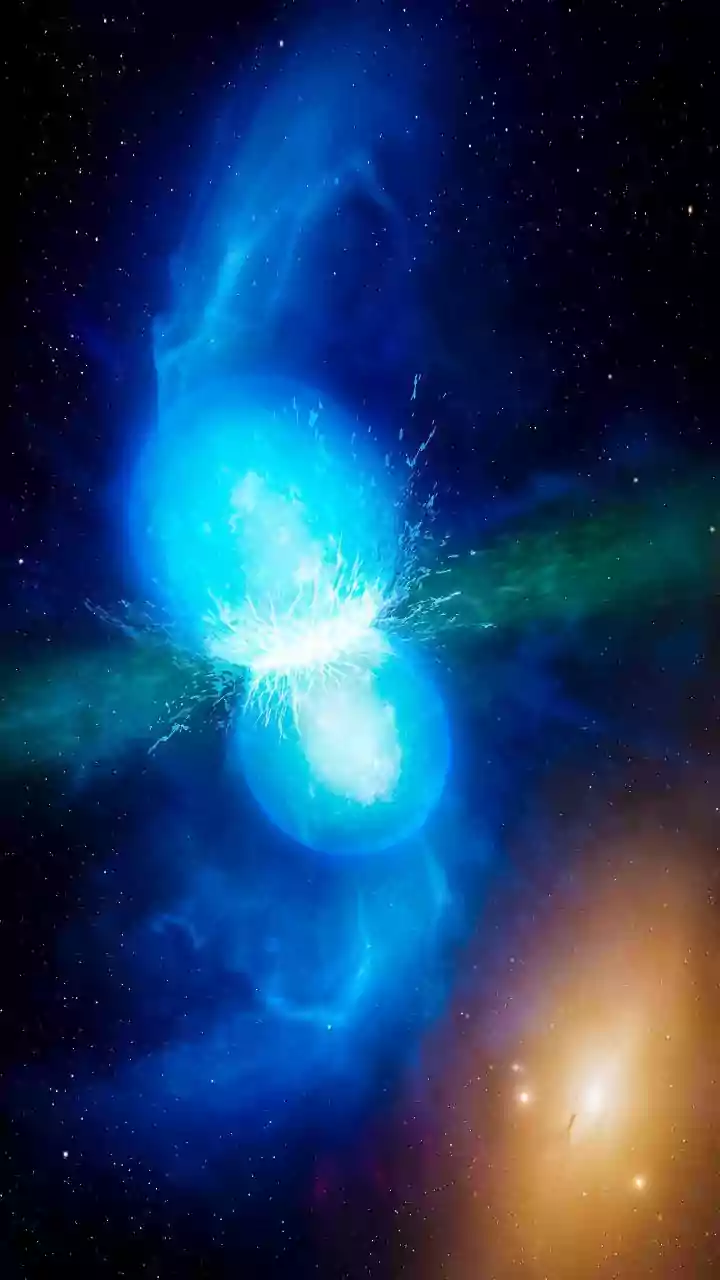
uranium, you need an event far more violent and energetic. The leading theory points to the merger of two neutron stars. These are the incredibly dense collapsed cores of massive stars, packing more mass than our sun into a city-sized sphere. When two of these stellar remnants, locked in a decaying orbit, finally collide, the result is a cataclysmic explosion known as a kilonova. This event releases a tremendous amount of energy and ejects a cloud of neutron-rich material into space. Through a sequence called the rapid neutron-capture process, or 'r-process', atomic nuclei quickly absorb free neutrons, undergoing transformations to form the universe's most precious heavy elements.
A Mysterious Glow in Our Galaxy
Recently, a team of researchers from China and the US turned their attention to a mysterious source of high-energy gamma rays known as HESS J1507−622. First detected by a telescope array in Namibia between 2006 and 2007, this source has puzzled astronomers because it emits powerful gamma rays without any corresponding light in lower energy forms, like X-rays or radio waves. Adding to the mystery, it sits away from the main plane of the Milky Way, where most of our galaxy's stars and known energy sources reside. While some had previously suggested it could be the remnant of a regular supernova, a new study proposes a more exciting possibility: that this glow is the still-hot wreckage from a kilonova.
Building the Case for a Kilonova
The research team developed a mathematical model to test their hypothesis. They simulated a hypothetical kilonova remnant, inputting variables like age, distance, and the energy and material ejected during a neutron star merger. By calculating the radiation that would be produced by such an event, they found their model's predictions closely matched the gamma-ray emissions observed from HESS J1507−622. Their analysis suggests the remnant is surprisingly young in cosmic terms, likely less than 1,000 years old. The location also fits the profile; neutron star pairs can be 'kicked' at high velocities when they form, sending them on paths that take them far out of the galactic plane where the collision would eventually occur. These factors make the kilonova theory a compelling explanation for the mysterious gamma-ray source.
The Search for Definitive Proof
It is crucial to note that this is still a 'candidate' factory. The headline's caveat, 'without confirmed gold detection', is key. Scientists have not directly observed gold or any other specific heavy element within the remnant. They have detected a signal consistent with the aftermath of an event that creates gold. The new research, which has been posted on the preprint server arXiv but is not yet peer-reviewed, provides strong circumstantial evidence. Confirming the presence of specific heavy elements in the remnant's faint glow is an incredibly difficult task that will require further observation with more advanced instruments. However, if this finding holds up to scrutiny, it would mark the first time a kilonova remnant has been identified within our home galaxy, offering an unprecedented opportunity to study a cosmic gold factory up close.