



The Grand Ambition of Gaganyaan
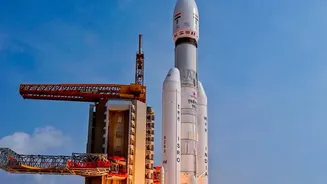
The Gaganyaan programme is India's ambitious endeavour to send astronauts into Low Earth Orbit, approximately 400 kilometres above the planet, for a mission lasting up to three days. This landmark project not only aims to demonstrate India's human spaceflight
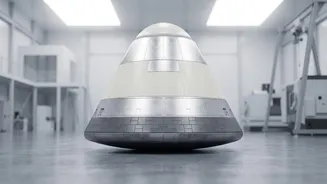
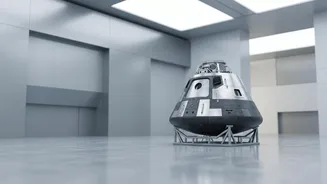
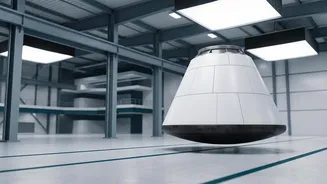
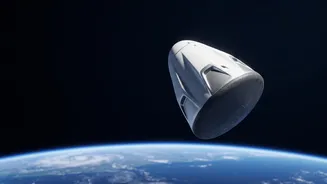
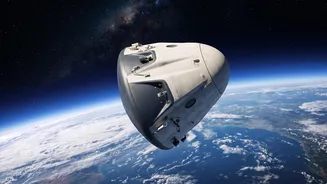
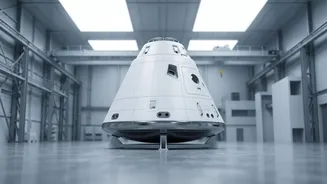
capabilities, joining a select group of nations, but also to inspire a new generation in science and technology. The heart of the mission is the Crew Module, a pressurised capsule designed to be a safe haven for the astronauts during launch, orbit, and the fiery re-entry into Earth's atmosphere. Before any astronaut boards the spacecraft, ISRO is committed to a rigorous, step-by-step testing regime to ensure every component functions flawlessly, with crew safety being the absolute highest priority.
A Trio of Crucial Tests
ISRO recently announced the successful completion of three key qualification tests for the Gaganyaan crew module. These weren't just routine checks; they simulated critical moments of the mission where automated systems must perform perfectly to protect the crew. The first test validated the Crew Module Up-righting System (CMUS), a clever flotation system that uses compressed gas to ensure the capsule flips to the correct orientation after splashing down in the ocean. The second focused on the umbilical separation, the clean disconnection of lines that link the Crew Module to the Service Module before re-entry. The third test confirmed the structural strength of the module when the Apex Cover, which protects the parachutes, is jettisoned.
The Moment of Truth: Separation Systems
The success of these tests shines a spotlight on the broader category of separation systems, the unsung heroes of crew safety. These systems are essentially the spacecraft's built-in escape and safety mechanisms. They range from the explosive bolts that separate different stages of the rocket to the complex Crew Escape System (CES). The CES is like a high-powered ejection seat for the entire capsule, designed to pull the crew module away from the rocket in milliseconds if a major problem is detected during launch. Other separation events, like detaching the Service Module or the parachute cover, are just as vital. A clean separation is everything; any failure could be catastrophic. These systems must be validated under conditions even more extreme than they will face in flight.
Why This Focus on Safety Matters
For a human-rated mission, the standards for safety and reliability are exponentially higher than for a satellite or robotic probe. Every system, especially those involving separation, represents a single point of failure that must be eliminated through meticulous design and repeated testing. The recent push on qualification tests demonstrates ISRO’s methodical approach: prove the safety systems on the ground, then in a series of uncrewed flights, long before astronauts are on board. The focus on moments like splashdown, re-entry, and parachute deployment shows an obsession with astronaut safety during the final, critical phases of their return to Earth. This ensures that the crew can return safely even if things do not go exactly as planned.