









The Legal Battlefield
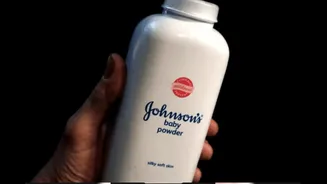
For over a decade, Johnson & Johnson has faced an avalanche of lawsuits from people, predominantly women, who allege that using its talc-based baby powder for feminine hygiene caused them to develop ovarian cancer. A smaller number of cases link the product
to mesothelioma, a cancer caused by asbestos exposure. The core of the plaintiffs' argument is that the company knew its talc could be contaminated with asbestos, a known carcinogen, and failed to warn consumers. In a civil lawsuit, the standard of proof is not 'beyond a reasonable doubt' like in criminal cases. Instead, plaintiffs must show a 'preponderance of the evidence,' meaning it is more likely than not that their claims are true. This can be influenced by compelling personal stories, expert testimony, and internal company documents, even if the scientific evidence on causation is not definitive.
The Murky Scientific Picture
On the other side is the scientific debate, which is far from settled. J&J has consistently stated that decades of independent research and clinical evidence support the safety of its cosmetic talc. Many large-scale epidemiological studies, which follow large groups of people over time, have found no statistically significant link between talc use and ovarian cancer. However, other types of studies, known as case-control studies, have suggested a modest increased risk. The science is complicated by several factors. Talc is a mineral mined from the earth and can be found in proximity to asbestos, leading to the potential for contamination. The key scientific question is whether the cosmetic-grade talc used in the powder was contaminated and, if so, whether that exposure was sufficient to cause cancer. J&J maintains its product was and is asbestos-free and does not cause cancer.
Why Settle If You Believe You're Right?
This brings us to the central question: If J&J is confident in the science, why offer a staggering $5.5 billion to settle roughly 76,000 cases? The answer lies in the world of corporate risk management. Litigation is incredibly expensive, time-consuming, and unpredictable. While J&J has won the majority of the cases that have gone to trial, some juries have returned massive verdicts against them, creating financial volatility. A massive settlement, while costly, offers certainty. It allows the company to cap its financial exposure and move past a damaging chapter that has plagued its reputation for years. As the company's litigation head stated, the resolution allows J&J to "put this matter behind it" and focus on its core business, a clear indication that this is a business decision, not a scientific concession.
A Business Decision, Not a Scientific Verdict
The company's move toward a settlement was also influenced by recent court developments. A federal judge recently cast doubt on the ability of plaintiffs to prove that talc specifically caused their individual cancers after key expert witnesses were withdrawn. This strengthened J&J's legal position and likely provided leverage to negotiate a more favourable, though still massive, settlement. The deal is structured to be accepted by at least 95% of claimants, effectively ending the vast majority of the litigation in one stroke. This strategy helps avoid the risks of individual jury trials, where emotional testimony can sometimes outweigh complex scientific data. Ultimately, settling is a pragmatic calculation of risk versus reward, weighing the cost of the deal against the unending expense and reputational harm of fighting thousands of individual battles in court.