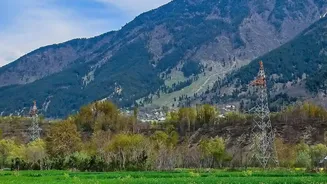








A Vision of Blooming Potential
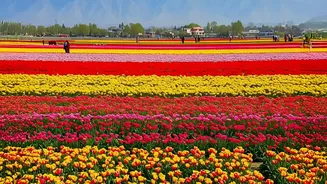
In a significant push to diversify agriculture and create new income streams, Ladakh has launched a large-scale floriculture project. Twin flower fields have been established at Choglamsar and Stakna in the Leh district, at a breathtaking altitude of
around 10,600 feet. The project, inaugurated in September 2026, spans approximately 40 acres and is home to over 2.5 million flowering plants. This initiative, a collaboration between the Ladakh administration and the CSIR-Institute of Himalayan Bioresource Technology (IHBT), aims to demonstrate that commercial flower cultivation can be a viable livelihood for farmers in the region's challenging climate.
The Economics of High-Altitude Flowers
This isn't just about beautifying the landscape; it's a calculated economic move. The primary flowers being cultivated are Lilium and Gladiolus—species with high demand in national and international markets. The project features around 2.4 million Lilium plants and 100,000 Gladiolus plants. The commercial potential is significant, with 'A-grade' Lilium stems, which have four to five buds, fetching premium retail prices between ₹150 and ₹200 per stem. The returns from floriculture are estimated to be nearly double those from traditional vegetable farming in the region, offering a lucrative alternative for local farmers. The first landmark air consignment of 15,000 Lilium stems was recently dispatched from Leh to major cities like Delhi, Mumbai, and Chandigarh, marking Ladakh's entry into the national flower market.
Science in a Cold Climate
Making flowers bloom in a cold desert requires scientific intervention. The CSIR-IHBT has provided crucial technical expertise and technology for the project. Ladakh's unique agro-climatic conditions, often seen as a challenge, are actually an advantage for certain flowers. Lilium bulbs, for instance, perform exceptionally well in cold conditions. An added benefit is that after three years, the bulbs begin to multiply naturally, boosting future production without extra investment. The project also serves as a model centre for demonstrating scientific cultivation techniques, encouraging farmers to adopt modern practices suited for the high-altitude environment.
Empowering Local Communities
The initiative is designed with a people-first approach. In the initial phase, the Agriculture Department is managing cultivation to establish the fields and demonstrate best practices. The plan is to then transfer responsibility to local Self-Help Groups (SHGs) and cooperatives, who will manage cultivation, harvesting, and marketing. This model aims to empower local communities, particularly women and youth, by providing them with training and a sustainable source of income. The project is already creating local jobs, with women employed for cutting, sorting, and packaging the flowers at a daily wage of ₹900, and a local botanist managing marketing.
Future Growth and Agri-Tourism
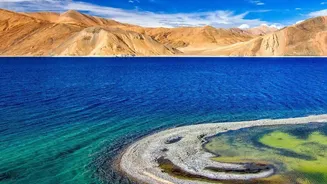
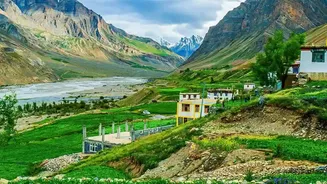
The success of this pilot project has set the stage for expansion. The Ladakh administration plans to replicate this model in other districts, aiming to bring 200 acres under floriculture cultivation by the next year. Beyond the economic benefits for farmers, these vibrant fields are expected to become a new attraction for tourists, adding a new dimension to Ladakh's tourism landscape. The visual contrast of millions of colourful blooms against the stark mountains could draw visitors and even become a location for film shoots, further boosting the local economy. This initiative is part of a broader vision to transform Ladakh into a hub for high-value crops, with similar pilot projects for saffron cultivation also underway.