









A Landmark Moment for Indian Space
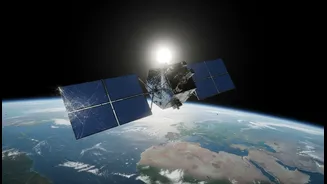
The mission, named Drishti, represented a significant leap forward for India's private space ambitions. Developed by the Bengaluru-based startup GalaxEye, the satellite was not just another payload; it was the world's first to combine optical and Synthetic
Aperture Radar (SAR) imaging technologies in a single unit. This 'OptoSAR' capability was designed to capture high-resolution images of Earth day or night, regardless of cloud cover—a game-changer for everything from strategic surveillance to disaster management. Launched on May 3, 2026, aboard a SpaceX Falcon 9 rocket, the satellite, also India's largest privately developed Earth observation craft, was celebrated as a showcase of sovereign technological capability, earning praise from industry leaders and government officials alike.
Nature's Ultimate Test: A Geomagnetic Storm
Just as Mission Drishti was completing its final checks in orbit, it flew into the path of a powerful geomagnetic solar storm. These storms are a form of severe space weather that occurs when the Sun ejects a massive cloud of charged particles, known as a coronal mass ejection (CME). While Earth's magnetic field protects us on the ground, satellites in orbit are highly vulnerable. The intense radiation from a CME can disrupt and permanently damage sensitive onboard electronics, effectively scrambling a satellite's brain. In early July, a series of strong solar flares and CMEs erupted from the sun, creating precisely these hazardous conditions in space and putting critical infrastructure at risk.
A Trial by Fire with a Sobering Outcome
For Mission Drishti, the encounter proved devastating. On July 7, GalaxEye confirmed that the satellite had encountered a critical anomaly during the solar storm. Initial analysis suggests that the intense radiation likely fried a key onboard system, leading to intermittent and then total loss of communication. While engineers are still attempting to re-establish contact, the company has stated that the likelihood of recovering the spacecraft is low. The promising mission, which had successfully validated numerous critical systems in its first few weeks, was silenced prematurely, dealing a significant setback to the young company and the wider industry.
The Stakes for India's Space-Tech Future
The loss of Mission Drishti is more than just the failure of a single satellite; it's a harsh lesson in the high-risk, high-reward nature of the space business. It underscores the growing threat that space weather poses to the world's ever-expanding satellite infrastructure. However, GalaxEye is determined to turn this setback into a learning experience. The company’s CEO, Suyash Singh, noted that the mission provided invaluable engineering insights that will directly strengthen future spacecraft. Learning from this, the startup is accelerating plans to bring more of its supply chain and manufacturing in-house to build more resilient systems. The company plans to launch two new, improved satellites within the next 24 months, signaling that while the challenge was immense, the ambition of India's private space sector remains undeterred.