




A Monumental Decision in a Hushed Hall
January 24, 1950, was a historic day for India. The Constituent Assembly, the body that had meticulously drafted the nation's constitution over nearly three years, was holding its final session. Just two days before India would formally become a republic,
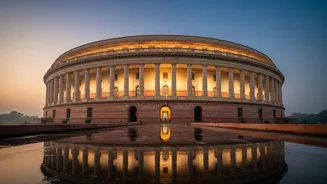
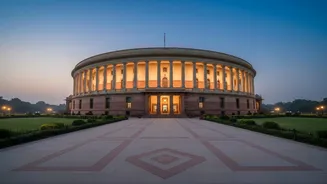
a few crucial pieces of national identity were yet to be cemented. In the hushed Central Hall of Parliament, Dr. Rajendra Prasad, the President of the Assembly, rose to address the members. Instead of a formal vote or a lengthy debate, he made a definitive statement that would echo through India's future. He declared that 'Jana Gana Mana' would be the National Anthem of India.
The Two Songs that Moved a Nation
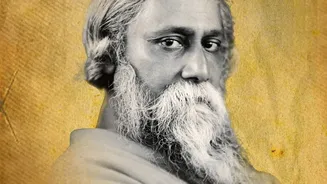
The choice was not simple. Two songs held a deep emotional and historical claim on the hearts of the people. The first was 'Vande Mataram', a poem from Bankim Chandra Chattopadhyay's 1882 novel 'Anandamath'. It had become the rallying cry of the freedom struggle, a song of sacrifice and defiance that fuelled a generation of revolutionaries. The second was 'Jana Gana Mana', a hymn composed and scored by the Nobel laureate Rabindranath Tagore. First sung at a session of the Indian National Congress in 1911, its soaring melody and message of pan-Indian unity had gained widespread appreciation. It spoke of India's geographical diversity—from Punjab and Sindh to Dravida and Utkala—bound together by a single spirit. Both songs represented the soul of the independence movement, but only one could be the anthem.
A Choice of Harmony and Honour
The debate over the choice had been long-standing. Supporters of 'Vande Mataram' pointed to its unparalleled role in the freedom struggle. However, there were concerns. The song's origin in a novel with a specific religious and political context made some leaders cautious. Furthermore, many, including Jawaharlal Nehru, felt its tune was not as easily adaptable for military bands and orchestras, a practical consideration for a national anthem that would be played on state occasions globally. 'Jana Gana Mana', in contrast, possessed a melody that was seen as both dignified and suitable for orchestral arrangement. Subhas Chandra Bose had already adopted a version of it as the anthem for the Indian National Army (INA), demonstrating its power to inspire. Ultimately, its message of pluralism and unity was deemed a more fitting representation of the modern, diverse republic India aspired to be.
A Solution that Honoured Both Legacies
In his historic statement on January 24, 1950, Dr. Rajendra Prasad did not just choose an anthem; he provided a uniquely Indian solution. He announced that while 'Jana Gana Mana' would be the National Anthem, the song 'Vande Mataram', which had played a historic part in the struggle for Indian freedom, would be honoured equally and would have equal status with it. With this single, graceful move, the Constituent Assembly formally adopted 'Jana Gana Mana' while simultaneously enshrining 'Vande Mataram' as the National Song, ensuring its legacy would never be forgotten. This decision was met with applause, satisfying the members who revered both compositions.
Crafting a Nation's Identity
The adoption of the anthem and song was part of a broader effort to define the new nation's identity through symbols. This had begun earlier. On July 22, 1947, the Constituent Assembly had adopted the Tricolour, or Tiranga, as the National Flag. Two days after the anthem was chosen, on January 26, 1950, the State Emblem was officially adopted. This was an adaptation of the Lion Capital of Ashoka from Sarnath, a powerful symbol of peace and righteousness dating back to the 3rd century BCE. Together, the Flag, the Emblem, the Anthem, and the Song formed a tapestry of identity, weaving together India's ancient heritage with its modern aspirations for a united, pluralistic, and sovereign republic.