








The Men with a Mission
In 2018, Pawan Kumar Chandana and Naga Bharath Daka, two former scientists from the Indian Space Research Organisation (ISRO), embarked on an audacious mission. They envisioned a future where launching satellites was as routine and affordable as booking
a flight. Driven by this goal, they quit their stable government jobs to found Skyroot Aerospace, a startup with the seemingly impossible dream of building India's first privately owned orbital rocket. Chandana, an IIT Kharagpur alumnus who worked on India's heavy-lift GSLV Mk III, and Daka, an IIT Madras graduate with expertise in flight computer systems, had the technical prowess. What they lacked was capital, especially at a time when India's space sector was not yet formally open to private players.
An Unlikely Believer
Finding investors for a high-risk, hardware-intensive venture with regulatory uncertainty was a monumental challenge. Most venture capitalists preferred the shorter investment cycles of consumer internet businesses. The turning point came not from a traditional deep-tech fund, but from Mukesh Bansal, the celebrated founder of fashion e-commerce giant Myntra and fitness platform Cult.fit. In 2018, in response to a cold message on LinkedIn, Bansal saw the potential that others overlooked. He became Skyroot's first and, for a time, only angel investor, writing the first cheque.
The ₹10 Crore Catalyst
The headline figure of ₹10 crore, part of Bansal's total initial investment which grew to around ₹12 crore, was more than just money; it was a vote of confidence that kept the dream alive. This seed funding was provided nearly two years before the Indian government formally opened the space sector in 2020, a move that would later attract institutional investors. Bansal's capital was the critical fuel Skyroot needed during its earliest, most vulnerable days. It allowed the founders to build their core team, begin foundational research and development, and start turning their blueprints into reality, laying the groundwork for what would eventually become the Vikram series of rockets.
From Seed Bet to Orbital Success
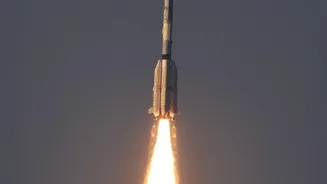
That early bet paid off spectacularly. Bolstered by Bansal's backing and the subsequent policy reforms, Skyroot went on to secure further funding from major investors like GIC and Temasek. The company achieved a major milestone in November 2022, launching Vikram-S to become India's first private company to send a rocket into space. This suborbital success was a precursor to their ultimate goal. On July 18, 2026, Skyroot made history with the successful orbital launch of Vikram-1. The launch not only validated Skyroot's technology but also positioned India as only the third country, after the US and China, with a private company capable of orbital launches.
A New Era for Indian Space
Mukesh Bansal's initial wager has yielded incredible returns, with his investment reportedly growing nearly 60 times in value. But the true return is measured in the stars. His conviction demonstrated that patient capital in frontier technology can build strategic national capabilities alongside financial rewards. The success of Skyroot, kickstarted by that crucial early funding, has shattered barriers and signaled the dawn of a new era for private enterprise in India's space ambitions. It proved that with the right mix of daring engineering and visionary investment, even the most sky-high dreams can be brought down to Earth.