






A Timeline Written in Rust
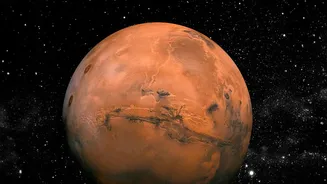
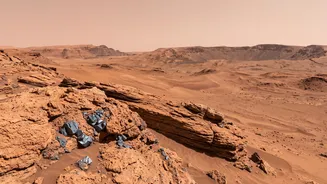
For over a decade, NASA's Curiosity rover has been patiently climbing Mount Sharp, a massive mountain in the middle of Gale Crater, reading the layers of rock like pages in a history book. Scientists have now found a reliable way to date Mars's transition
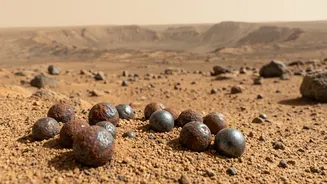
from a warm, wet planet to a cold, dry one, using a common, rust-colored mineral called hematite. Hematite, a form of iron oxide, forms when iron reacts with water, so its presence has long been used to confirm where water once existed. But a new study reveals something more specific: the tiny crystals that make up the hematite grow to different sizes and structures depending on the temperature and how long water was present. This means hematite is more than just a sign of ancient water; it's a geological clock, recording the conditions under which it formed.
Reading the Rocks
Researchers analyzed 20 different rock samples drilled by Curiosity at various elevations within the crater. Since the deepest layers of rock formed earlier in Mars's history, climbing the crater wall allows scientists to travel through time, observing a rock record that spans a long period of the planet's climate evolution. The team discovered that hematite crystals from lower, older layers were generally larger, reaching up to 65 nanometers. In contrast, crystals from higher, more recent rock layers were much smaller, less than 10 nanometers in size. This difference in crystal size acts as a clear marker of a changing environment. Larger crystals suggest a long, slow formation process in warmer water, while the smaller crystals point to colder, less abundant water.
The Clue of the Missing Mineral
Adding another layer to the story was the presence, or absence, of another mineral called goethite. Goethite typically forms alongside hematite but was missing from the samples taken from the older, deeper layers of the crater. Its presence in the younger, higher-elevation samples, alongside the smaller hematite crystals, paints a picture of a planet in transition. The analysis suggests that warm, wet conditions capable of supporting life could have persisted deep underground in Gale Crater for as long as 4.7 million years, even as the surface of Mars was already growing colder and drier. This subterranean water would have been a much more stable and protected environment than the harsh surface.
A Widespread Watery Past
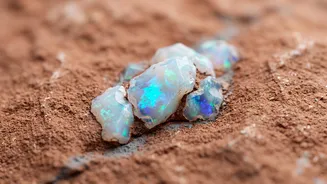
This isn't the only recent mineral discovery reshaping our understanding of water on Mars. Other analyses of Curiosity's data have revealed that Gale Crater is also 'chock-full' of opal. These water-rich gemstones were found in light-colored halos surrounding fractures in the rock, spread across the entire crater. The presence of widespread opal suggests that water was interacting with rock beneath the Martian surface much more recently and extensively than previously thought. These fracture networks would have created subsurface pockets shielded from the intense surface radiation, providing potentially habitable conditions long after the ancient lakes in Gale Crater dried up.