






The Original 1948 Blueprint
In February 1947, British Prime Minister Clement Attlee announced his government's intention to grant India full self-government. The deadline set for this momentous transfer of power was no later than June 30, 1948. This 16-month timeline was considered
ambitious but necessary to ensure an orderly transition, allowing time to sort out the complex political, administrative, and military details of ending nearly two centuries of British rule. The plan was to hand over power to a responsible Indian government, hoping that a united India could be preserved. However, the arrival of a new Viceroy would dramatically alter this carefully laid schedule.
Enter Lord Mountbatten: A Change of Plans
Lord Louis Mountbatten, the last Viceroy of India, arrived in March 1947 tasked with overseeing this transition. Upon his arrival, he was confronted with a rapidly deteriorating situation. The interim government, a coalition of the Congress and the Muslim League, was on the verge of collapse due to intense internal disagreements. More alarmingly, communal violence was escalating across the country, particularly in Punjab and Bengal. Mountbatten quickly concluded that the British administration was losing its authority and that waiting until June 1948 was untenable. He believed that any delay would lead to a complete breakdown of law and order, leaving Britain with no real power to transfer.
The Urgent Push for an Earlier Date
Faced with what he perceived as an impending civil war, Mountbatten made the unilateral decision to drastically accelerate the timeline for independence. His justification was that a swift transfer of power was the only way to stem the rising tide of violence and chaos. By advancing the date, he hoped to force the Indian political leadership to take responsibility and manage the situation themselves. The argument was that the uncertainty of a long transition was fueling the conflict. The Indian Independence Bill was subsequently introduced in the British Parliament on July 4, 1947, and passed with remarkable speed, codifying the new, much earlier deadline.
Why August 15? A Personal Anniversary
With the decision made to bring independence forward to 1947, the question became which specific date to choose. The selection of August 15 was a personal one for Mountbatten. As he later admitted, the date was chosen spontaneously during a press conference. August 15 marked the second anniversary of Japan's surrender to the Allied forces in World War II, a pivotal moment in Mountbatten's own career as he had been the Supreme Allied Commander of the South East Asia Command at the time. For him, the date symbolised a great victory and a personal triumph, and he saw it as a fitting day for the transfer of power.
A Midnight Tryst with Destiny
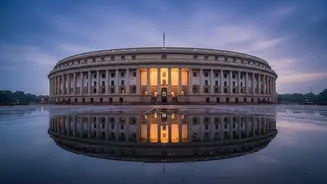
The choice of August 15, however, was met with dismay from Indian astrologers, who considered it an inauspicious day. To circumvent these astrological concerns, a creative solution was devised. Indian leaders, including Jawaharlal Nehru and Dr. Rajendra Prasad, decided to hold the official ceremony at the stroke of midnight, between August 14 and 15. This timing was significant because, according to the Hindu calendar, a new day begins at sunrise, while the Western calendar marks the new day at midnight. This compromise allowed the transfer of power to occur during the 'Abhijeet Muhurta', an auspicious window around midnight, while still officially adhering to Mountbatten's chosen date. It led to Nehru's iconic "Tryst with Destiny" speech, delivered as India awoke to life and freedom at the midnight hour.