




The Heart of a Hypercar Titan
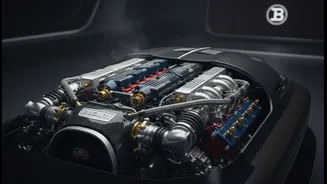
To understand the significance of its departure, you have to appreciate the sheer audacity of the W16. First unveiled to the world in 2005 within the Bugatti Veyron, it was an engine born from a sketch on an envelope by the visionary former VW Group Chairman,
Ferdinand Piëch. The concept was simple but wildly ambitious: create an engine for a road car with 1,000 metric horsepower. The result was an 8.0-litre, quad-turbocharged marvel, effectively two V8 engines fused together. It was, and remains, the only 16-cylinder engine ever used in a production vehicle. This powerhouse not only redefined speed, propelling the Veyron past 250 mph, but it also gave birth to an entirely new category of vehicle: the hypercar. Over the years, the engine evolved, powering the Chiron and its derivatives to even greater heights, including shattering the 300-mph barrier.
The Last of its Kind: The W16 Mistral
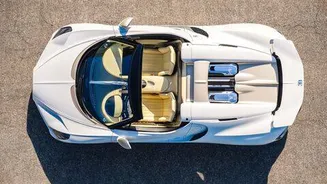
Every legend deserves a grand finale, and for the W16, that farewell performance is the Bugatti W16 Mistral. Limited to just 99 units, all of which were sold before production even began, the Mistral is the last road-going Bugatti to feature this iconic engine. It's not merely a Chiron with the roof removed, but a distinct roadster designed as a final tribute. In its ultimate form, the engine produces a staggering 1,600 PS (1,578 hp), capable of pushing the open-top car to a record-breaking 282 mph, making it the fastest roadster in the world. Recent reports in mid-July 2026 confirmed that the final Mistral, a bespoke model titled “The Last of its Kind,” has officially rolled off the Molsheim production line, closing a monumental chapter in automotive engineering.
An Inevitable Silence
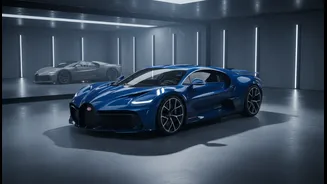
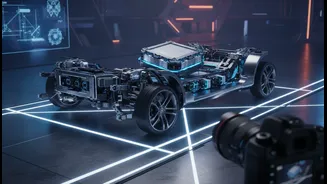
The decision to retire the W16, while momentous, is a reflection of the automotive industry's broader shift. The future, even at the highest echelons of performance, is electric. This transition was solidified for Bugatti through its merger with Rimac Automobili, a Croatian company renowned for its pioneering work in high-performance electric vehicle technology. The new entity, Bugatti Rimac, signals a clear direction toward a hybrid and eventually all-electric future, with Bugatti's next hypercar, the Tourbillon, set to be powered by a new V16 hybrid powertrain. While the Molsheim factory will continue to assemble Bugatti vehicles, the engineering heart will beat to a different, more electrified drum. The era of pure, unadulterated internal combustion titans like the W16 has drawn to a necessary close.
The Custodians of the W16 Legacy
While the factory has built its last W16, the engine's story is far from over. It now passes into the hands of the 99 Mistral owners, and the wider community of Veyron and Chiron drivers, who become its living custodians. These are not just collectors who will store their vehicles in climate-controlled garages. Bugatti ownership is an active pursuit, fostered by a global network of clubs and events. From the annual Bugatti Festival in Molsheim to international meets and driving tours across scenic routes, these gatherings ensure the cars, and their incredible engines, are experienced as intended. The owners are now the ones responsible for sharing the W16's visceral soundtrack and breathtaking performance with the world, ensuring the engine's roar continues to echo on mountain passes and racetracks for decades to come. They are no longer just owners; they are the keepers of a mechanical legend.