



The Galaxy’s Missing Ingredient
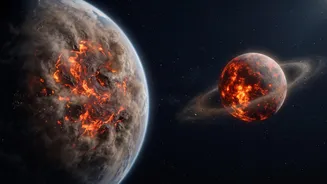
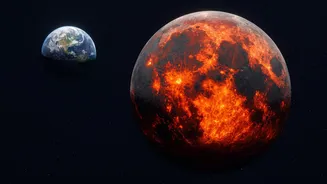
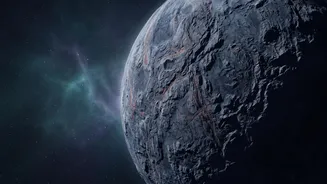
When we look out into the galaxy, super-Earths are everywhere. These are planets larger than Earth but smaller than Neptune, and they appear to be a standard feature in most planetary systems. Yet, in our own cosmic backyard, there are none. The space
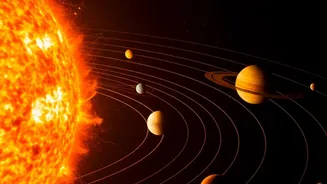
between Mercury and the Sun is conspicuously empty, and the terrestrial planets we do have—Mercury, Venus, Earth, and Mars—are relatively small compared to those seen around other stars. This has been a long-standing puzzle for astronomers. Why is our solar system so different? Did planet formation fail to produce these common worlds here, or did something happen to them? A compelling, albeit dramatic, theory put forward by scientists, including Konstantin Batygin at Caltech, proposes that our solar system did, in fact, form super-Earths, but they were destroyed before they could establish a permanent home.
A Wrecking Ball Named Jupiter
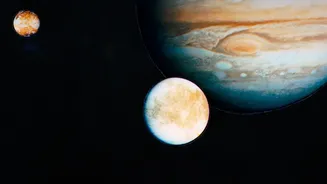
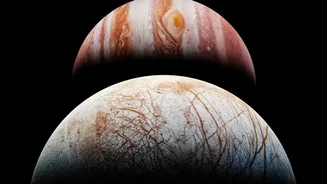
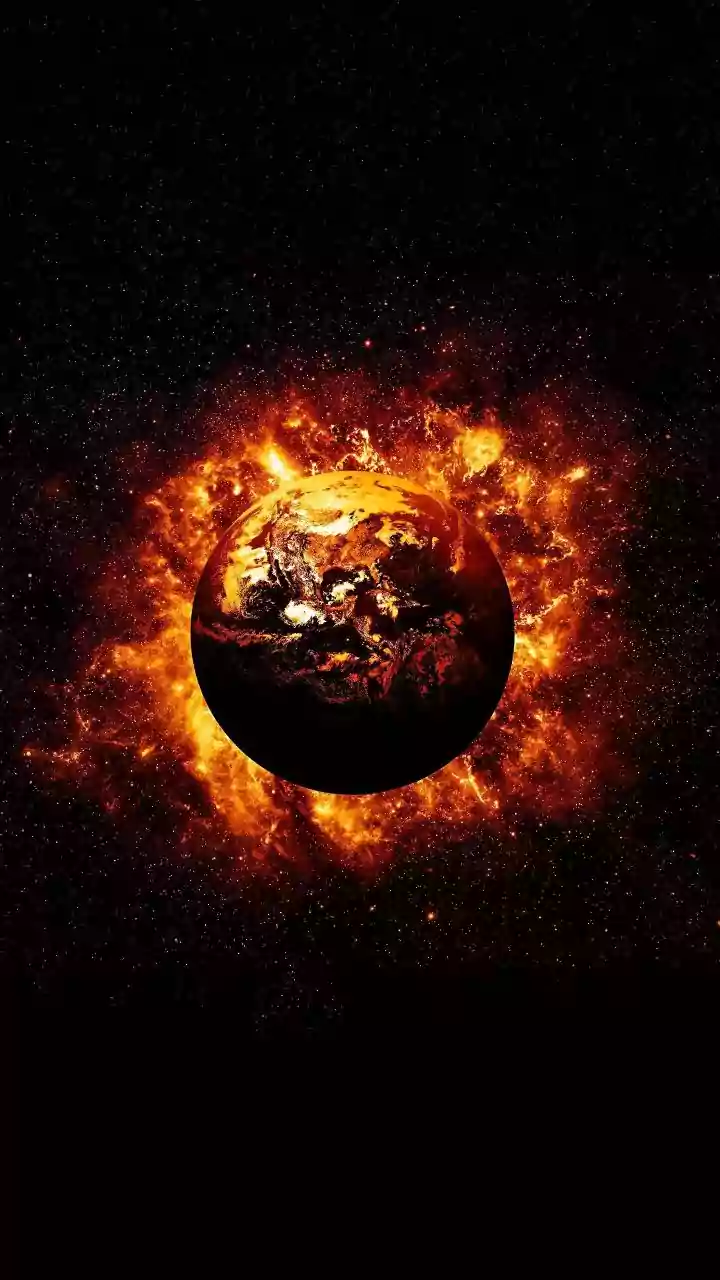
The leading hypothesis for what happened to these primordial planets involves a young, marauding Jupiter. According to a model known as the Grand Tack, Jupiter formed and began to migrate inward toward the Sun, pulled by the dense disk of gas and dust that filled the early solar system. Had it continued, it might have ended up as a “hot Jupiter” close to the Sun, a common feature in other systems. However, the formation of Saturn created a gravitational tug that halted Jupiter’s inward march and pulled it back out. According to simulations by Batygin and his colleague Gregory Laughlin, this journey would have been catastrophic for any super-Earths in the inner solar system. Jupiter’s immense gravity would have acted like a wrecking ball, knocking these early planets into chaotic, overlapping orbits. This triggered a chain reaction of collisions, shattering them into pieces over thousands of years. The resulting debris would have then spiraled into the Sun, effectively clearing out the inner solar system and paving the way for a second generation of planets—the smaller, volatile-depleted rocky worlds we know today.
The Qualification: A Hunt for Ghosts
Here is the key qualification: this theory is based on powerful computer simulations, not direct observation. The hypothetical super-Earths are long gone, either swallowed by the Sun or shattered into oblivion. The evidence for their existence is therefore indirect. It’s an inference based on what’s missing and the strange configuration of what remains. For example, this model elegantly explains why Mars is so much smaller than Earth and why the inner solar system is so barren. More recent research from 2026 suggests another way to find evidence. A study published in the Monthly Notices of the Royal Astronomical Society proposes that if a super-Earth spiraled into the young Sun, it could have left a permanent chemical fingerprint. The model suggests a planet five to ten times Earth's mass could have altered the Sun’s composition, potentially explaining its unusually low levels of lithium. Scientists believe it might be possible to detect these signatures using helioseismology, the study of the Sun’s internal vibrations.
Why This Cosmic 'What If' Matters
While it sounds like a destructive event, the demise of these ancient super-Earths may be the very reason we are here. Their destruction left behind debris that was depleted of volatile gases like hydrogen. This allowed for the formation of planets like Earth without the thick, crushing hydrogen atmospheres that are thought to envelop most super-Earths. This makes truly Earth-like planets—with solid surfaces and relatively thin atmospheres—potentially quite rare in the grand scheme of the galaxy. The theory, even if unproven, is a crucial tool for scientists. It provides a testable framework that connects the architecture of our home system to the broader galactic census of planets. It reminds us that planetary systems are not static things; they are dynamic, often violent places whose histories are written in the orbits, sizes, and compositions of the worlds that survive.