






A Junkyard in the Sky
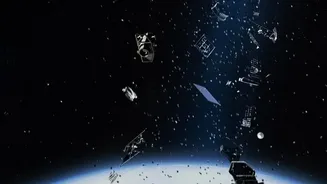
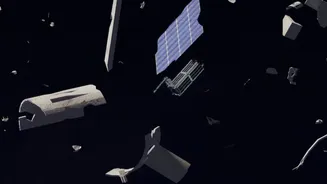
Earth's orbit is increasingly crowded. Decades of space activity have left a trail of over 31,000 tracked objects, from defunct satellites and spent rocket stages to tiny fragments from past collisions. This orbiting junkyard poses a significant threat
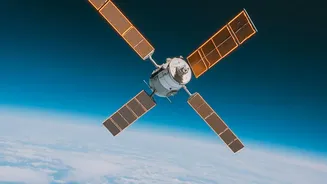
to the thousands of active satellites that power global communications, navigation, and science. The risk of a cascading collision event, known as the Kessler Syndrome, is no longer theoretical, prompting a surge of interest in so-called 'space janitors'—companies developing technology to clean up our orbital backyard.
The Billion-Dollar Forecast
The business of managing this problem is already valued at over a billion dollars, though most of that revenue currently comes from tracking and collision avoidance services, not active removal. Market projections are bullish, with some reports suggesting the active debris removal sector alone could grow exponentially, reaching as much as $9.57 billion by 2035. This optimism is fueled by the rapid growth in satellite launches, particularly large constellations which increase orbital congestion. Companies like Japan's Astroscale and Switzerland's ClearSpace have emerged as early leaders, securing contracts with space agencies to demonstrate capture and removal technologies.
The Regulatory Black Hole
Despite the clear need, a major hurdle is the lack of a globally enforced regulatory framework. International law, including the Outer Space Treaty, classifies space objects as the property of the launching state, even if they are defunct. This means a company can't simply remove a dead satellite without the owner's permission. While guidelines from bodies like the Inter-Agency Space Debris Coordination Committee (IADC) exist, they are largely voluntary. National regulations are a patchwork. The U.S. has taken an aggressive stance with the FCC's five-year deorbit rule for new satellites, which went into effect in 2024. In contrast, most other nations still adhere to a 25-year guideline, while the European Space Agency has a non-binding goal for zero new debris by 2030. This lack of a harmonized, legally binding system creates massive uncertainty for any commercial removal service.
Who Foots the Bill?
The most significant question remains: who pays? Active debris removal is incredibly expensive. A single mission to remove one object can cost tens of millions of dollars. Astroscale and ClearSpace's pioneering missions are funded by government contracts, not commercial customers. For a self-sustaining market to emerge, a clear business case is needed. Currently, there is no direct financial incentive for a satellite operator to pay for the removal of another company's defunct satellite, even if it poses a risk. The problem is a classic 'tragedy of the commons,' where the orbital environment is a shared resource that everyone has an incentive to use but no one has a direct economic reason to clean up.
Technology in Search of a Business Model
The technology itself is advancing rapidly, with concepts ranging from nets and harpoons to robotic arms and laser nudging. Startups like Portal Space Systems and Paladin Space are aiming to create 'Debris Removal as a Service' platforms capable of removing multiple objects in a single mission to bring down costs. However, these technical solutions are currently untethered from a viable commercial model. Without a clear customer base or regulatory mandate forcing operators to clean up legacy debris, these innovative companies are developing a service for a market that does not yet truly exist. Early business models are still in their infancy and rely heavily on government subsidies to prove their worth.